A lone woman trudges through the woods, her breath clouding in the chill. Hunger gnaws at her, sharp and primal, as she stumbles upon the carcass of a deer, half-hidden beneath a tangle of brambles. The wind shifts, carrying the scent of blood—fresh, metallic, and irresistible—drawing her closer despite the decay.
On her knees, she devours the cold, dead meat, hands stained red, jaw working hungrily. Her breathing grows ragged, each bite both a relief and a torment, as if something inside her awakens with every swallow. Shadows writhe at the edge of vision, and the forest seems to hold its breath, the trees looming like silent witnesses.
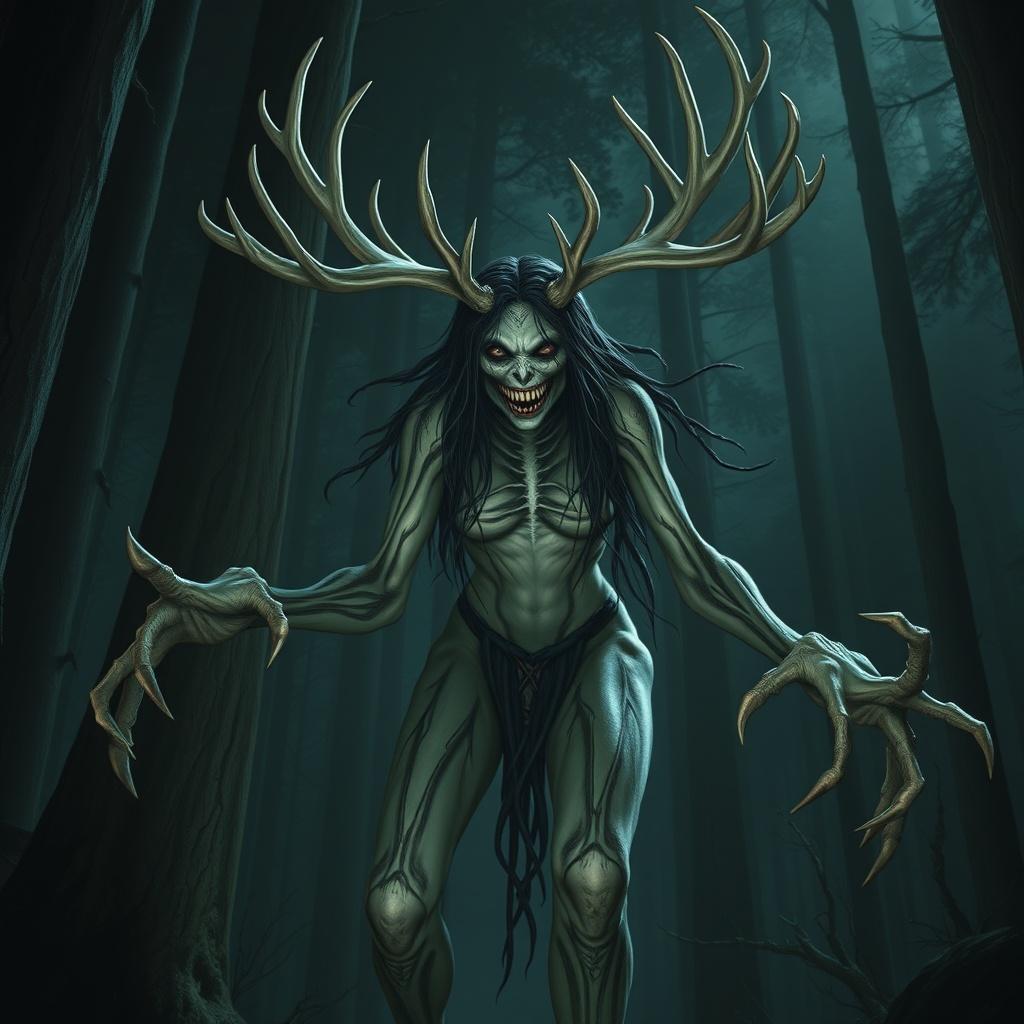
She gasps as her nails lengthen into curved, black claws, skin paling to a deathly hue. Her spine contorts with a sickening crackle, hair sprouting in wild patches along her head, back, and down her lengthening tailbone. Her mouth stretches open, lips peeling back to reveal rows of jagged, needle-sharp teeth.
Her face elongates, flesh peeling away to reveal the raw, moss-stained moose skull beneath. Eyes burn with a ravenous, unnatural light as her tail lashes behind her, thick with bristling hair. The smell of earth, blood, and terror mingles in the air, and the forest recoils from the presence of something ancient and monstrous.
The Wendigo’s claws dig deep gouges in the frozen ground, breath steaming in the cold night. Its hunger is no longer human, but endless and all-consuming. The woods, once familiar, now seem like a hunting ground, every shadow alive with possibility.
With a guttural snarl, the Wendigo lopes into the darkness, leaving behind only shattered bones and a memory of the woman who once walked these woods. The legend of the bloodthirsty Wendigo, crowned with antlers and hunger, is born anew beneath the cold, indifferent moon.