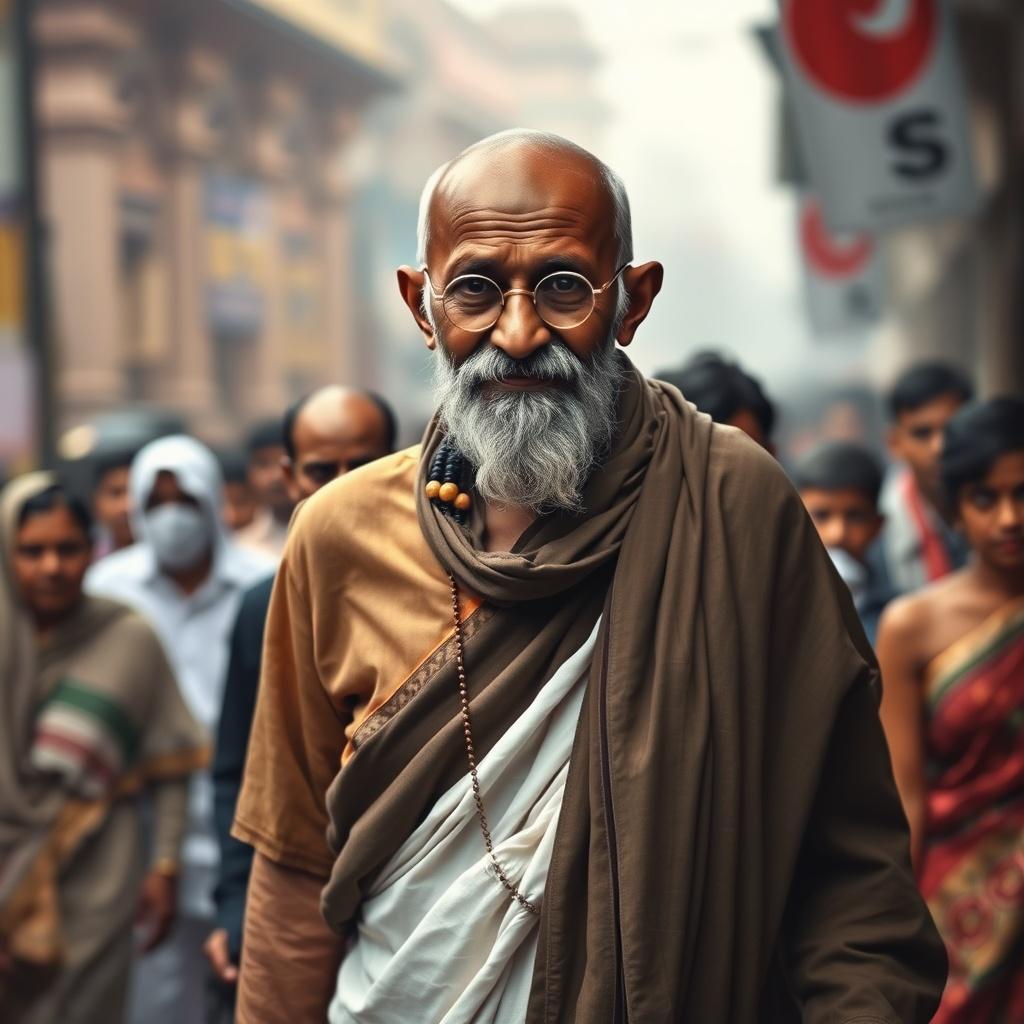
Mahatma Gandhi walked slowly along the crowded lane, his eyes taking in the familiar sights with a quiet intensity. The year was 1947, a time of great change and uncertainty. Yet, in the midst of this chaos, he remained a symbol of peace and resilience, his small, bespectacled figure a source of hope for many.
Gandhi stopped at the corner of a busy intersection, where a group had formed, eager to hear from the man who had been at the forefront of India's struggle for independence. "Be the change you wish to see in the world," he spoke, his voice calm yet powerful. These words, simple yet profound, seemed to ripple through the crowd, igniting a flame of introspection and inspiration.
Among the crowd, a young man with hopeful eyes turned to his neighbor, a woman clutching her child, and shared his dreams of a peaceful future. "His words make me believe that we can truly create a better world," he said, his voice filled with conviction.
Gandhi resumed his walk, his heart lighter, knowing that his voice had reached those willing to listen. "In a gentle way, you can shake the world," he mused, contemplating the power of non-violence and inner strength. The path forward was uncertain, but he was not alone; his journey was shared by many who believed in his vision.
Gandhi disappeared into the twilight, leaving behind not just words, but a legacy of courage and compassion. His teachings echoed in the hearts of those who heard them, a reminder that even in the darkest of times, light can be found through unity and understanding.
As the first rays of sunlight broke over the city, the people of Delhi awoke with a sense of purpose, ready to embrace the change they wished to see. The journey toward peace was ongoing, but with leaders like Mahatma Gandhi, it was a journey they no longer feared to undertake.