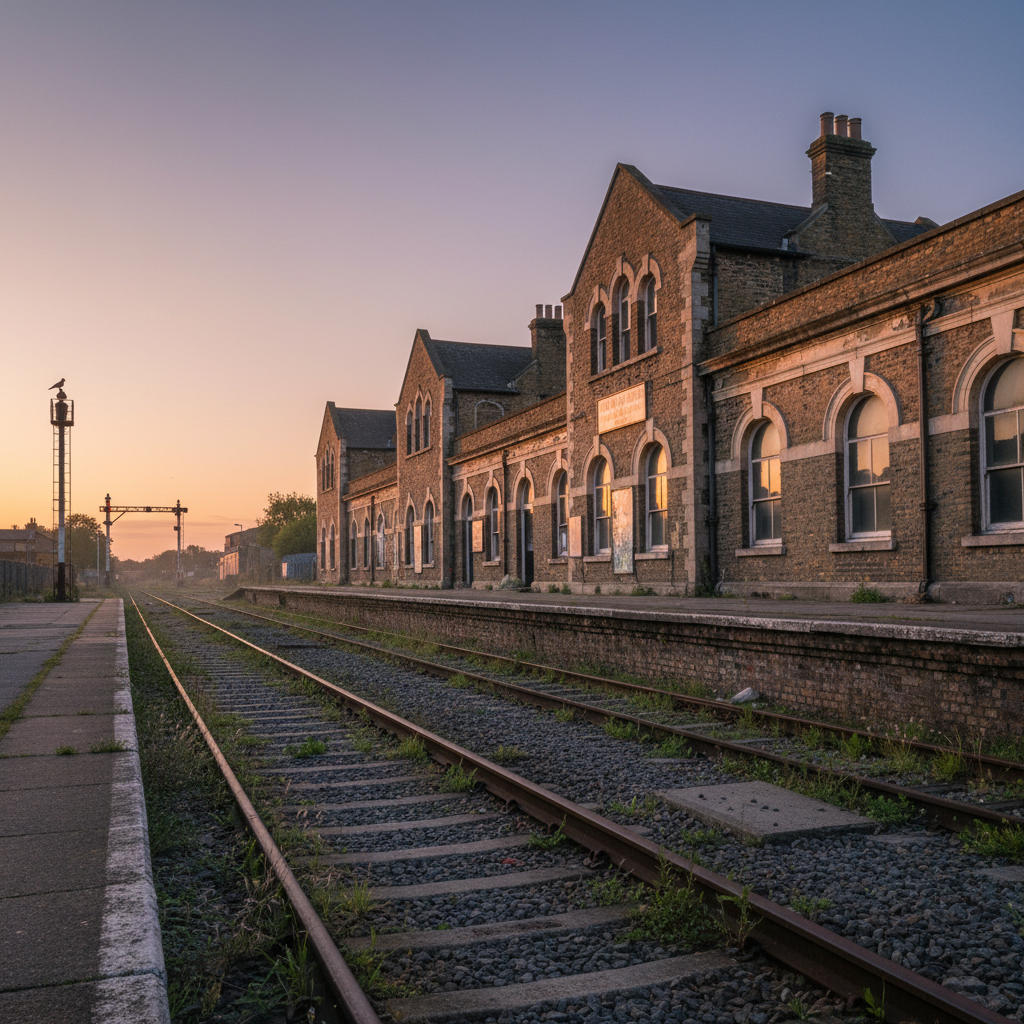
The old station stands forgotten at the edge of a sleepy town, its arched windows reflecting memories of a busier era. A single lamp flickers near the ticket booth, illuminating peeling paint and old posters from a time when trains arrived every hour. The silence feels heavy, interrupted only by the soft shuffling of someone approaching along the gravel path.
A young woman, her curiosity piqued by stories from elders, enters through the creaking doors. She trails her fingers along the dusty counter, imagining the bustle that once filled the air. Each echo of her footsteps seems to awaken the ghosts of commuters and porters, laughter and announcements lingering in the stale atmosphere.
She lingers on a photograph of a child waving at a departing train, her small face pressed to the glass. The woman wonders about the destinations and dreams that once began here. A sudden gust rattles the windowpanes, carrying with it the faint scent of coal and engine oil.
She closes her eyes, letting the imagined sounds wash over her, feeling the pulse of the station’s history beneath her feet. The walls seem to breathe, alive with stories left untold. For a moment, time blurs, and she feels herself part of a grand departure, waving goodbye with the crowd.
The woman steps outside, pausing to look back at the silent building. She senses that the station, though forgotten by most, remembers everything—the laughter, the tears, the hope of new journeys. She promises herself to return, carrying the echoes of Purana station in her heart.
Though trains no longer stop here, the Purana railway station endures as a monument to memories. Its walls hold the warmth of countless goodbyes and reunions, its silence a testament to time’s gentle embrace. Those who listen closely can still hear the echoes of arrival and departure, a symphony of hope that refuses to fade.