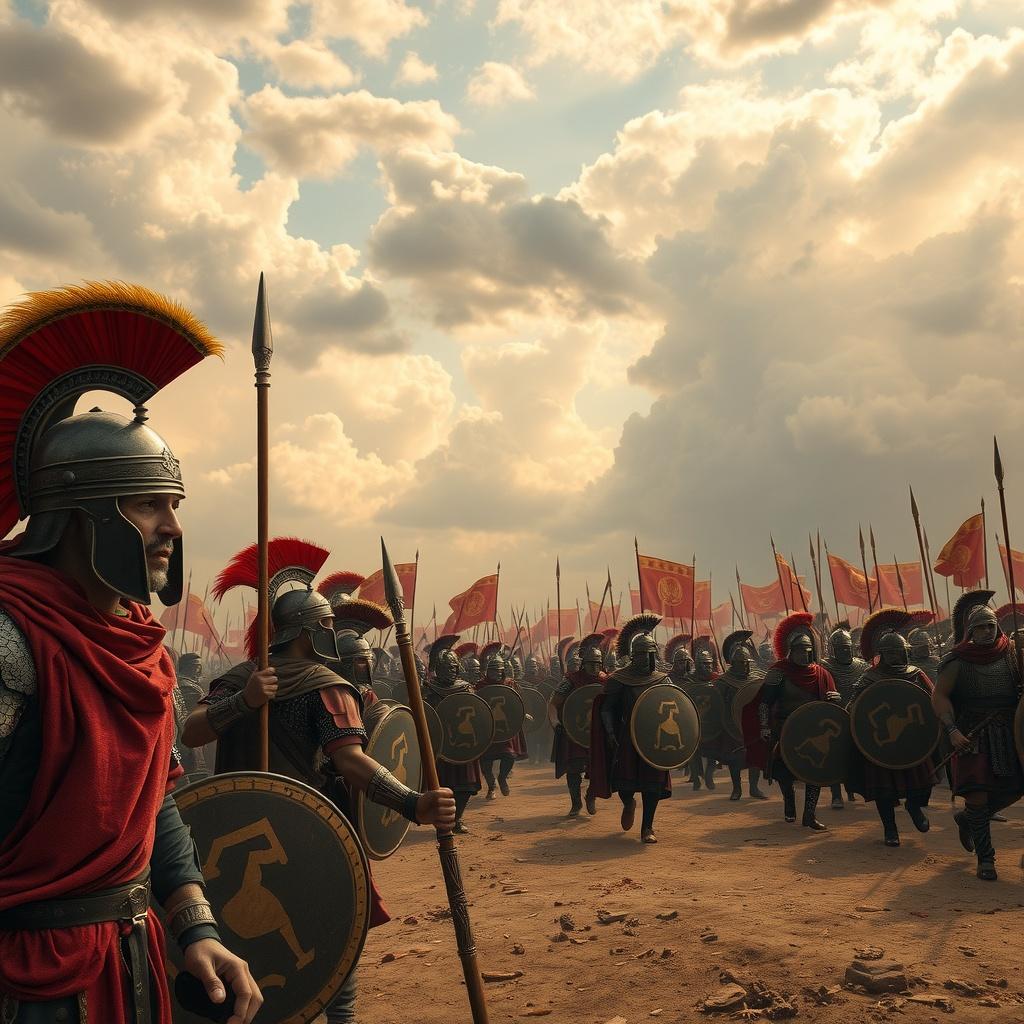
In the heart of Athens, rumors of tensions with Persia were spreading like wildfire. The citizens, while engaged in their daily trading, whispered about the growing animosity and the possibility of war. The city was alive with energy, yet beneath the surface, an undercurrent of anxiety pulsed through the crowd.
King Darius of Persia, seated on his magnificent throne, listened intently to his advisors. The defiance of Athens and other city-states was a thorn in his side, and he knew that a show of strength was necessary. "These Greeks must be taught a lesson," he declared, his voice echoing through the hall.
In Athens, General Themistocles stood among the city’s leaders, advocating for a stronger naval defense. "We cannot afford to ignore the Persian threat," he urged, his eyes scanning the room for agreement. The leaders nodded, understanding the gravity of their situation.
Diplomats from both sides met in hopes of finding a peaceful resolution. Envoy Aristides, representing Athens, spoke earnestly of peace and mutual respect. Persian Ambassador Cyrus, however, remained resolute, "Our king demands submission, not negotiation," he stated, leaving little room for compromise.
The Persian forces, vast and formidable, landed on the shores of Marathon, signaling the start of hostilities. The Greeks, though outnumbered, were determined to defend their land. General Themistocles rallied his troops, "For our freedom and our future!" he cried, igniting a fierce resolve among the Athenian soldiers.
The battle raged with ferocity, each side driven by their own motivations. The Greeks, fueled by their desire for independence, fought valiantly against the might of the Persian Empire. As dawn broke over the horizon, the tide of battle began to turn, setting the stage for a conflict that would echo through history.