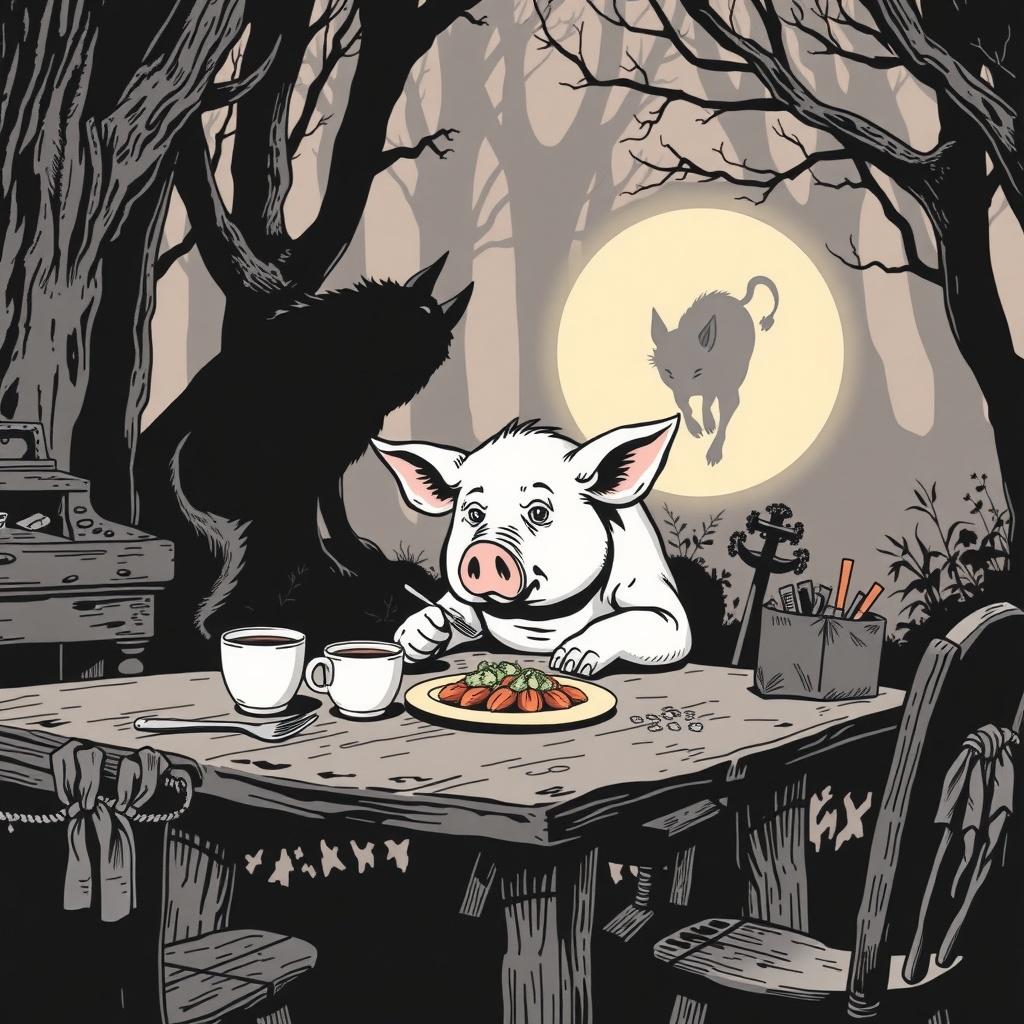
The third pig sits alone, spooning hearty stew into a battered bowl. The air is thick with the scent of herbs, root vegetables, and something wilder, darker. Shadows ripple along the walls as he eats, every clink of his spoon echoing in the quiet, haunted room.
He remembers the chaos—the snapping of jaws, the cries of his brothers, the terror that once filled these woods. The taste of victory is sharp, but bitter. He hears again the wolf’s voice, low and ragged in defeat, its final words lingering like smoke: the big bad wolf, cunning and desperate, whispering from the edge of death.
"You only won because you learned to be like me," the wolf had said, eyes glinting with a predator’s understanding. The pig lowers his spoon, staring into the simmering depths of his meal. The trappings of his home—the brick walls, the locked door, the iron pot—suddenly seem less like comforts and more like weapons.
A shiver runs through the pig as he realizes how much he’s changed. He had outwitted the wolf, not by building a better house, but by hunting the hunter. His cleverness had become a kind of tooth, his caution a sharpened claw. The line between prey and predator blurs beneath the lamplight.
"I should be happy," he murmurs to the empty room, voice barely above a whisper. The faces of his brothers flicker in the fire’s glow, both comfort and accusation. The forest beyond the glass seems to watch, patient and eternal.
The pig pushes his bowl away, unsettled by the realization that the wildness he fought had taken root within him. He has survived, but at a cost that chills him deeper than any winter wind. Tonight, amid the safety of bricks and firelight, it feels as though the forest has won after all.