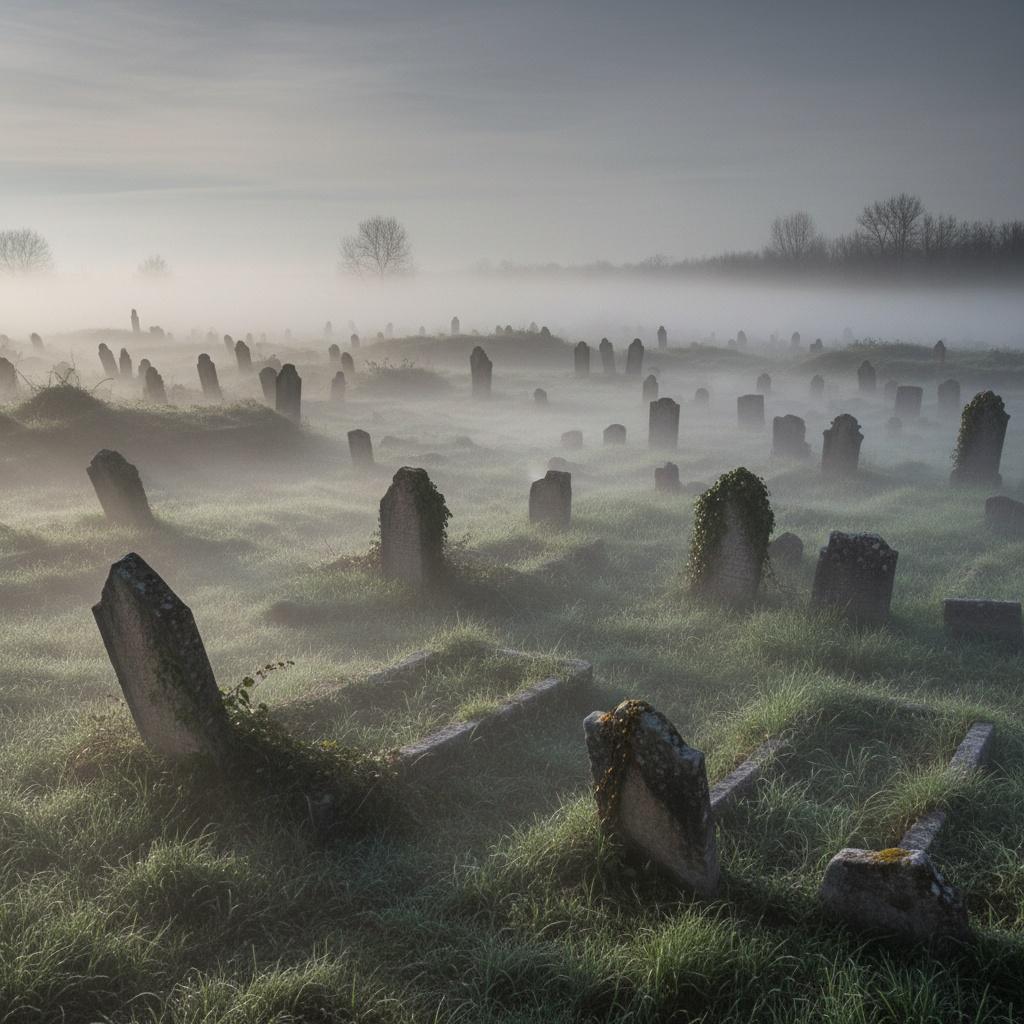
The Issız Cuma cemetery, nestled in a remote valley near Çanakkale, seems timeless—its silence broken only by the distant crow of a rooster and the gentle sighing wind. Old cypress trees loom over the uneven rows of graves, their twisted roots clutching the soft, humid soil. Visitors stand at the entrance, hesitant, as if crossing into a realm where history and mystery entwine. Two graves, side by side, draw the eye: their mounds oddly fused, the headstones leaning as if in conversation.
Hatice’s sister, Fatma, kneels before the graves, her trembling hands brushing the earth. The burial had been meant to honor separation—Hatice and little Ayşe, mother and daughter, laid to rest in distinct places. Yet the land itself seems to rebel, pulling the graves together again and again. "We rebuilt them three times," she whispers, voice shaky. Village elder, Hasan, steps forward, his eyes clouded. "Some things are not for us to change. The earth remembers what we forget,"
Dr. Emre Kaya, a young geologist, crouches beside the merged graves, peering at the shifting soil. He murmurs about liquefaction and humidity, while his colleague, Biologist Selin, inspects the headstones’ slow migration. "There’s no record of soil moving like this—not so precisely and not just here," he admits. "It’s as if something wants them together," Selin adds, her voice barely audible. The family members watch, their skepticism mingled with hope.
Zeynep, the second mother, stands by her child’s resting place after decades. Tears glimmer as she recalls tying the bead to the marker so long ago. Now, the wood is nothing but powder, the grave clothing gone, yet the fragile string and bead remain untouched—impossible, she thinks, in this damp, acidic ground. "Forty-seven years, and it’s as if the earth protected this piece," she says softly. The researchers marvel, documenting the phenomenon.
Dr. Emre speaks of geology, electromagnetic fields, and local humidity, but none of his words settle the crowd’s unease. Selin considers biological impossibilities, and the villagers recount stories of other cemeteries where nothing like this has happened. Hasan stirs the embers of a small fire, looking thoughtful. "Some places are thin," he muses, "where the ordinary laws are weaker, and the heart’s longing carries weight." The others nod, unsure whether to believe in science or the supernatural.
As night deepens, the mysteries of Issız Cuma linger—graves that defy separation, fragile threads that endure against decay. Visitors leave with more questions than answers, the air thick with stories and possibility. The valley holds its secrets in soft earth and shifting shadows, waiting for another dawn—or perhaps, for someone daring enough to listen beyond the silence.