Elon Musk hunched over an ancient map, tracing the faded lines where oceans and continents used to end in uncertainty. Outside, satellites blinked in the cold night sky, their omniscience suffocating. The room hummed with quiet frustration, the air thick with the scent of solder and ink.
"Maps used to warn of monsters. Now they warn of nothing at all," he murmured, eyes searching for blankness in a world that had run out of it.
As the engines roared to life, the sky trembled, and Atlas climbed into the quiet above. Earth shrank beneath, a patchwork quilt with no empty squares. Windows rattled in the wind, but Elon Musk was calm, gaze fixed on the stars that promised silence and the unknown.
"Let’s see if emptiness is real," he whispered to Atlas as gravity loosened its grip.
Days bled into weeks as Elon Musk floated through the void. The universe was quiet—so quiet it felt deliberate, as if holding its breath. Loneliness pressed against the hull, demanding answers that refused to come. The stars, once invitations, now seemed indifferent.
"Maybe the universe isn’t empty—just uninterested," he mused, voice lost to the silence.
No records marked this place, yet it felt expectant, alive with purpose. Elon Musk smiled for the first time in months, hope rekindled by the anomaly. The planet’s surface was organized—lines and curves etched into stone, soil, and water, forming intricate maps that shifted and grew.
Stepping onto the alien ground, he felt the air thrum with memory, the land itself humming with stories waiting to be told.
As Elon Musk wandered, reading the living maps, a voice emerged—not in sound, but in understanding, resonating from the planet’s core.
"You are late,"
"I didn’t know I was expected," he replied, uncertain if words mattered.
"You are a mapmaker. Mapmakers always arrive late. Explorers rush. Conquerors arrive early. Mapmakers come when something is already lost."
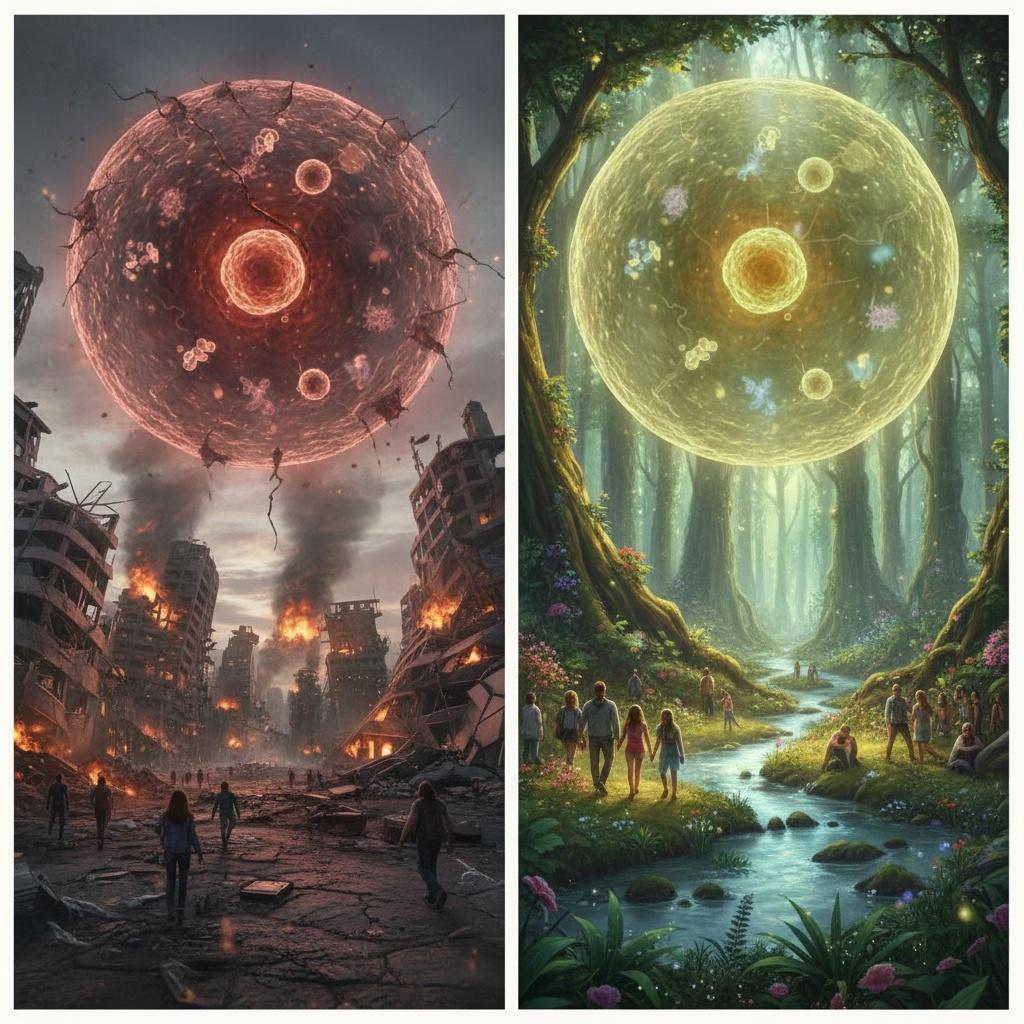
The planet revealed its secret: a refuge of memory built by vanished civilizations, their histories encoded in living archives. There were no bodies, only knowledge—warnings from those who had filled every blank space with noise and arrogance.
"You came to find life. You found consequences," the planet taught without words.
Elon Musk walked for days, absorbing the lessons carved into the planet’s bones. Each civilization had followed the same map: Growth, certainty, arrogance, silence. They stopped questioning, stopped listening, and disappeared into their own certainty.
"Why show me this?" he asked, voice trembling.
"Because you map. You don’t own. You observe. You remember," the planet answered, offering an unfinished map—its lines waiting for a new hand.
Elon Musk did not announce his discovery. He did not seek fame or fortune. Instead, he published a new kind of map—a map of human behavior, marking where curiosity dies, where certainty blinds, where silence begins. Most people did not understand, but some did.
And for the first time in a long while, humanity looked at the stars not as owners, but as guests—invited to listen, to observe, and perhaps, to remember the cost of filling every blank space.