Professor Elara Thompson, an expert in theoretical mathematics, sat at an oak desk, poring over a text on Riemannian Geometry. The gentle tick of an old clock punctuated the silence. "Riemann, you've always been elusive," she mused aloud, her eyes tracing the complex equations.
Professor Elara reached for the manuscript, her fingers brushing away the dust. As she flipped through the pages, a particular diagram caught her eye—a depiction of a multi-dimensional curve. "This could redefine our understanding," she whispered, her heart racing with excitement.
Elara paced the room, her mind a whirlwind of ideas. Taking a piece of chalk, she began to replicate the diagram on the board. "If only I could visualize this in a tangible way," she pondered, her brow furrowed in concentration.
Dr. Marcus Lin, a computer scientist, joined Elara at her request. His eyes widened as he examined the replicated diagrams. "With the right algorithms, we might simulate these geometrical constructs," he suggested, his voice tinged with excitement.
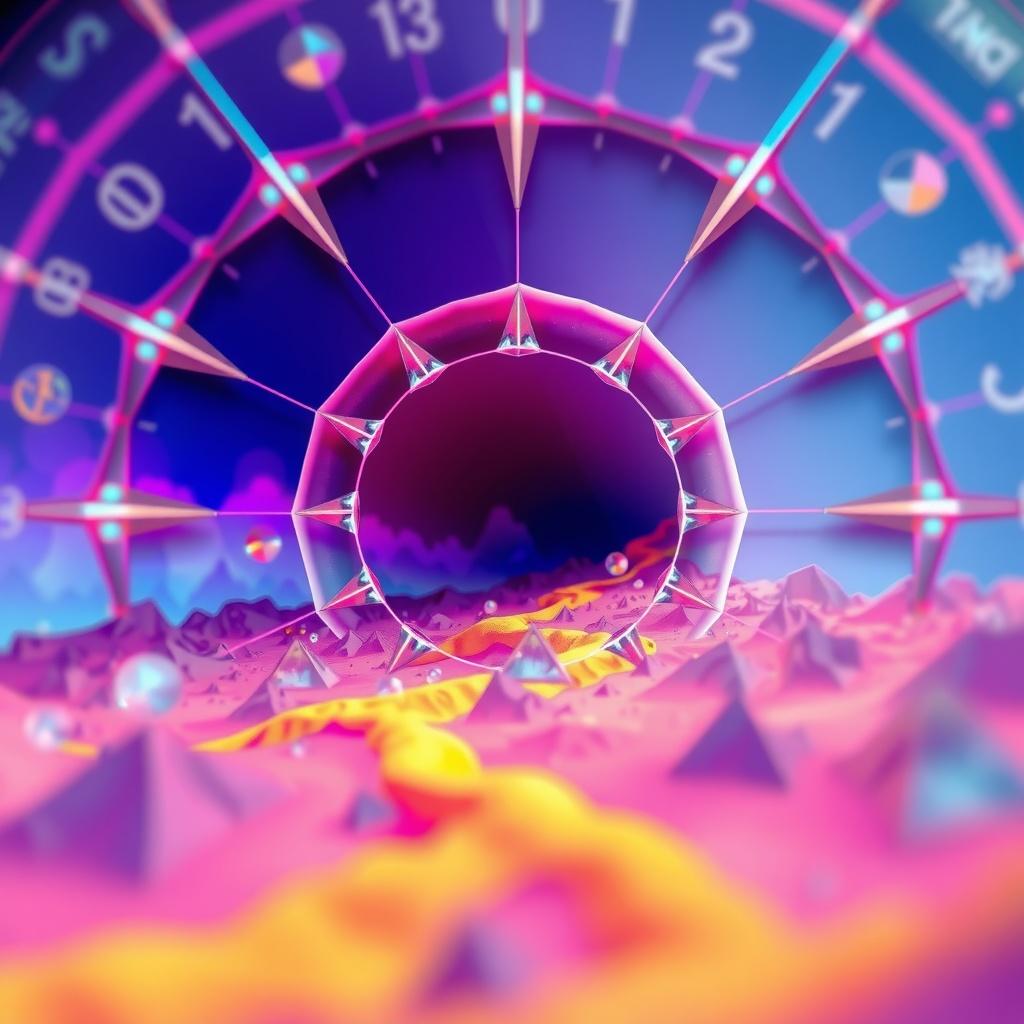
Elara and Marcus watched in awe as the curves twisted and turned, defying conventional understanding of space. "This is beyond anything I've imagined," Elara breathed, her eyes reflecting the glowing lines.
Elara closed the original manuscript, her heart full of gratitude for the journey through Riemannian Geometry. Marcus packed up his equipment, a smile playing on his lips. "We've only just begun to curve reality," she said, a spark of determination in her eyes.