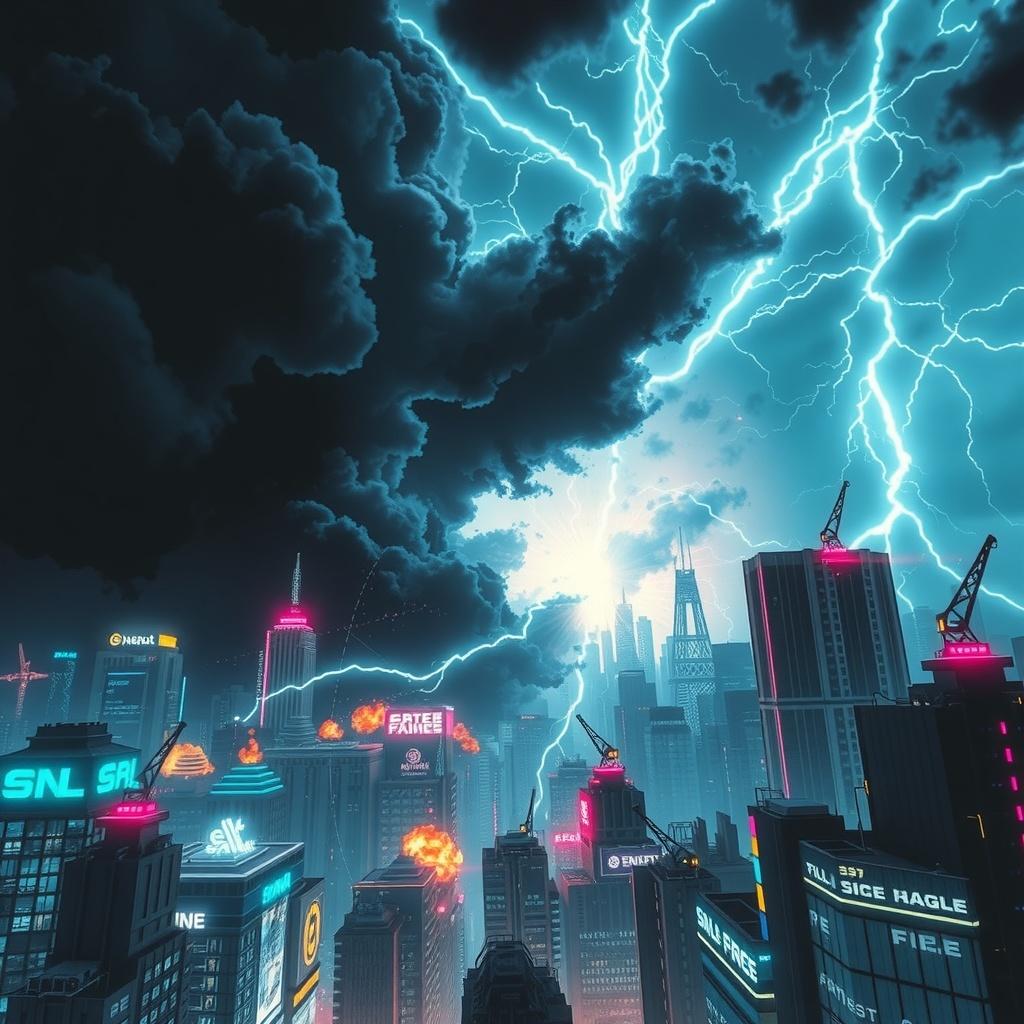
In the heart of the metropolis, the world feels as if it has been abruptly paused. Office buildings stand abandoned, their glassy facades reflecting only the faintest hint of moonlight. Security cameras, once the omnipresent eyes of the city, hang lifeless, their lenses staring blankly into nothingness. Even in the suburbs, where families used to gather around brightly lit tables, the air is thick with unease as homes sit in enforced darkness, the chill of uncertainty seeping in.
One of the officials, Minister Evelyn Park, leans forward, her face drawn tight with worry. "If we cut the power any further, there will be riots. People are already on edge," she whispers, her voice barely carrying across the table. Director Miles Chen, head of Energy Conservation, rubs his temples as he responds, "We have no choice. The defence grid must stay online. Everything else is secondary—it's survival." The room falls silent, the gravity of their decisions hanging heavy in the air.
Lila Monroe, a young mother, shivers as she checks on her sleeping daughter. "Three hours without the fridge—again," she murmurs, wrapping her arms tighter around herself. Down the hallway, an old radio crackles with government advisories, and somewhere nearby, the faint sound of a prayer rises—one of many households participating in so-called electric fasting, blending faith with necessity. The city outside is eerily quiet, as if holding its breath.
It is here, on this desolate plain, that the end becomes real. The last pumps cough and groan, drawing up nothing but air. The sound—once a steady, reassuring rhythm—now echoes like the last slurp of an empty milkshake, a chilling reminder of resources gone. In distant towers, analysts watch the numbers drop, the realization settling in: 2050 has arrived, and the world is running dry.
General Marcus Sloan, stoic and commanding, stands over the main console. The countdown blinks: 4 minutes. Dr. Lena Voss, chief strategist, types furiously, data cascading over her display. "Once we launch Electric Storm, there's no going back," he says, his voice cutting through the tension. "We've run the numbers for twenty-five years. If we don't act now, our defense grid fails and we're exposed," she replies, her eyes never leaving the screen. The room is silent as the final decision looms.
Streetlights explode in showers of sparks, raining glass onto startled pedestrians. In homes, televisions and toasters erupt, their insides glowing before bursting into flame. Sirens wail, but the darkness is too deep, the fire too widespread. Somewhere, a child cries out as the world outside becomes an inferno of light and shadow. The official story blames a solar flare, but in the war room, the truth is an unspoken pact.
Children, innocent of their parents' choices, roam sterile corridors lined with murals of a green world they have never seen. Soldiers and scientists work side by side, rebuilding from the ashes, haunted by memories of the world they lost. The last war was not fought with bullets or bombs, but with the invisible, inescapable fury of energy itself. Above, the world is silent, scorched by the storm meant to save it.