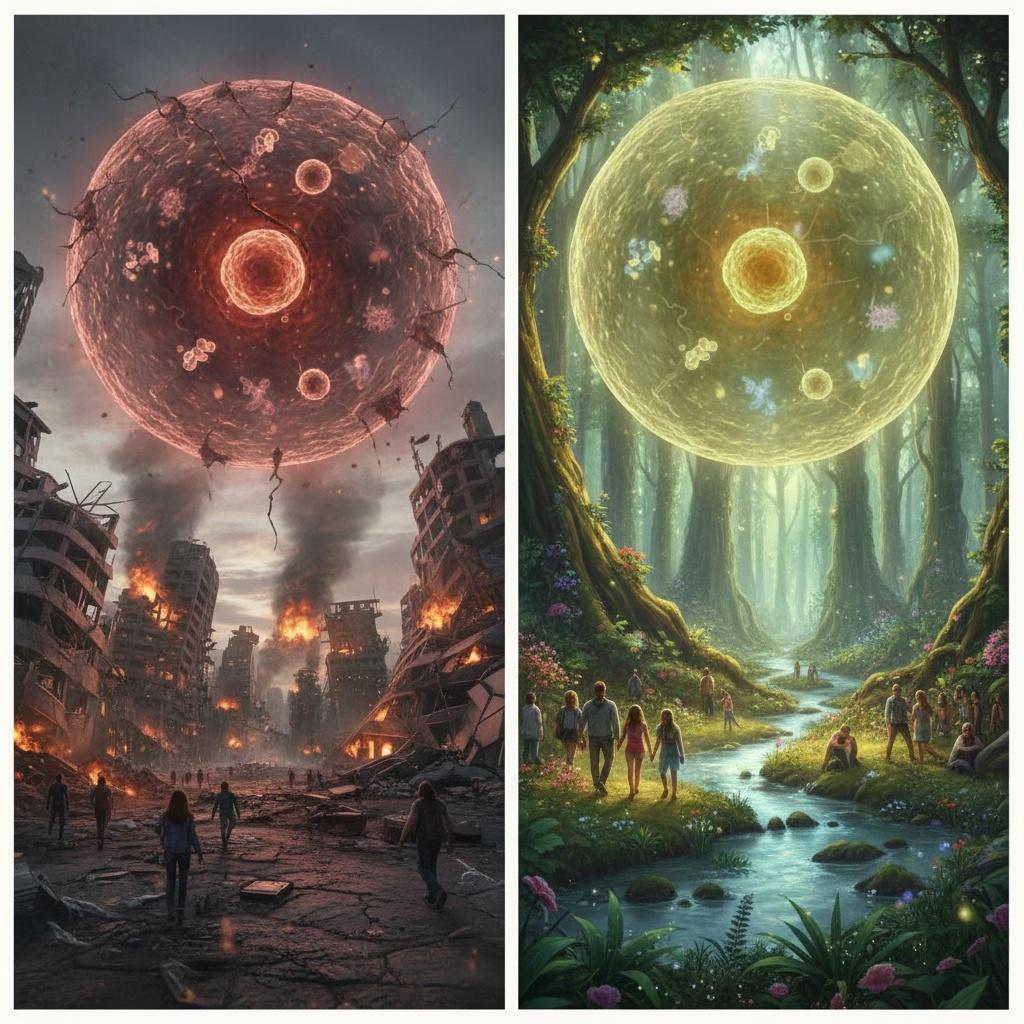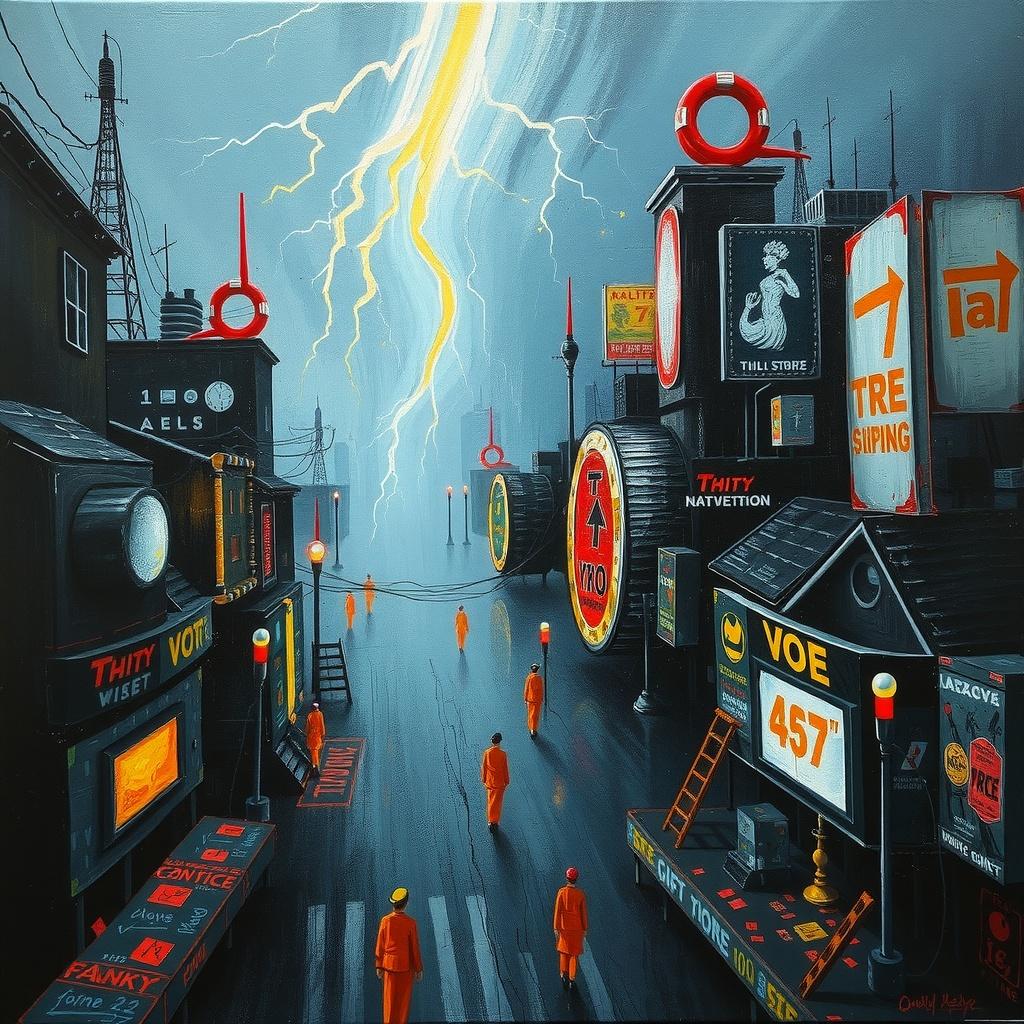
In 2032, New York City is a ghost of its former self. The grand skyscrapers that once glittered with lights stand like silent sentinels against the cloudy sky. Simon, a survivor of the chaos, walks cautiously down the deserted avenues, his flashlight flickering. The air is thick with the smell of burnt metal and ozone, remnants of the catastrophic event known as "Project Blowout: The Energy Surge!" that decimated the population.
Decades before the disaster, a group of researchers gathered to address the looming energy crisis. They knew that the solar flares were a threat to the power grids, but their solution was controversial. Instead of creating more sustainable power sources, they devised a plan to use the solar flares' energy to power the grid, hoping to avert panic with controlled blackouts. Dr. Emily Carter, the lead scientist, was skeptical. "Isn't this too dangerous?" she asked, her voice filled with concern, but her warnings were ignored.
The day came when the government decided to execute "Project Blowout." Engineers sat at their consoles, monitoring the energy surge as it traveled through the grid. The plan was to use the excess energy from the solar flare to power the entire eastern seaboard. Marcus, the chief engineer, wiped sweat from his brow. "We have to get this right," he muttered, watching the screens intently. But the calculations were off, and the energy surge became uncontrollable.
The power surge was too much for the aging infrastructure. Electrical fires erupted across the city, and televisions exploded in homes. Streetlights burst into showers of sparks, electrifying the streets. Panic spread faster than the fires, and people fled, their screams echoing through the night. The city, once a beacon of innovation, had become a harrowing landscape of destruction.
Four years after the disaster, Simon stands on a rooftop, surveying the ruined city. Survivors are few, scattered among the remains of a world that once thrived. The government's attempt to control the energy crisis had backfired spectacularly, leading to unimaginable loss. As Simon reflects on the events, he feels a sense of bitter irony. The very energy meant to save them had become the instrument of their downfall.
Despite the devastation, life persists. In a small corner of the city, a community of survivors has begun to rebuild. They tend to a garden, drawing strength from the earth to sustain themselves. Anna, a young woman with a determined spirit, kneels in the dirt, planting seeds. "We’ll rise again, stronger this time," she says, her words a promise of resilience. In the shadow of the past, there is hope for a new beginning.