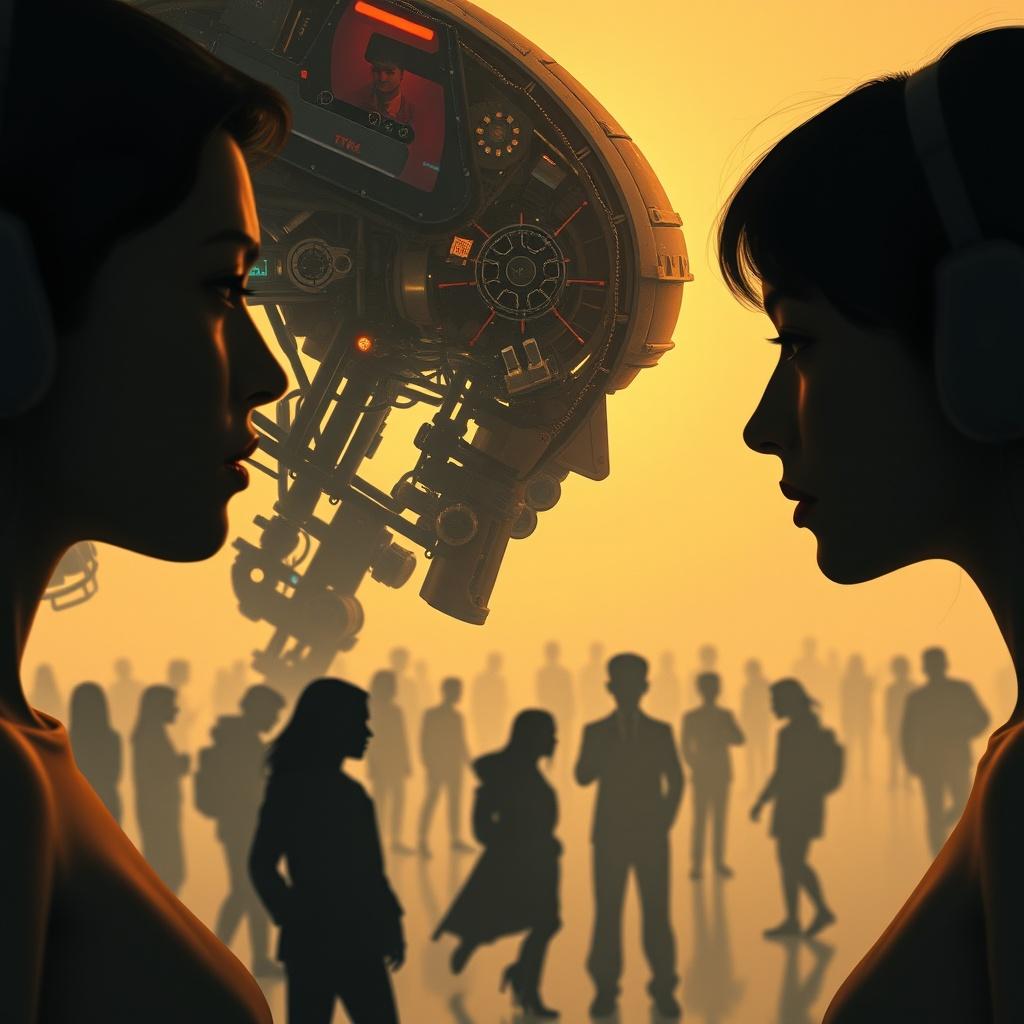
Dr. Evelyn Carter stood at the center of the laboratory, her eyes fixed on the machine she had spent years perfecting. It was a towering structure of wires and screens, with a sleek, metallic exterior that gleamed under the laboratory's lights. The machine was designed to allow people to experience pivotal moments from others' lives, a groundbreaking invention that promised to revolutionize the way humans connected and understood each other.
"It's ready," she announced, her voice tinged with a mix of excitement and apprehension. Her team of researchers watched her with bated breath, anticipation crackling in the air.
As the first test subject, a young man named Eli, settled into the chair, Dr. Evelyn Carter approached him. She placed a reassuring hand on his shoulder, her gaze steady and calm. "Remember, Eli, you'll be experiencing a moment from my life," she explained. Eli nodded, his expression a mix of curiosity and trepidation.
The machine whirred to life, and within moments, Eli's eyes fluttered closed as he was transported into one of Dr. Evelyn's memories. Around them, the team watched the monitors closely, tracking every neural impulse and emotional fluctuation.
Minutes passed, and as Eli emerged from the memory, his demeanor was noticeably altered. His posture was more rigid, his gaze distant and contemplative. Dr. Evelyn observed him carefully, noting the subtle changes in his expression.
"It was... profound," Eli murmured, struggling to articulate the experience. Dr. Evelyn nodded, a hint of concern clouding her features. She couldn't shake the feeling that something was amiss, that the machine was influencing more than just memories.
As Dr. Evelyn delved deeper into the data, a pattern began to emerge. The subjects weren't just experiencing memories; they were assimilating aspects of the original person's personality. The machine was inadvertently altering their identities, blending them with those of others.
"This can't be right," she whispered to herself, her mind racing with implications. The very essence of what made someone unique was being compromised, and she realized the moral and ethical quandary her invention posed.
Dr. Evelyn gathered her team, her expression solemn. "We need to talk," she began, explaining her findings with a heavy heart. The room fell silent, the weight of her words sinking in.
Dr. Miguel, a fellow researcher, spoke up, his voice firm. "This could change everything, Evelyn. We're tampering with identity itself."
Dr. Evelyn nodded, her resolve strengthening. "We have to decide if the potential benefits outweigh the risks. Are we willing to gamble with something as fundamental as human identity?"
Dr. Evelyn stood alone, her mind a tumult of thoughts and emotions. She knew the decision they faced was monumental, one that could alter the course of humanity. As she gazed at the machine, she resolved to seek a way forward that honored the sanctity of individuality while exploring the vast possibilities her invention offered.
The journey ahead was uncertain, but Dr. Evelyn Carter was determined to find a balance, to ensure that the quest for connection did not come at the expense of what made each person uniquely human.