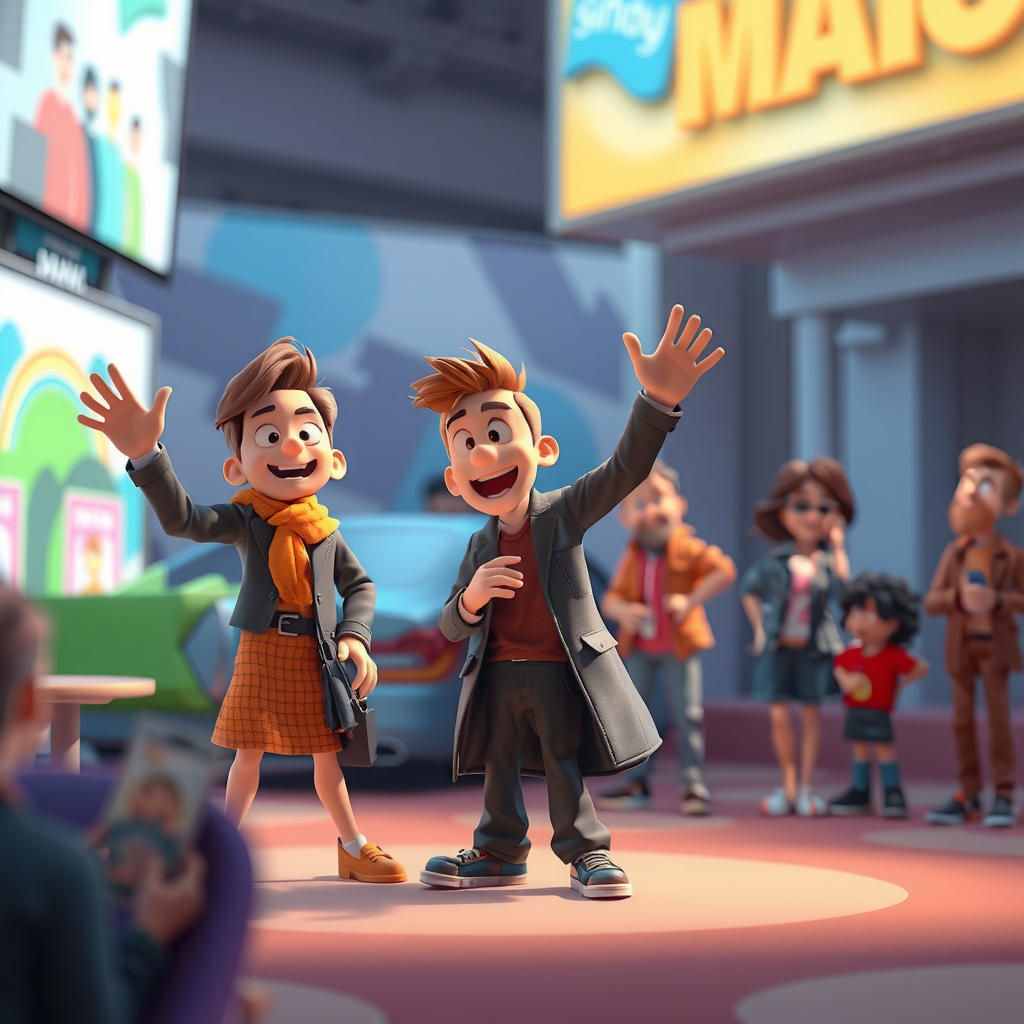
The office is alive with the energy of innovation. Designers sketch on tablets while strategists scribble on whiteboards filled with arrows and hashtags. Rain spatters softly against the glass, blurring the city skyline. In the corner, a monitor flashes with a hundred versions of the same ad, each tailored, each unique.
Inside the glass-walled server room, Meta’s AI whirs methodically, churning out endless permutations of ad copy. Each variant is a subtle remix: a new tone here, a fresh value proposition there, a hyper-targeted use case for each viewer. The result is a digital symphony of personalized messages, each crafted to feel intimately familiar.
The campaign team gathers, their eyes glazed from the onslaught of options. Personalized ads are everywhere, so perfectly tailored that they blur into background noise. Morgan, the lead strategist, shakes their head, sifting through performance charts. "When everyone’s special, no one stands out anymore. Personalization is just the baseline now."
Morgan[/@ch_1] leans on the railing, deep in thought, notebook in hand.]
Morgan flips through pages of sketches and notes, searching for something deeper. The city pulses below, each window a story waiting to be told. Morgan murmurs to themselves, "We need more than just data. We need to understand what really moves people—what makes them care."
The team regroups, this time digging into the soul of their audience. They uncover unexpected motivations, shared struggles, and hidden desires. Suddenly, the room crackles with excitement as new angles take shape—stories rooted in real insight, not just surface-level personalization.
A hush falls as the screen lights up with a story that feels genuine, surprising, and deeply human. The audience leans in, moved not by the fact that the message is “for them,” but by the fact that it truly gets them. Morgan watches, a quiet pride in their eyes, knowing they’ve found a new edge—one built on creative angles, empathy, and the power of real insight.