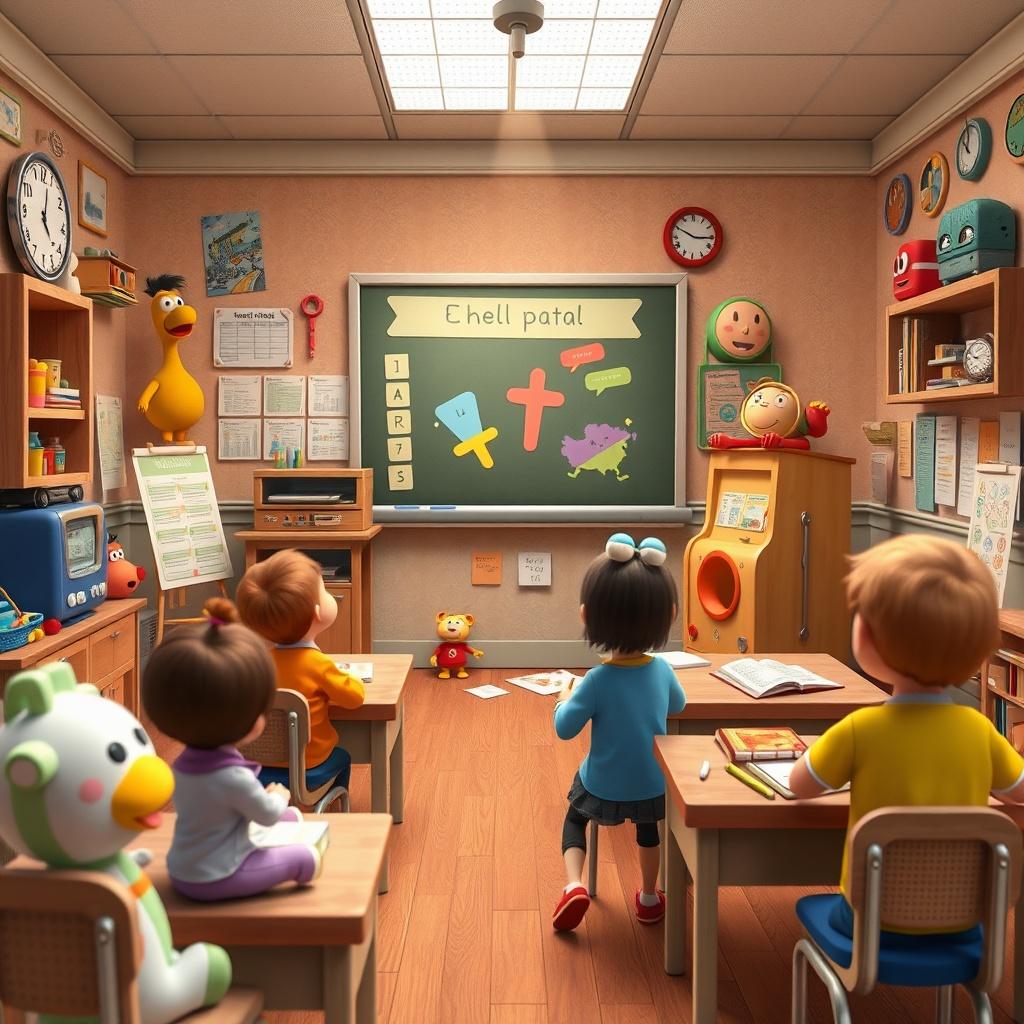
Ms. Carter stood at the front of the room, her passion for teaching evident in her animated gestures. Jake, a curious student with an inquisitive smile, was ready with his notebook open, eager to dive into the topic of the day.
"Ms. Carter, why did Toys 'R' Us fail? It seemed like such a huge company," Jake asked, his voice tinged with genuine curiosity.
"Great question, Jake. Let's explore that together," she replied, her eyes twinkling with enthusiasm.
"In its heyday, Toys 'R' Us was a pioneer in toy retail, offering an unparalleled selection. But what they gained in inventory, they lost in adaptability," Ms. Carter explained, pointing to a graph illustrating the company's peak years.
"So, what changed?" Jake asked, leaning forward with interest.
"Several factors, Jake. The rise of e-commerce giants like Amazon, shifts in consumer behavior, and a failure to innovate their business model," she continued, as images of online shopping and digital innovations filled the screen.
"Innovation is key, Jake. Companies that thrive are those that foresee changes and adapt quickly," Ms. Carter emphasized, her voice resonating with conviction.
"Could Toys 'R' Us have done something differently?" Jake pondered aloud, his pen poised over his notebook.
"Absolutely! They could have embraced online retail earlier or partnered with tech companies to enhance their customer experience," Ms. Carter suggested, her words painting a picture of a missed opportunity.
"The takeaway here is that no matter how successful you are, you must always be willing to adapt and innovate," Ms. Carter concluded, her voice inspiring the room.
"Thanks, Ms. Carter. I think I understand now," Jake said, a newfound appreciation evident in his tone.
Ms. Carter smiled warmly at her students, her heart full of hope for the future generations of thinkers and innovators.
Jake, inspired by the discussion, walked out with a spark of determination, ready to apply these lessons in his own life.