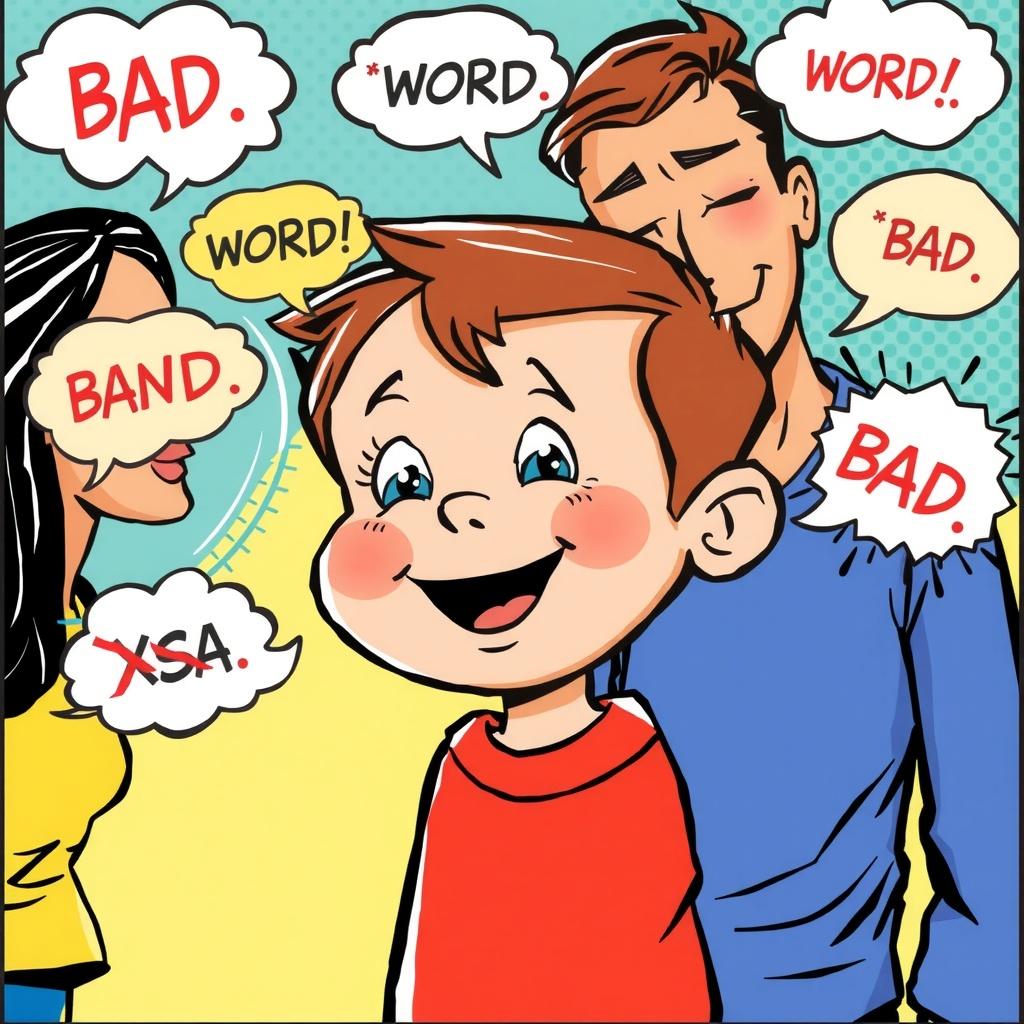
Eli, a curious five-year-old with bright eyes, repeats the new words he learned at the playground, unsure of their meaning. His mother, Maya, pauses mid-fold with a pile of laundry, her face registering surprise and concern.
"Eli, where did you hear those words?"
"Some big kids said them when their ball rolled away. Are they funny?"
Maya[/@ch_2] and Jon—Eli’s father—leaning against the counter in quiet conversation.]
"I think Eli's picking up things from the older kids. We need to talk to him, but not make him feel ashamed,"
"We should help him understand why some words aren't okay, and show him better ways to express himself,"
"Eli, sometimes people use words that can hurt others or make them feel sad. Do you know why that's not very nice?"
"No... but I don't want to hurt anyone,"
"That's wonderful, Eli. We can always use kind words to show how we feel. If you're angry or upset, you can say, 'I'm frustrated,' or 'I need help,'"
"I'm a little mad that my toy broke,"
"You did great, Eli! It's okay to feel that way and talk about it,"
"And if you ever hear a word that makes you wonder, you can ask us about it,"
Eli shares his feelings with friends, choosing words that help, not harm. Maya and Jon exchange proud smiles, watching their son grow more confident with each day.
"I helped my friend when he was sad today. I told him it's okay to feel that way,"
"That's the best thing you could have said, Eli,"
"We're so proud of you,"