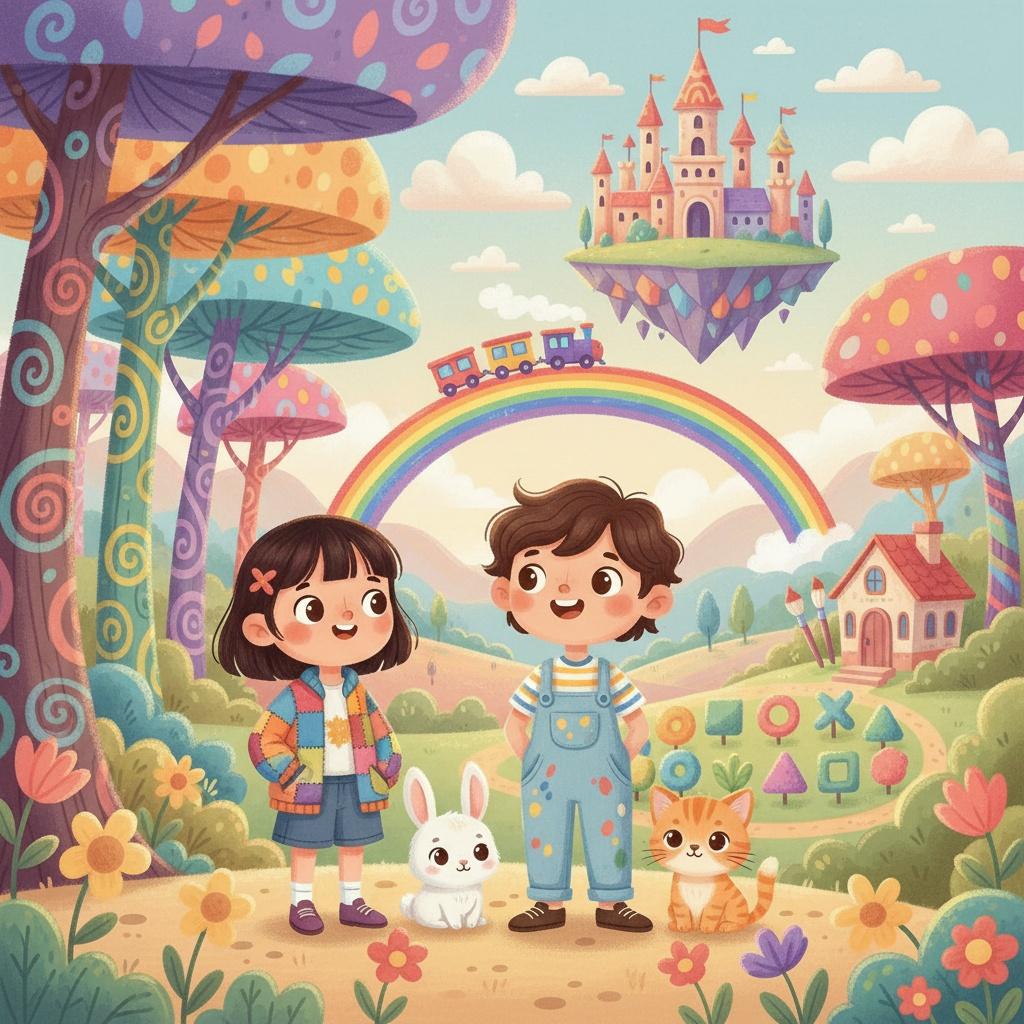
小耳朵, a five-year-old with bright eyes and a curious smile, held a brush in her hand. She was painting the colors of sounds she couldn't hear but could feel. "Red is for the barking dog," she murmured, dabbing vibrant strokes onto the canvas. She wore her hearing aids, which helped her catch glimpses of sound, yet it was through her art that she truly understood the world.
小耳朵 sat quietly, watching the lips of her classmates move, their words sometimes lost in a sea of sound. It was hard to follow, and she often felt alone. Yet, 小魚, her neighbor, always approached her with a gentle smile. 小魚 loved sharing stories of strange and wonderful things. "Let's play in the sand," she said, her hands moving in a gentle invitation.
小猴 was the most lively child in the class, always using exaggerated gestures to communicate. He made 小耳朵 laugh with his antics, using his body to tell stories she could understand. Together, 小魚, 小猴, and 小耳朵 found a language of their own, one filled with colors and movements.
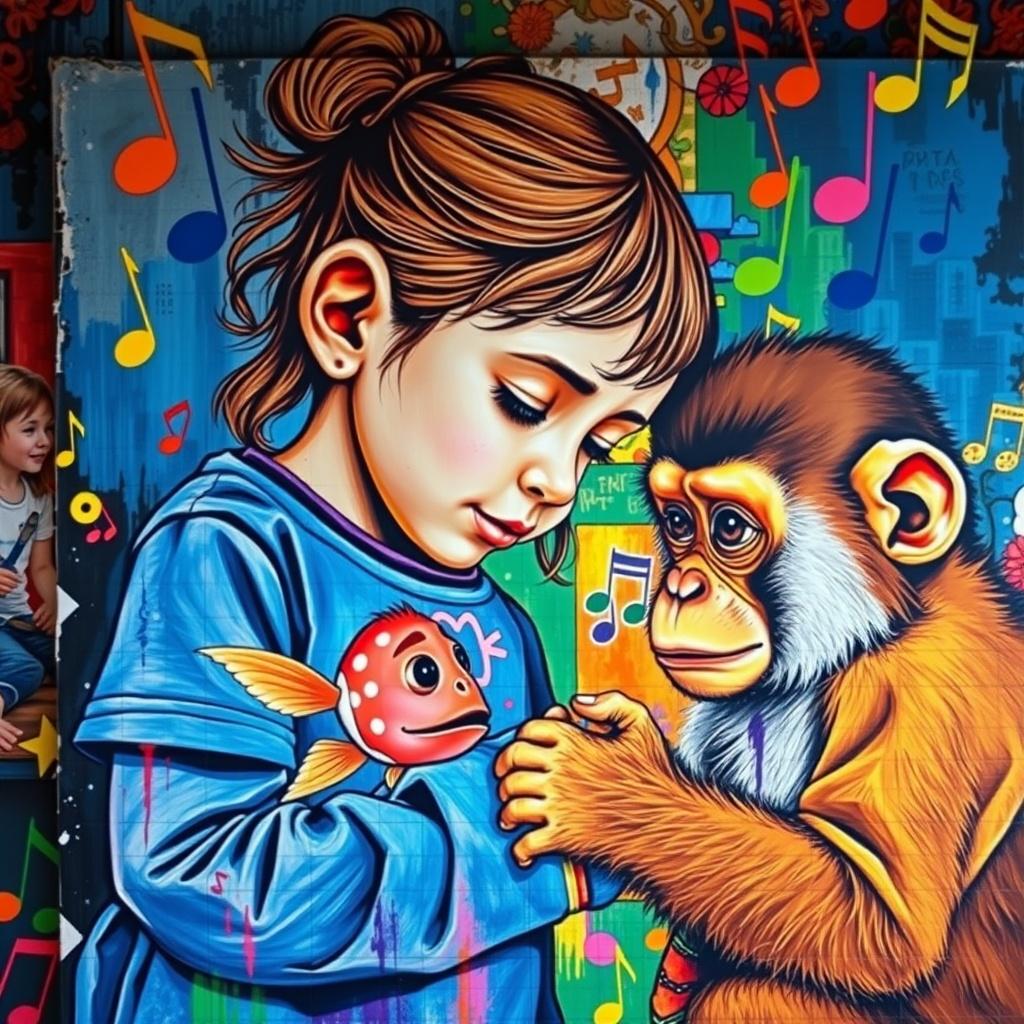
小耳朵 stood before her canvas, her brush moving with purpose. "Blue is for the soft breeze," she explained, her eyes sparkling with excitement. Each child painted their version of sound, creating a tapestry of hues and feelings. The room buzzed with creativity, a symphony of silent voices.
The other children gathered around the mural, their curiosity piqued. They began to use colors and hand gestures to communicate with 小耳朵, bridging the gap between sound and silence. 小猴[/@ch_3_d]"Let's use colors to share stories,"[/@ch_3_d] [@ch_3]he suggested, sparking a new game.
小耳朵 was no longer an observer but a vibrant part of her class. She taught them simple signs and how to listen with their hearts. The teacher spoke about how everyone is special in their own way, fostering a deeper understanding among the children. Together, they realized that through creativity and empathy, they could connect beyond words.