Long ago, people dreamed of flying like birds. On this sunny morning, a crowd gathered to watch two brothers, Orville and Wilbur Wright, who had built a strange-looking machine called the Wright Flyer. It was made of wood and cloth, and it had two wings that looked like a giant bird. The brothers were confident as they prepared for a short flight.
Orville Wright, the younger brother, climbed onto the Flyer. He started the engine, and the machine began to move, bumping along the ground. The crowd watched in awe as it lifted off the earth for the very first time. Wilbur Wright cheered as the Flyer stayed in the air for 12 seconds, marking the beginning of a new era.
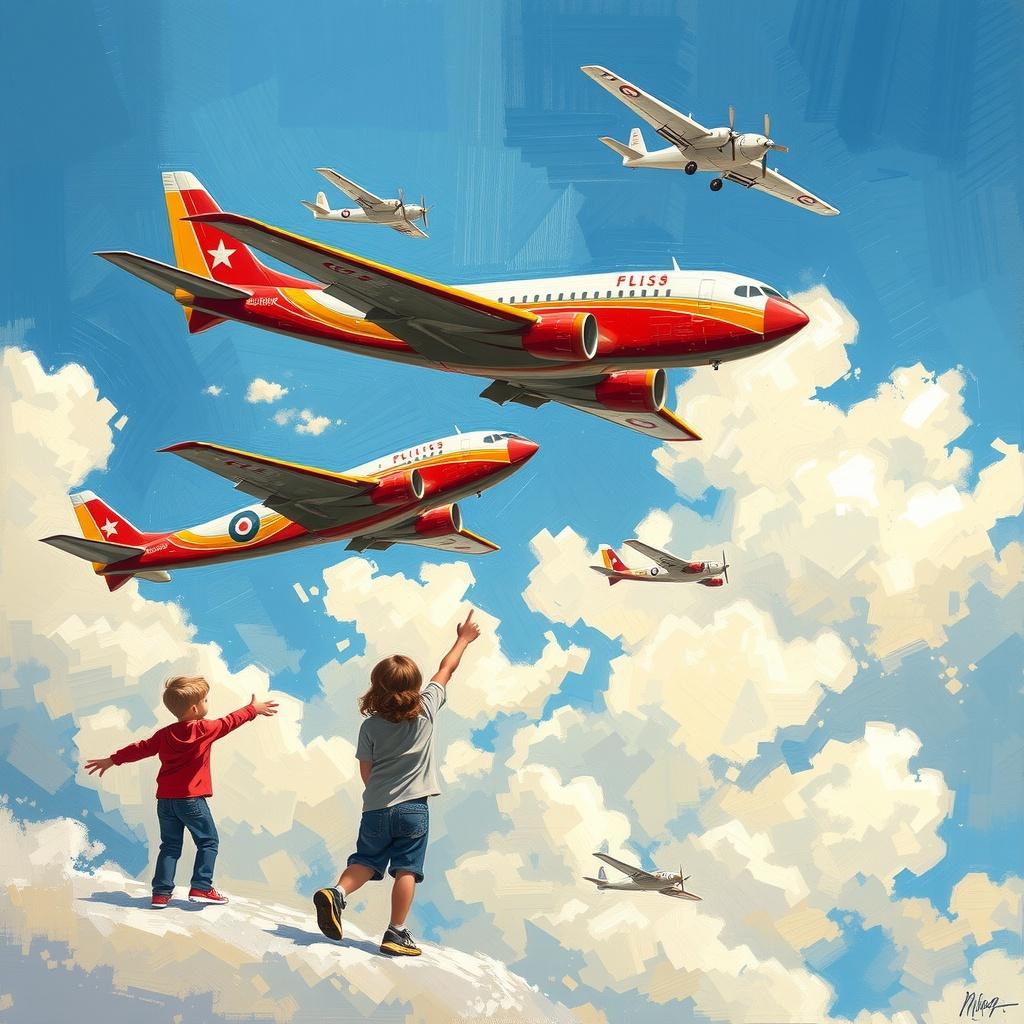
Airplanes quickly became faster and more advanced. Factories built them with strong metal and powerful engines. These new planes could fly higher and longer. People started using airplanes to travel across countries and even oceans, making the world feel smaller and more connected.
During the 1930s and 1940s, flying became glamorous. Planes were designed to be comfortable and stylish, and people dressed up for their flights. Airports were exciting places full of adventure. Flying turned into a popular way to travel, making it easier for families to visit faraway places.
Today, airplanes are a part of everyday life. They are fast, safe, and can carry hundreds of passengers at a time. Airports are like small cities, with shops, restaurants, and people from all over the world. Airplanes connect us, bringing people, cultures, and ideas together like never before.
The future of flight is bright. Scientists and engineers are working on new technologies that will make flying even more amazing. There may be planes that fly without fuel, using only the power of the sun. The dream of flight continues to inspire people to reach new heights and imagine the impossible.