In a quaint little village nestled between rolling green hills, a curious eight-year-old girl named Meera lived with her grandparents. Meera loved her grandfather’s tales about nature and her grandmother’s stories about their family’s organic farm. However, she found it hard to understand why her grandparents insisted on farming without using the shiny, colorful chemical bottles other farmers used
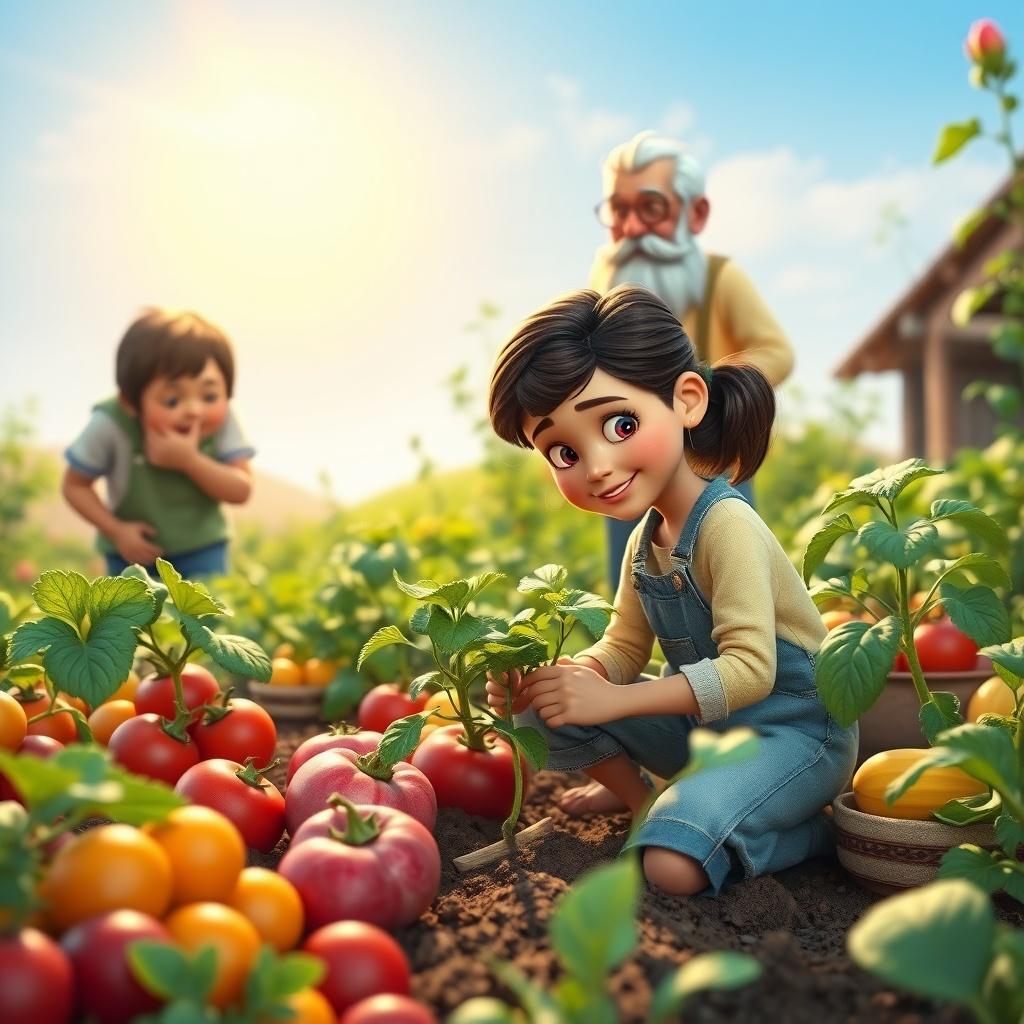
.One sunny morning, Meera sat on the porch, munching on a juicy mango her grandmother had plucked fresh from their orchard. Her best friend, a white hen named Piku, clucked around her feet. As she ate, her grandfather joined her with a warm smile."Meera," he said, "how would you like to be the little garden keeper today?"Meera's eyes sparkled. "What do I have to do?""Follow me," said her grandfather. Together, they walked to a small patch of earth in the backyard. The soil was soft and rich, alive with wiggling earthworms.“This is your patch,” he said. “We'll plant some seeds here today, but first, we must prepare the soil.”
Meera nodded eagerly and got to work with her tiny spade. They mixed compost, a dark, crumbly mixture of kitchen scraps and dried leaves, into the soil. Her grandfather explained, “This compost feeds the soil, just like healthy food nourishes us.”As the days passed, Meera watered her little patch diligently. She was fascinated by the tiny green shoots that began to peek through the soil. She watched them grow taller and stronger, her curiosity blossoming alongside them.One day, as they worked together, Meera asked, “Grandpa, why don’t we use those big bottles like Mr. Sharma does? His vegetables look so big and shiny.”Her grandfather chuckled. “Ah, they might look good, but do you know what those chemicals do to the soil and the insects?”Meera shook her head.He explained, “Those chemicals can harm the soil and kill helpful creatures like earthworms and bees. Without them, the soil loses its strength, and the crops stop growing well. That’s why we use organic methods. They keep the soil alive and healthy.”
A week later, Meera’s garden produced its first batch of cherry tomatoes. They were small but bright red and bursting with flavor. Meera beamed with pride as she presented them to her grandmother, who made a delicious salad
.Later that evening, Meera overheard a conversation between her grandparents and Mr. Sharma. He had come to seek advice because his farm’s soil had become hard and dry.“I didn’t know chemicals could do this,” Mr. Sharma admitted. “What should I do?”Grandfather suggested, “Start with composting and planting cover crops. Nature knows how to heal itself if we give it a chance.”
Meera stepped forward, holding one of her cherry tomatoes. “And don’t forget to care for the soil like it’s your best friend,” she said. “That’s what Grandpa taught me.”Mr. Sharma smiled at her wisdom, and Meera felt a warm glow inside. She realized she wasn’t just a little garden keeper—she was a protector of nature, helping her community rediscover the magic of organic farming.