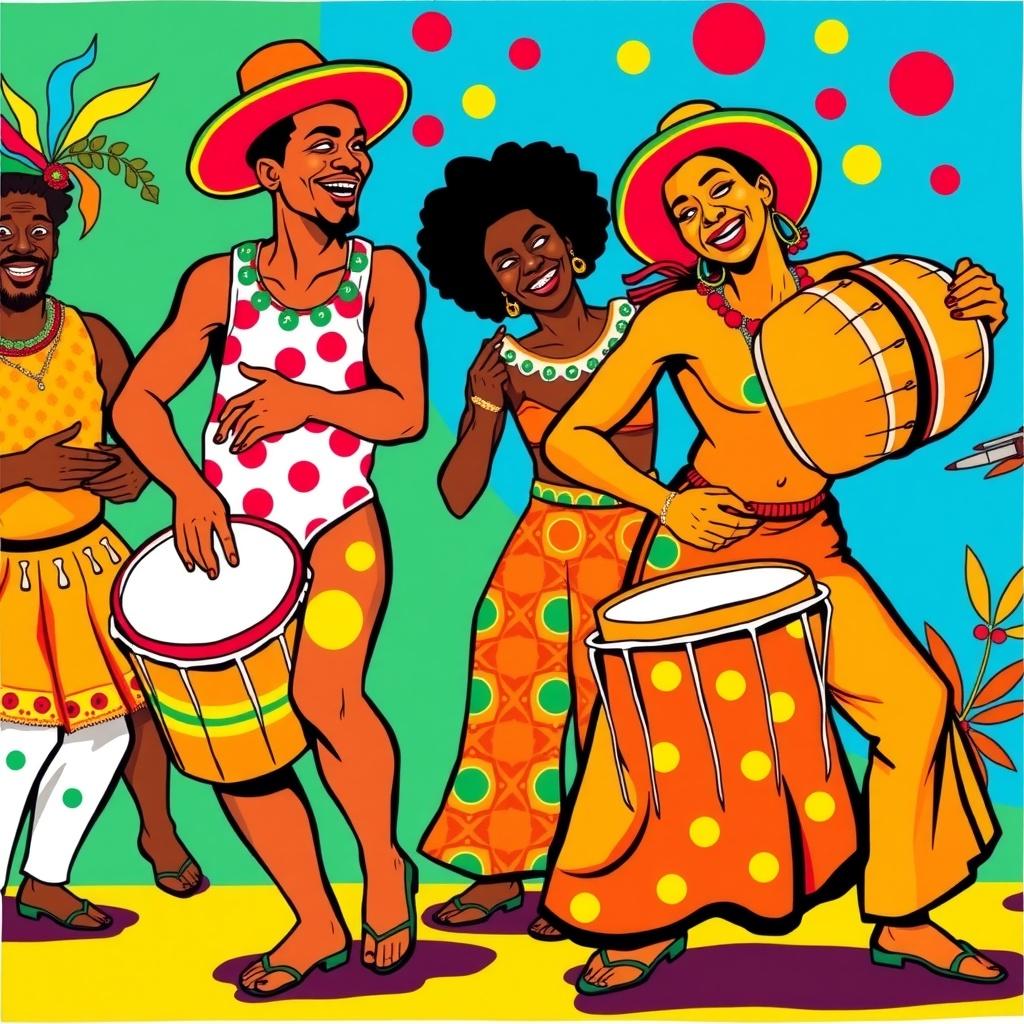
The villagers of Vila Alegre gathered in the central square, where the vibrant banners danced in the gentle wind. The sun bathed the village in a warm glow, casting playful shadows on the cobblestone paths. Children giggled as they chased each other around the square, their laughter blending with the rhythmic beating of drums. The elders, with smiles etched upon their faces, began to prepare for the jongo celebration. It was a day of remembrance and joy, where stories of the past and hopes for the future would be shared through dance and song.
As the drums began to beat faster, the villagers formed a circle, their movements fluid and graceful. The women wore skirts of vivid colors that swirled around them like a kaleidoscope, while the men clapped and sang, their voices resonating with the spirit of jongo. The children, eager to join, mimicked the steps of their elders, their feet tapping in time with the music. The entire square seemed to pulse with life, the sound of the drums echoing off the surrounding buildings and reaching up to the cloudless sky.
Elder João, a respected figure in the community, stepped into the middle of the circle. His voice, rich and melodious, carried the weight of history as he began to speak. "Jongo is more than just a dance," he said, "It is a testament to our ancestors' resilience and creativity. In the fields, where they toiled under the sun, they found solace in these rhythms, and through them, they communicated, resisted, and celebrated life." The crowd listened intently, their expressions a mix of reverence and inspiration.
As the sun dipped lower in the sky, painting the square in hues of gold and amber, the villagers reflected on the elder's words. They understood that jongo was a bridge between the past and the present, a living tradition that carried the voices of those who came before. The children, now tired from dancing, sat with their parents, their eyes wide with wonder as they absorbed the stories of courage and unity. The drums continued their gentle beat, a heartbeat of the community that would never fade.
With the arrival of twilight, the village square transformed into a scene of twinkling lights and laughter. Torches were lit, casting a warm glow on the faces of the dancers who continued to move to the rhythm of jongo. The stars above seemed to dance in harmony, reflecting the joy and unity that filled the hearts of everyone present. Elder João watched with pride as the tradition lived on, knowing that the spirit of jongo would guide future generations.
As the night deepened, the celebration gradually came to a close. The villagers embraced each other, their spirits lifted by the shared experience. The children, now sleepy, were carried home by their parents, their heads resting on shoulders. Elder João stood at the edge of the square, watching the community disperse. The echoes of the drums lingered in the air, a reminder of the day's joy and the enduring strength of their heritage. As the last lanterns were extinguished, the village of Vila Alegre slept, cradled by the gentle rhythm of jongo.