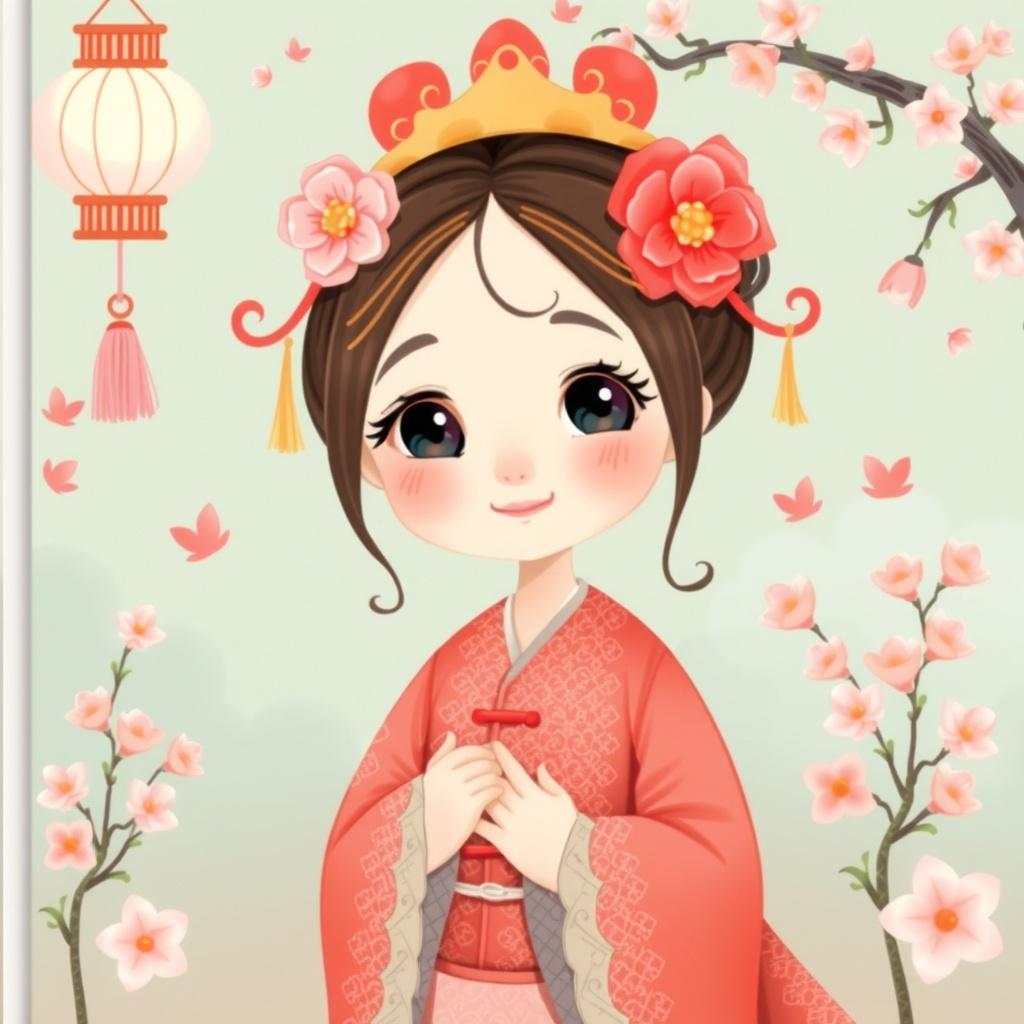
Mei Lin sits by a stone table, her long black hair shining in the golden light as she prepares tea with careful, graceful motions. The delicate porcelain cups and the lacquered tea tray reflect her appreciation for Chinese artistry. "Every morning, I honor my ancestors by beginning the day with tea. Each movement is a gesture of respect and a reminder of our family’s history."
Mei Lin joins her grandmother, both dressed in flowing qipaos embroidered with gold thread. Together they bow before the ancestral tablets, their faces solemn yet peaceful. "Grandmother, why do we always bow three times?" Her grandmother smiles, her eyes crinkling. Grandmother Lian"Three bows represent heaven, earth, and humanity—our respect for all that connects us."
Mei Lin dips her brush into black ink, her hand steady as she traces elegant characters onto paper. Each stroke is deliberate, a dance of tradition and self-expression. "Writing in calligraphy is a way to speak to our past. Every character has its own spirit." Her friend, Li Wei, watches in awe. "Your writing is so graceful, Mei Lin. Can you teach me the meaning behind these words?"
Mei Lin folds dumplings with her younger brother, explaining the symbolism behind each ingredient. "We put coins inside some dumplings for luck, and long noodles for a long life. Food is more than nourishment—it’s a way to share blessings." Her brother grins as he tries to mimic her technique.
Mei Lin and her family release lanterns into the sky, watching as their wishes float upward. The scene is alive with joy, tradition, and hope. "As the lanterns rise, so do our dreams. This festival reminds us to cherish the light within and share it with others."
Mei Lin thinks about the day—its rituals, flavors, and laughter. She feels deeply connected to her culture and proud of the traditions she shares. "My heritage is a gift, woven from the threads of love and memory. I will carry it forward, teaching others its beauty."