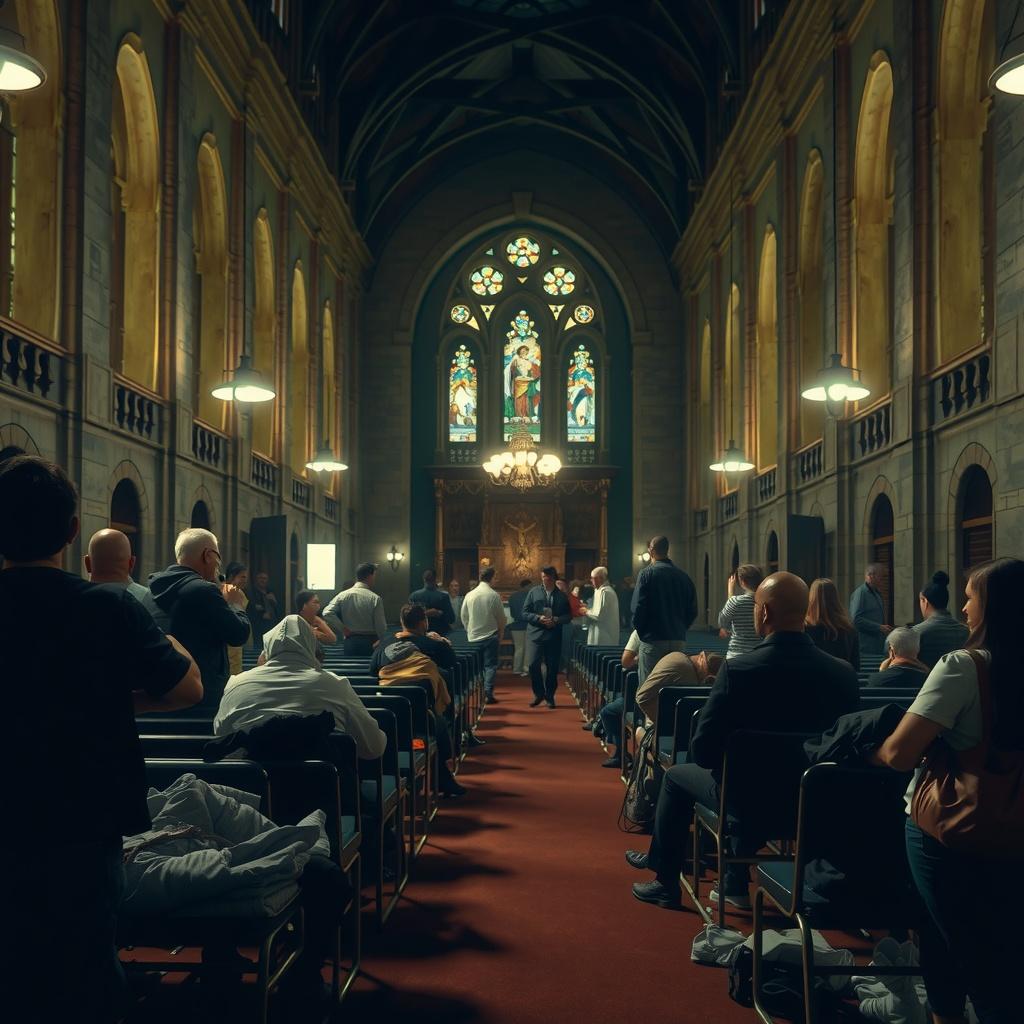
The silence is broken only by the rumble of hungry bellies echoing from the alleyways. The churches, once sanctuaries of peace, now serve as looming reminders of comfort withheld. Outside, homeless men and women shift in their sleep, restless on the unforgiving concrete, while inside, the sacred halls await their new purpose.
A line forms at the entrance, some clutching sleep-in tickets, others only hope. The charity’s staff, wearied by long hours and changing expectations, guide the arrivals with forced smiles. Arguments flare near the altar as church leaders and charity workers debate the altered contract—now the wealthy must surrender their tickets to those truly in need.
Father Thomas, the church’s reverend, tall and solemn, surveys the scene.
Maria, a tired charity worker, her hands raw from work, stands beside him.
"We promised shelter, but now we must choose who is worthy,"
"All are worthy, Father. If only our patrons saw it that way."
The judge bows his head and prays for clarity, echoing the church’s motto: ‘Open to all.’ Papers shuffle, voices rise, and the fate of the sleep-in hangs in the balance. The charity’s bold move—shifting from fundraiser to true shelter—faces scrutiny, but the judge’s gaze is unwavering.
The vast interior buzzes nightly with life: laughter, whispered stories, the shuffle of feet on stone. The invisible divide between rich and poor narrows as cots line the aisles, and the church transforms from fundraiser venue to living sanctuary. Maria wipes sweat from her brow, watching a patron share bread with a guest, and for a moment, the spirit of charity feels real.
Father Thomas stands at the door, greeting each guest with gentle words. Maria and the staff ready hot tea and clean sheets, determined to keep the promise. The city watches, some skeptical, some inspired, as the church sleep-in becomes a silent revolution, one bed at a time.