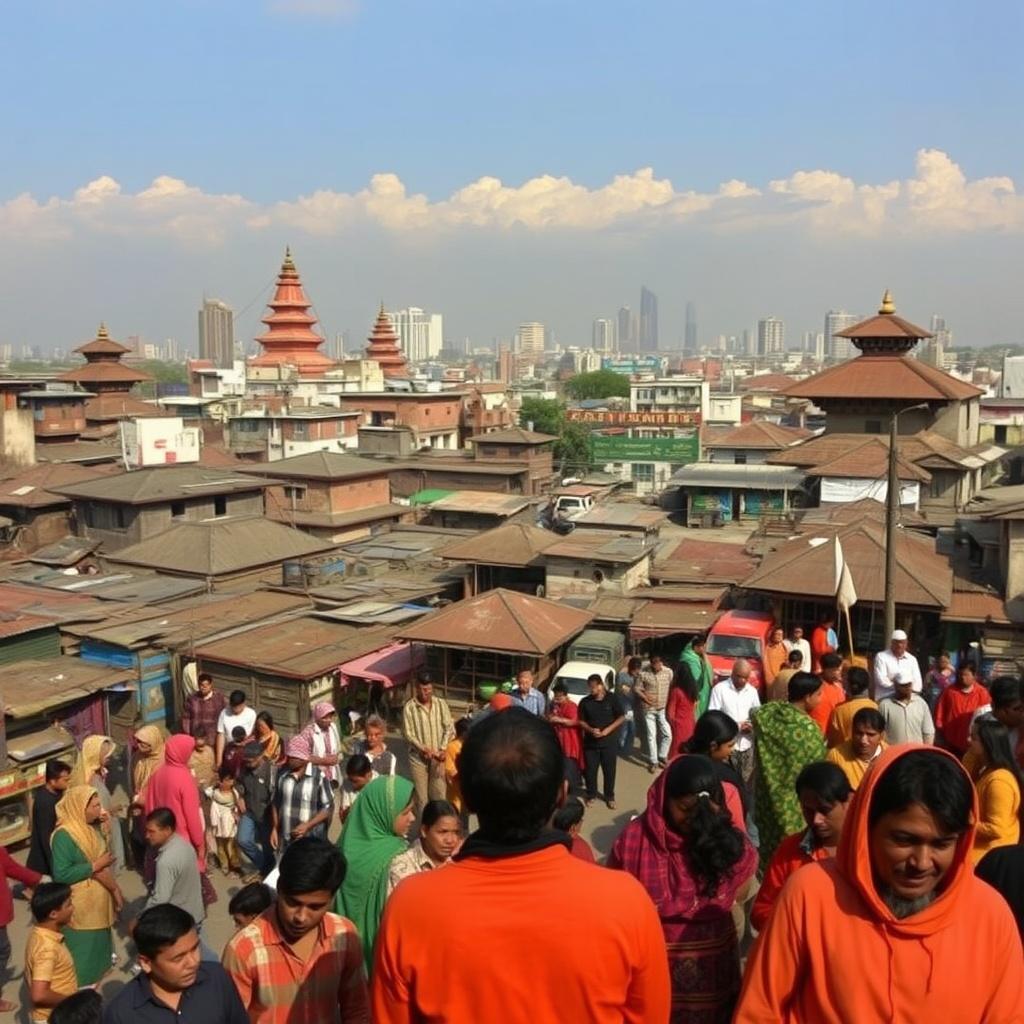
Balen Shah sat in his office, the hum of Kathmandu's vibrant streets filtering through the windows. His desk was a sea of maps and documents, and a large vision board hung on the wall, filled with ambitious plans for the city's future. The energy of the city contrasted with the calm focus in Balen's eyes as he contemplated the path ahead. "In the heart of this ancient city, we can build a future that honors our past," he often mused to himself.
The memories of his campaign surged back—open fields filled with hopeful faces. Balen stood before the crowd, a young leader with a vision that resonated with the youth, the environmentalists, and those frustrated by the city's inefficiencies. "Our city deserves better roads, cleaner air, and opportunities for every citizen. Together, we can make Kathmandu a city of dreams!" His words ignited a spark, and the crowd's cheers echoed his resolve.
Back in the present, Balen surveyed the sprawling landfill site, the air thick with the scent of neglect. Concerned locals gathered around him, sharing stories of their struggles with inadequate waste management. A resident challenged him, "Mayor Shah, we’ve heard promises before. What makes you different?" Balen met their gaze with determination. "I can’t promise overnight change, but I’ll promise you this: I will not rest until we see improvement, no matter how small, every single day." His commitment sparked a glimmer of hope in their eyes.
The council chambers buzzed with tension as Balen faced resistance from entrenched political interests. Opposition Leader stood defiantly. "Your ideas are impractical and disruptive!" But Balen remained calm, his voice unwavering. "Impractical is allowing our city to decay while we debate endlessly. Change is disruptive, but it is necessary." The room fell silent, the weight of his words hanging in the air.
A sudden flood devastated a low-lying area of Kathmandu, transforming the streets into rivers. Balen was on the front lines, coordinating relief efforts with tireless energy. He inspired citizens to volunteer, and together they cleaned streets, distributed food, and built temporary shelters. The crisis reignited the community spirit, weaving a fabric of unity and resilience. The narrator reflected, "In times of crisis, true leaders rise. Balen's commitment brought people together, reminding everyone of the strength in unity."
The city's landscape began to transform—streets cleaner, traffic flowing more smoothly, parks emerging as green oases. At the inauguration of a solar-powered waste processing plant, Balen stood before the crowd, pride shining in his eyes. "This is not my achievement; it’s ours. A city's heart is its people, and together we are building a better Kathmandu." The applause from the citizens was a symphony of shared success.
Late at night, Balen found solace on a rooftop, his guitar in hand, the city lights twinkling like stars. As he strummed gently, a mix of pride and determination filled his heart. "The road is long, but every step counts," he whispered to himself, the melody carrying his dreams over the sleeping city.
[Final Scene: Hope for the Future:Panoramic view of Kathmandu, citizens inspired, Balen among the people]
The camera panned over Kathmandu, capturing its blend of ancient temples and modern buildings, bustling markets, and serene green spaces. Inspired by Balen's leadership, the citizens no longer waited for change—they became the change. Walking through a crowded street, Balen shook hands with the citizens who now shared his vision. His vision board hung proudly on the office wall, reading: "Kathmandu: A City for Everyone."