The camera pans over a collage of vibrant images: diverse faces, communities bustling with life, and historical snapshots of racial inequality. The atmosphere is one of contrast—joyful diversity against the somber backdrop of history's injustices.
A narrator's voice breaks through, resonating with authority and empathy. "O racismo é uma das mais antigas e persistentes formas de opressão. Ele não apenas exclui, mas também limita oportunidades e silencia vozes. Hoje, vamos explorar como ele se manifesta e como podemos combatê-lo."
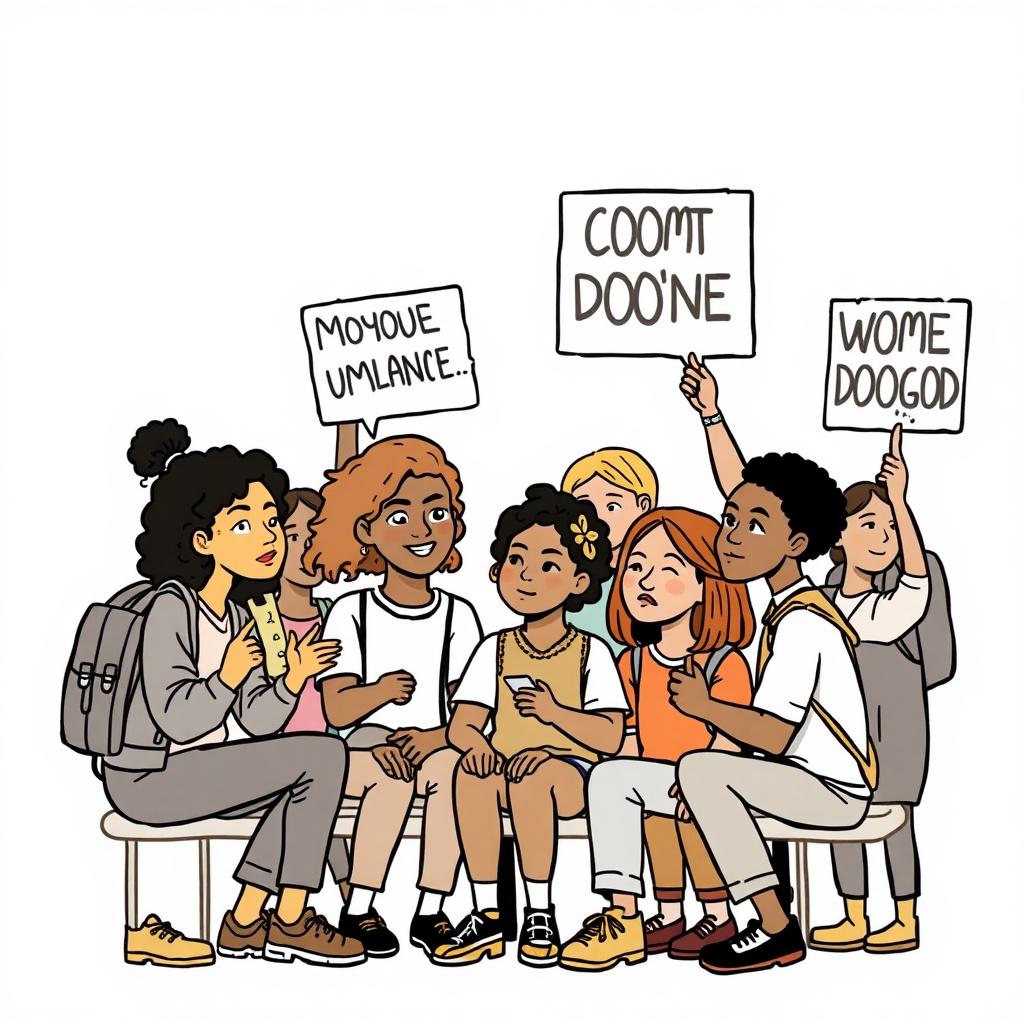
Inside a modern classroom filled with eager students, Lúcia, a passionate young activist with an air of determination, stands ready to lead her peers through a journey of awareness. Posters depicting anti-racism messages adorn the walls, creating a backdrop of urgency and purpose.
"Racismo não é apenas um ato individual de preconceito," Lúcia begins, her voice clear and confident. "É um sistema que afeta nosso cotidiano. Vamos discutir exemplos concretos e entender o que podemos fazer."
The scene transitions to a montage of historical footage: images of slavery, colonialism, and the civil rights movements led by figures like Martin Luther King Jr. and Zumbi dos Palmares. The air is thick with the echoes of chants and speeches, capturing the relentless fight for equality.
As the footage plays, Lúcia narrates over it. "Embora tenhamos avançado, o passado continua a moldar nossa realidade atual," she explains, drawing connections between history and the systemic issues that persist today.
The focus shifts to real-world examples of structural racism. Images flash by: a courtroom, a hospital, a boardroom—each depicting the stark underrepresentation and discrimination faced by people of color.
"O racismo está enraizado nas instituições," Lúcia asserts, pointing to a graph illustrating disparities in police violence and leadership roles. "Precisamos reconhecer essas desigualdades para começar a mudá-las."
A series of interviews unfold, each person sharing their personal experiences with racism. Their voices are raw and compelling, each story a powerful testament to the impact of prejudice.
Lúcia watches intently, her eyes reflecting empathy and resolve. "Essas histórias são um chamado à ação," she says softly, understanding the depth of pain and the courage it takes to share.
The final scene showcases initiatives and solutions. Students brainstorm ideas for anti-racist education, while community leaders discuss inclusive policies. The atmosphere is one of hope and collaborative effort.
"Cada um de nós tem um papel," Lúcia concludes, her voice inspiring and strong. "Reconhecer privilégios, denunciar injustiças e construir um futuro igualitário. Juntos, podemos fazer a diferença."