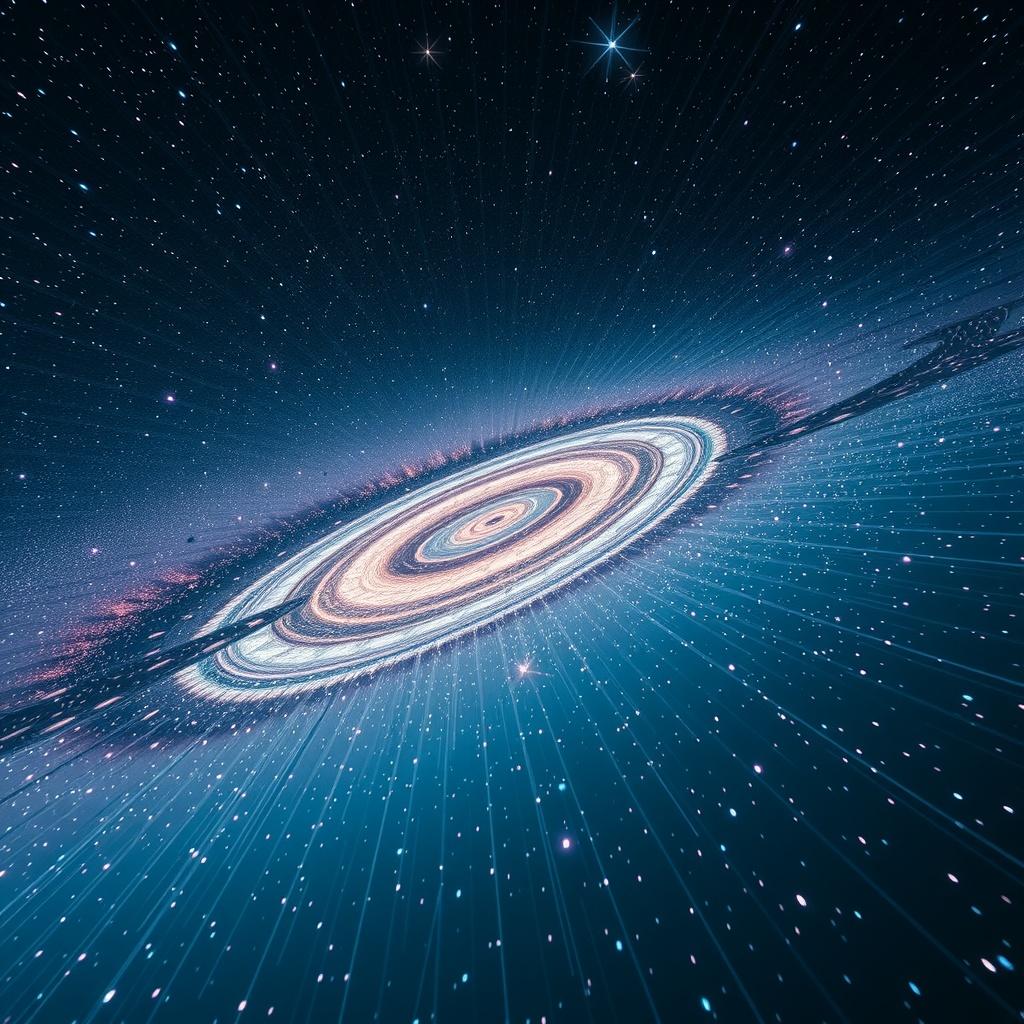
The vastness of the universe is breathtaking, with galaxies like islands adrift in a cosmic ocean. As your voyage begins, you peer through the viewport at a tapestry of glowing clouds and bright pinpricks, searching for the path home. Somewhere among these, your destination—Earth—awaits, hidden in the spiral arms of the Milky Way. Each star and swirl hints at a story, but only one leads you back to the familiar blue planet.
Your first landmark is the Local Group—a gathering of over 30 galaxies spread across 10 million light-years. The Milky Way and Andromeda (M31) dominate this galactic neighborhood, each surrounded by smaller galaxies like satellites. To find Earth, steer away from the imposing Andromeda and aim for the spiral jewel: the Milky Way. Its spiral arms, glowing faintly, spin clockwise from a bright, star-studded center.
The Milky Way is a sprawling spiral galaxy, its arms unfurling like ribbons of light. Two prominent arms—the Perseus and Scutum-Centaurus—frame the galaxy, boldly etched against the night. But your true path lies elsewhere: seek the more modest Orion Arm, wedged between the Perseus and Sagittarius arms. This “suburbia” is less crowded, a quieter lane beyond the galactic bustle.
Guide your vessel into the Orion Arm, also called the Orion-Cygnus or Local Arm. Here, about 25,000 light-years from the galaxy’s center, the stars are familiar but not overwhelming. This region is a spur, a partial arm between larger neighbors, home to the Local Bubble—a relatively empty zone shaped by ancient supernovae. You’re closing in on the Sun’s neighborhood, where a handful of stars mark the way.
As you drift through the Local Bubble, watch for the guiding stars: Proxima Centauri, the closest at just over four light-years away, is a dim red torch. Alpha Centauri A and B shimmer together, marking the gate to the Solar System. Barnard’s Star, Luhman 16, Wolf 359, Lalande 21185, and WISE 0855−0714 form a cosmic signpost. Follow their faint but steady glow, spiraling gently in the direction of the Sun.
Now the most familiar star, the Sun, calls you home. The solar system orbits the galaxy’s center, racing around in 240 million years per lap—a tiny speck in a cosmic clock. As you near, slow your approach; the pace of one Earth year per orbit is the local speed limit. Beyond the gold glow of the Sun, Earth awaits—a blue marble adrift in the dark, ready to welcome you back.
Your journey concludes as Earth comes into view—a vibrant oasis amid the cosmic sea. From here, you see not just a planet but the intricate map that led you home: the Local Group, the spiral arms, the Orion Spur, and the guiding stars. Every return is a rediscovery, a reminder that even in the vastest universe, there are always paths that lead you back to where you belong.