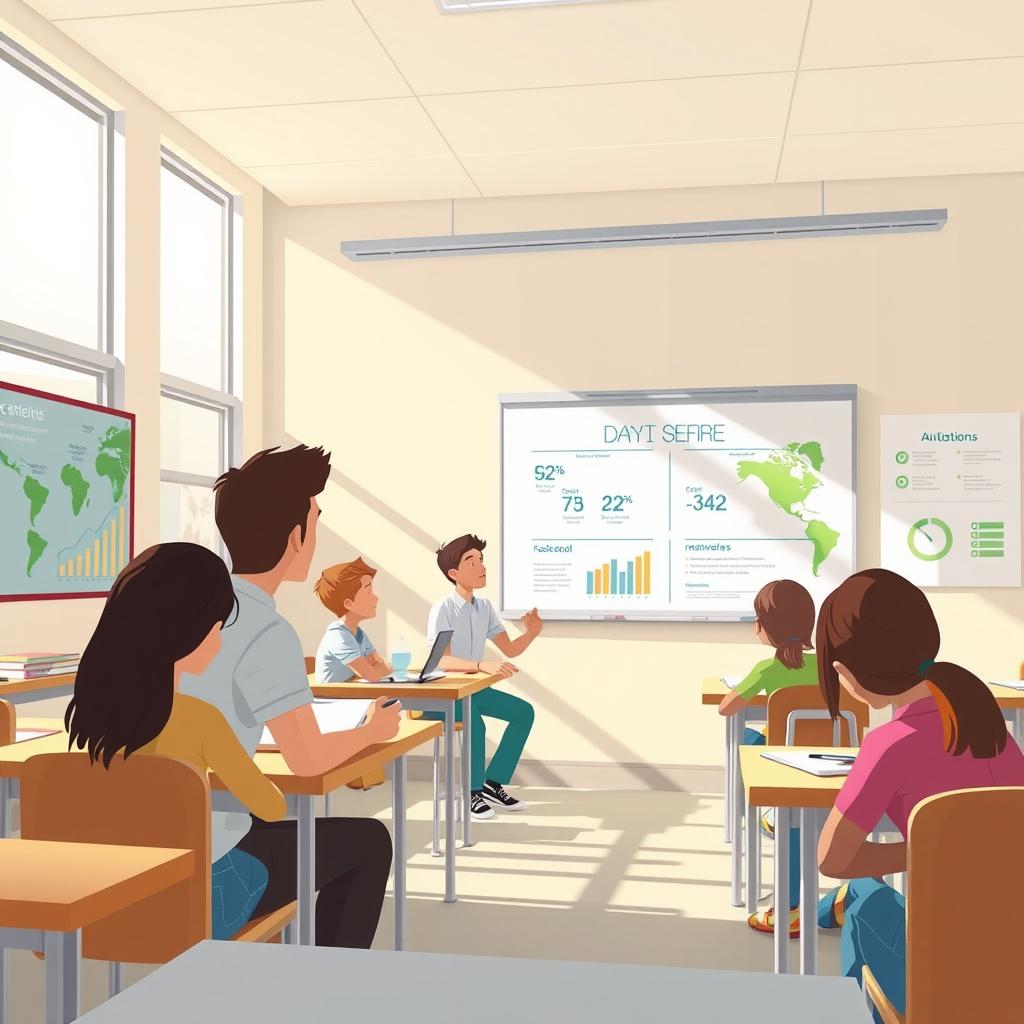
Elif adjusted her glasses, flipping through her notebook eagerly. The classroom was abuzz with excitement as the students knew a lively debate awaited them.
"Today, we're diving into the effects of heating fuels on both humans and the environment," their teacher announced, setting the stage for the day's discussion.
Mert raised his hand, pointing to a chart depicting various fuel types. "So, we have wood stoves, natural gas, and even solar heating," he remarked, jotting them down in neat columns.
"Let's focus on wood and natural gas," suggested Elif, her voice filled with determination. "We should explore their impact on emissions and safety."
Mert frowned at his laptop screen, reading aloud. "Did you know that improper installation of gas systems can lead to leaks and even poisoning?" His voice carried a note of concern.
"And wood stoves, while traditional, release significant amounts of carbon into the atmosphere," Elif added, highlighting a graph in her book.
Elif leaned over to Mert, whispering, "We need to emphasize the economic and environmental costs in our arguments."
"Agreed. Let's ensure we highlight the long-term impacts on our futures," Mert replied, nodding thoughtfully.
Elif stood up, her voice clear and confident. "While natural gas is efficient, the risk of leaks and its contribution to greenhouse gases cannot be ignored," she argued.
Mert countered, "But wood stoves are no better, releasing harmful smoke and depleting natural resources faster."
Elif glanced at her peers, a newfound awareness in her eyes. "It's clear our families' choices in heating can shape not just our environment but our very future," she concluded, her voice tinged with urgency.
The classroom buzzed with thoughtful discussions as the students realized the importance of their choices, not only academically but personally, as they considered the implications for their families and the world beyond.