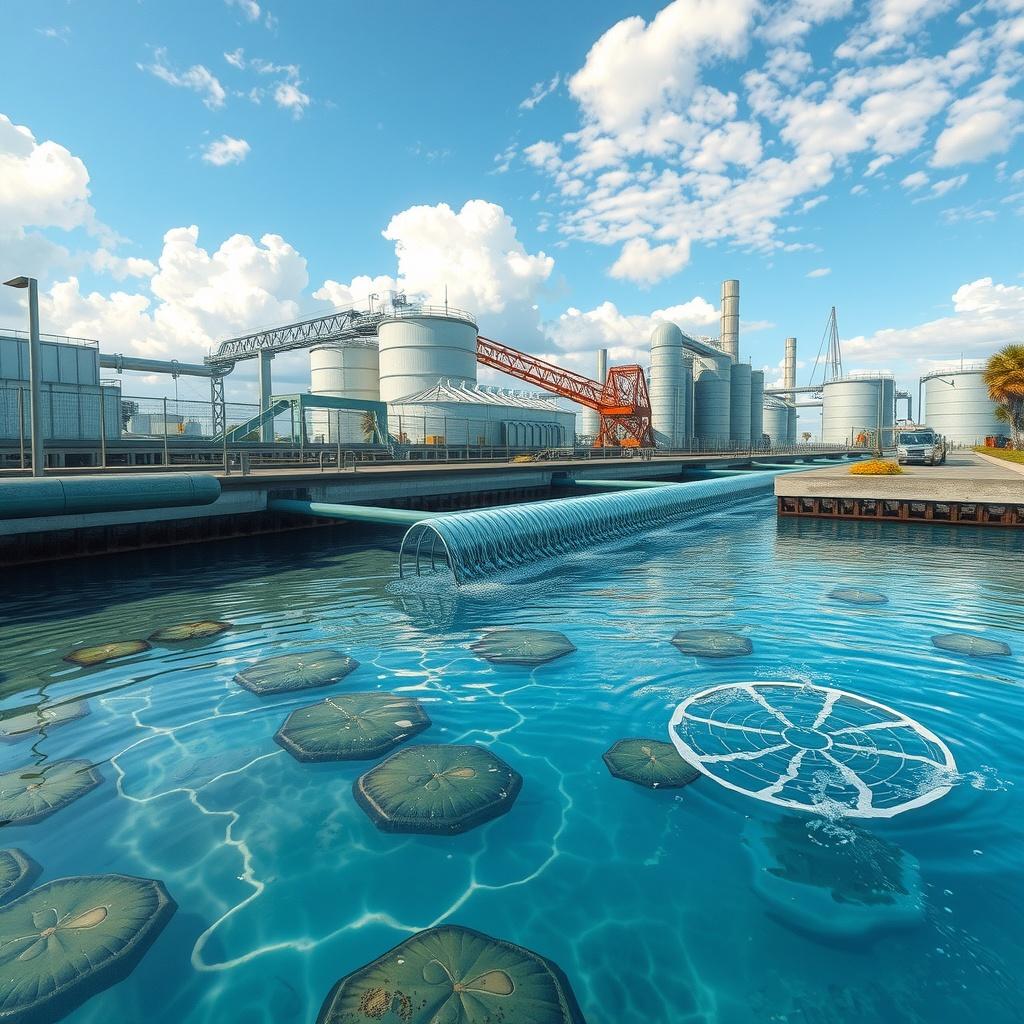
Beneath the city, a hidden river begins its journey—this is wastewater, the murky mixture of water and contaminants that flows away after use. It’s filled with soap suds, food scraps, oils, chemicals, and countless tiny particles invisible to the naked eye. As it rushes through dark tunnels, the city above remains oblivious to the secret adventure unfolding below.
At the plant’s entrance, wastewater streams in, swirling with debris and litter. Here, the first step awaits: large screens and filters stand ready to catch plastic wrappers, leaves, and odd bits of trash. The air is damp, heavy with the scent of earth and machinery, as workers in reflective vests monitor the incoming flow.
As the water circles, gravity works its magic. Sand, grit, and larger solids fall to the bottom, forming a thick sludge, while lighter oils and greases float to the top. Skimmers glide across the tank, sweeping away these floating contaminants, leaving the water a little cleaner than before.
In these pools, helpful bacteria feast on the remaining waste, breaking down harmful substances into harmless ones. This biological ballet continues for hours, as unseen armies of microbes transform dirty water into something almost pure. The process is slow, but each moment brings the water closer to clarity.
Here, the water undergoes one last treatment—disinfection. Chlorine or ultraviolet light is used to kill any remaining germs, ensuring the water is safe and clean. Only when every test is passed does the water earn its freedom, ready to return to rivers, lakes, or even back to the city.
The city sleeps peacefully, unaware of the intricate dance happening beneath its streets. Wastewater’s journey has ended, transformed from polluted runoff to pure, life-giving water—ready to begin the cycle anew with the dawn.