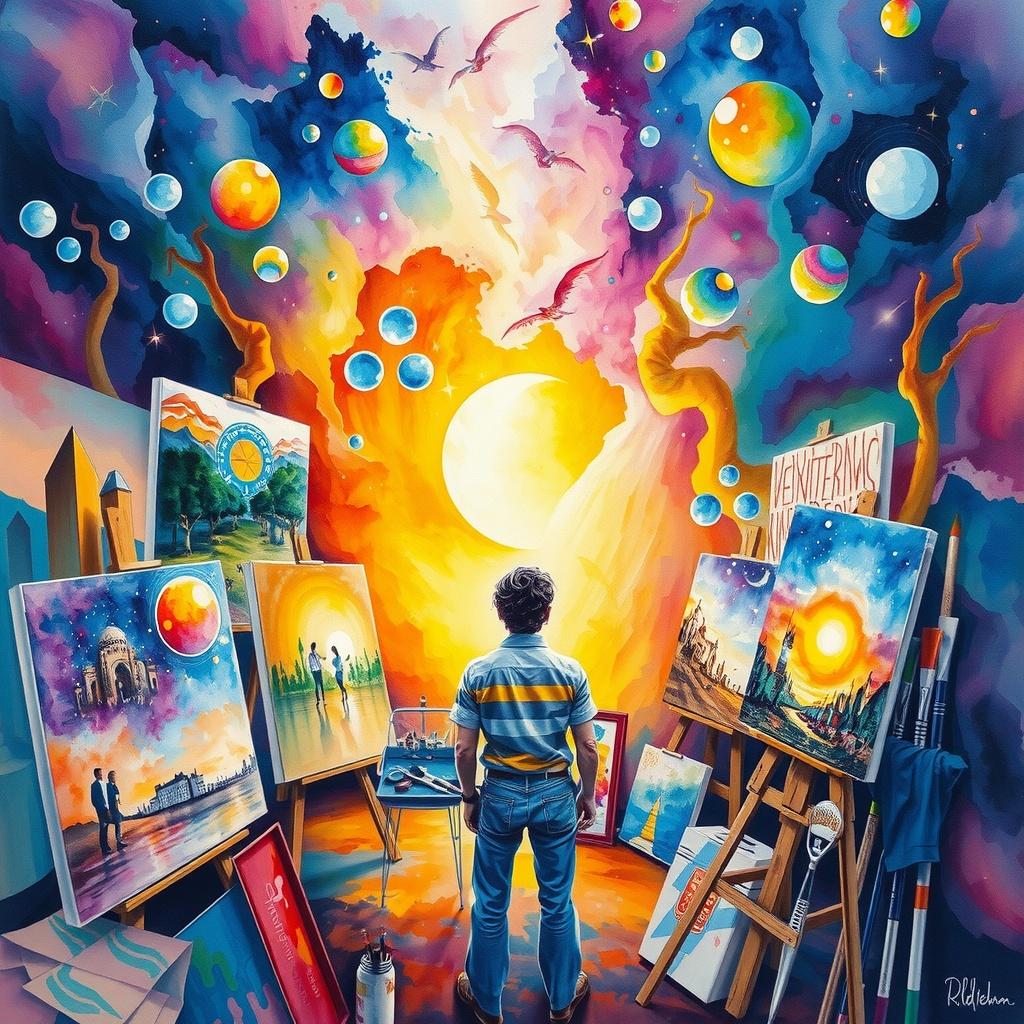
Elias Moreau, a wiry man in his thirties with tousled hair and paint-stained hands, sits hunched over a blank canvas. The city hums quietly outside his window, but inside, time feels suspended. He dips his brush in cerulean blue, unaware that this morning’s inspiration will mark the start of something extraordinary.
Elias studies his work, a strange sense of déjà vu prickling at his skin. He shrugs it off, cleaning his brushes, but as he glances out of his window, he freezes. In the square below, a boy releases a red balloon, and a sudden gust sends it spiraling—exactly as he painted, the balloon snags in the statue’s hand.
Elias flips through his old works, his heart pounding as he recalls the news stories and city events each painting eerily predicted. "Is it just coincidence, or am I painting the future?" He sinks into his chair, fear and fascination warring in his chest.
Elias finishes, then paces restlessly. He can’t sleep, anxiety gnawing at him. At dawn, he hurries to the painted alley, heart racing as he finds the lamp post upright and no cat in sight—yet.
"If I paint disasters, will they happen? If I paint hope, can I create it?" he whispers into the rain, trembling. The responsibility weighs on him, heavier than any canvas.
Elias closes his eyes, recalling the joy on the boy’s face with the red balloon, the startled safety of the alley cat. He breathes deeply, then begins to paint—not what he fears, but what he hopes for: kindness, laughter, resilience. The future, it seems, is his to shape—one brushstroke at a time.