In the heart of the vibrant market, Dr. Aria Patel marveled at the array of artifacts. The air was rich with the scent of spices and the sound of bartering, but her focus was on a singular piece—a 3,600-year-old scroll known as the Edwin Smith Papyrus.
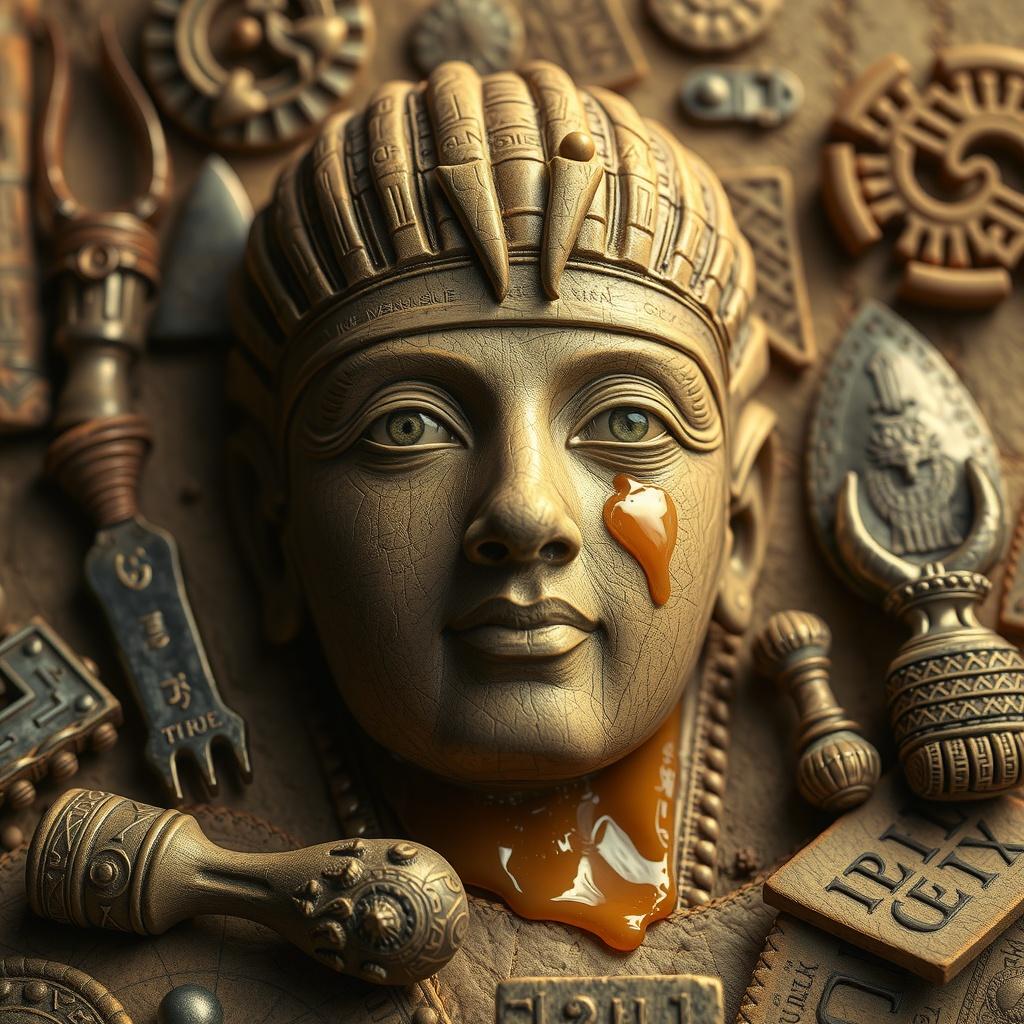
Dr. Aria Patel leaned closer to the papyrus, her eyes tracing the meticulous symbols that chronicled not just history, but a masterclass in ancient medicine. "It's astonishing how advanced they were," she mused, noting the innovative use of honey and moldy bread as natural antibiotics.
Professor Alan Hughes, a seasoned archaeologist, joined her. "Can you believe their treatments can kill antibiotic-resistant bacteria?" he asked, his voice tinged with admiration. Together, they examined CT scans revealing the shocking preservation techniques used by the ancients, akin to modern chemistry.
Dr. Emily Carter, a biomechanics expert, joined their conversation, fascinated by the ergonomic designs of prosthetic toes found on mummies. "These were not mere ceremonial props," she explained, "but functional innovations that predate our understanding by millennia."
Dr. Aria Patel stood in awe as she watched the team uncover hydraulic sand ramps, the secret behind moving massive stones without wheels. "The Great Pyramid's alignment to true north is no accident," she said, her voice filled with wonder at the stone-age astrophysics involved.
As the sun set, casting a warm glow over the Nile, Dr. Aria Patel reflected on the day's revelations. "It's not just history we're uncovering," Professor Hughes remarked, "but the genius of a civilization that continues to inspire us today."