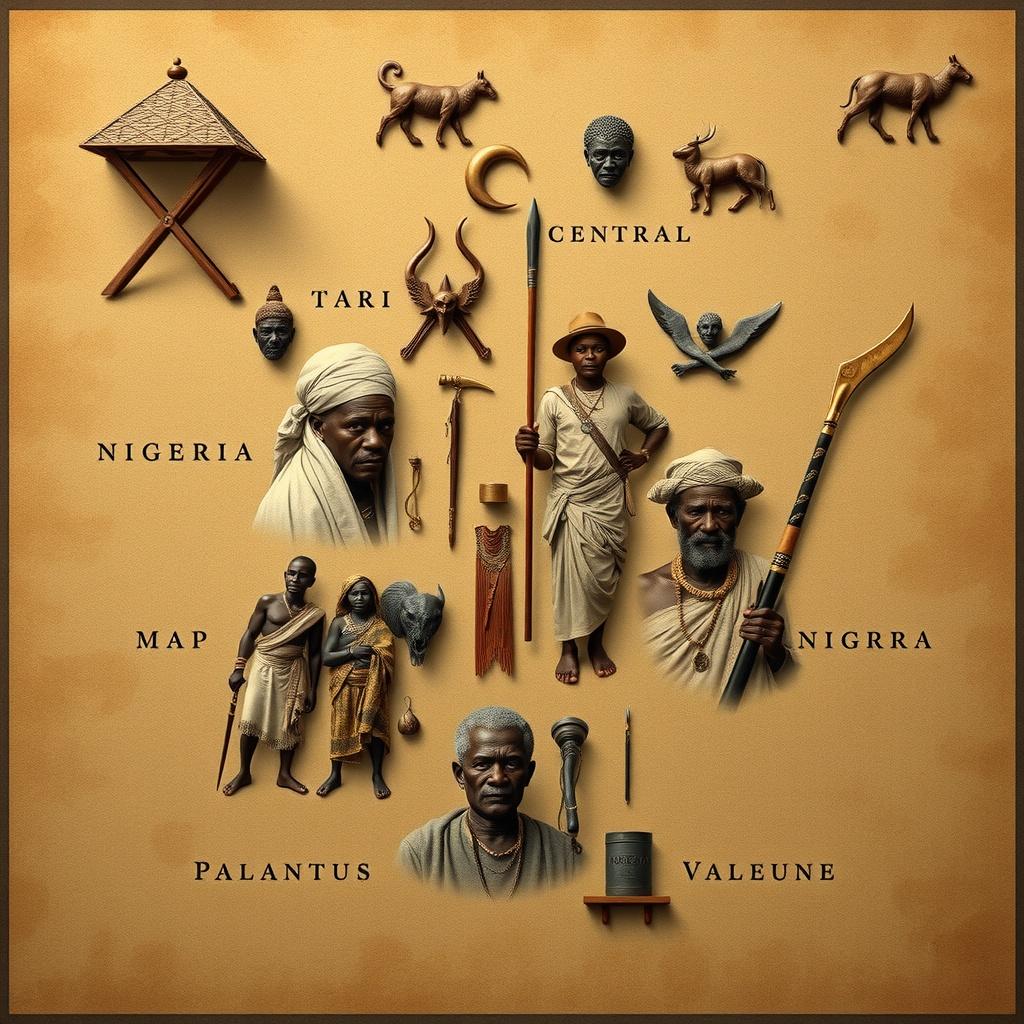
In the beginning, Nigeria was a tapestry of independent peoples and kingdoms. The Nok civilization flourished in the central regions, known for their terracotta sculptures and ironworking skill. As the day broke, villagers gathered beneath towering baobab trees, exchanging goods, stories, and songs that echoed through the morning air.
The Kingdom of Benin emerged as a center of art and power, its oba revered by subjects and feared by rivals. Far to the north, the Hausa city-states thrived, their markets alive with the scents of spices and the sounds of traders haggling. Horses pawed the dust as messengers raced between walled cities, carrying news of alliances and rivalries.
Islam spread through the northern empires, bringing new writing, learning, and connections to far-off lands. The Yoruba kingdoms, especially Oyo, expanded their influence with powerful cavalry and sacred festivals. In quiet villages, griots recounted the deeds of kings and ancestors, weaving tradition into the fabric of nightly life.
Long before European ships appeared on the coast, Nigerian peoples traded with North Africa and beyond. Salt, gold, and slaves passed through intricate networks, shaping fortunes and destinies. Communities like the Igbo and Ibibio developed their own systems of governance, proud and independent beneath the starlit sky.
The first Europeans arrived, seeking trade and opportunity. With them came new goods, ideas, and unsettling changes. Some local leaders welcomed their wares, while others prepared for conflict, sensing the winds of transformation in the salty air.
By the late 1800s, the British sought to unite these diverse lands under their rule, negotiating, fighting, and dividing. Old kingdoms struggled to maintain their identity as new borders and laws took shape. The merging of northern and southern protectorates loomed on the horizon, setting the stage for a new chapter in Nigeria’s long and vibrant story.