The sun blazed fiercely over the ancient Egyptian landscape, casting long shadows over the ruins that whispered secrets long buried in time. French soldiers, led by Jean-François Champollion, worked diligently, their brushes and tools revealing fragments of a forgotten world. Among them, Lieutenant Pierre-François Bouchard, his face streaked with sweat and dust, paused as his hand brushed against something unfamiliar.
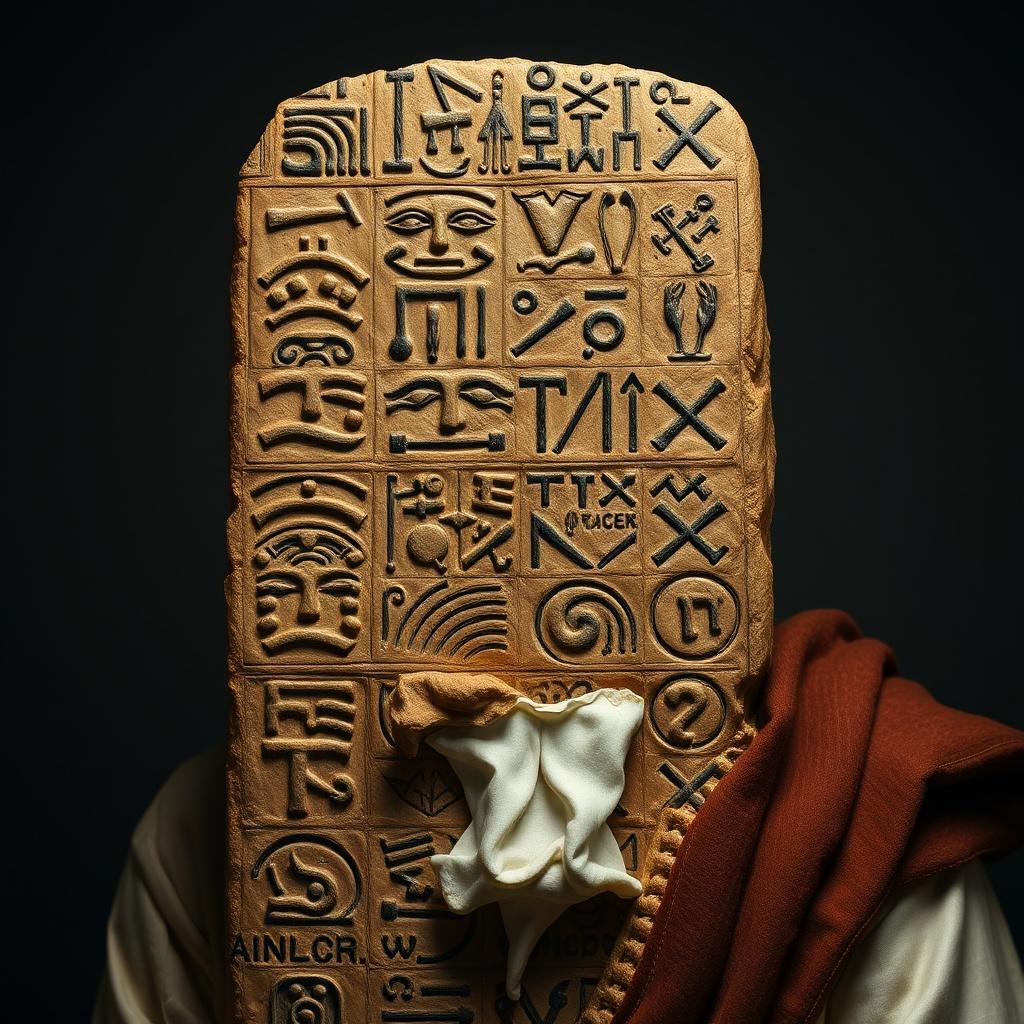
"Captain! You need to see this!" Bouchard called out, his voice slicing through the hot, dry air. His eyes widened in astonishment as he uncovered a large stone inscribed with strange symbols.
Jean-François Champollion, an ambitious young scholar with a passion for deciphering the mysteries of antiquity, approached swiftly. As he and the captain examined the stone, realization dawned upon them. The Rosetta Stone, with its three distinct scripts—Greek, Demotic, and Egyptian hieroglyphs—promised to be the key to unlocking a civilization long shrouded in mystery.
The stone, transported to Europe, became the centerpiece of scholarly intrigue. In a grand hall in Paris, Jean-François Champollion stood among the best minds of his time, his heart racing with both excitement and trepidation. The Greek inscription was clear, a familiar tongue, but the hieroglyphs remained an enigma, their intricate designs mocking his every attempt to understand them.
"These symbols... they represent more than just words. They must convey meaning—stories, lives, history itself," Champollion mused, his fingers tracing the ancient script. Despite the pressure from rival scholars, his determination never waned. Days turned into nights as he tirelessly worked, his mind a tapestry of connections and hypotheses.
Years of relentless study finally bore fruit. In the quiet of his study, Champollion felt the pieces of the puzzle fall into place. His heart pounded with exhilaration as he scribbled his findings, the hieroglyphs unraveling before him as a combination of phonetic symbols and ideograms. The ancient language breathed life through his translations.
Bursting into the lecture hall with newfound energy, he shouted, "I've done it! I've cracked the code!" The room fell silent, scholars hanging on his every word as he unveiled the structure of the ancient Egyptian language. The Rosetta Stone's secrets, once locked away, now promised to transform their understanding of a bygone era.
Thanks to Champollion's brilliance, the world could once again read and comprehend the stories etched in stone. The hieroglyphs revealed tales of powerful pharaohs, gods, and the rich tapestry of life in ancient Egypt. Archaeologists now walked in the footsteps of the past, unraveling the mysteries that had eluded human understanding for centuries.
Champollion's legacy was immortalized, not just in museums, but in the very essence of archaeology. The Rosetta Stone became the bridge that connected modern minds with an ancient civilization, transforming the landscape of history and knowledge forever.
Today, the Rosetta Stone rests in the British Museum, a symbol of human curiosity and perseverance. Visitors from all corners of the globe stand in awe, drawn by the stone's powerful story—a story of discovery, intellect, and the indomitable spirit of one man who dared to unlock the secrets of the past.
The stone remains a beacon of how a single discovery can open doors to the mysteries of history, forever altering the course of human knowledge and understanding. From the sands of Egypt to the hearts of many, its legacy continues to inspire those who seek to uncover the stories etched in time.