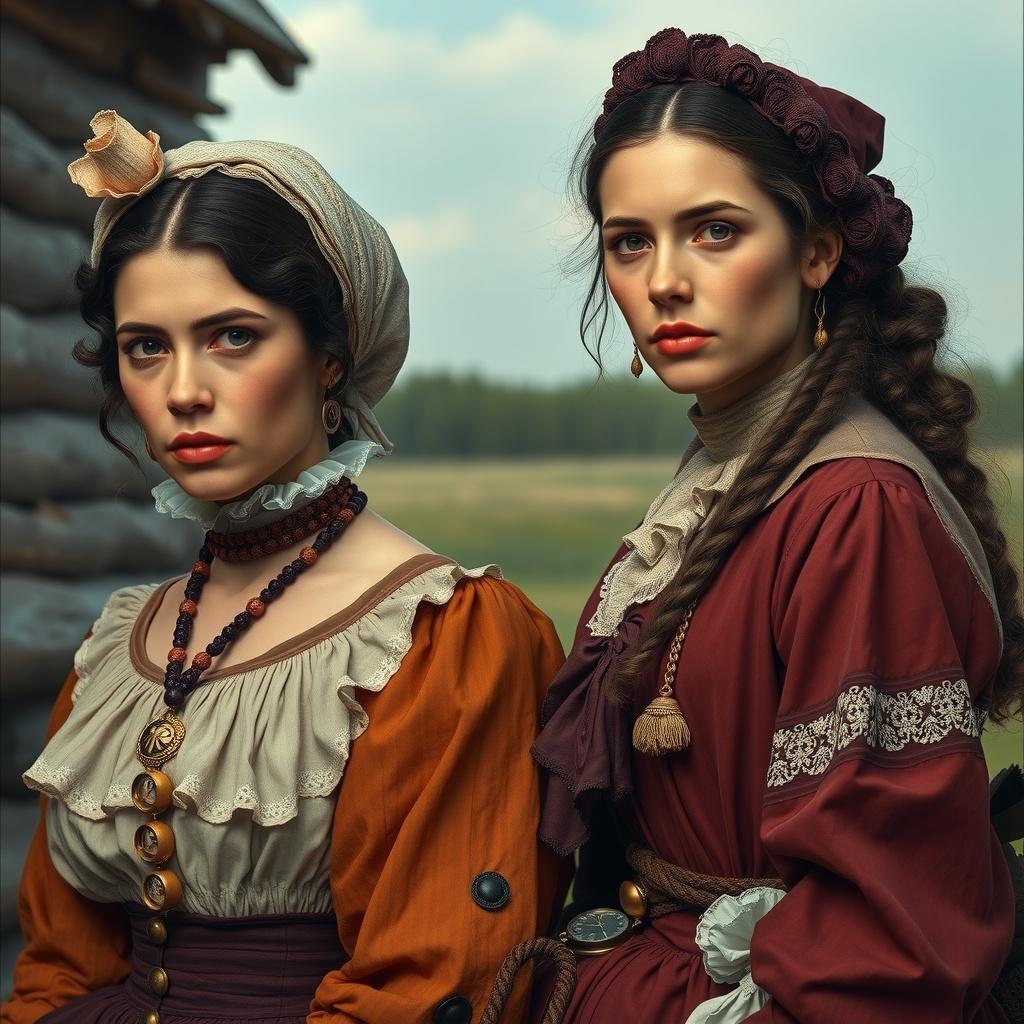
The marketplace was alive with the gentle hum of bartering voices, as women in long skirts and bonnets moved through the aisles. Their dresses, crafted from calico and wool, whispered stories of both fashion and necessity. Eliza Thompson, a seamstress known for her skillful hands, admired the array of fabrics on display. "These new patterns are just what the town needs," she mused, envisioning the garments she could create.
Eliza settled at her sewing table, surrounded by the tools of her trade. Her fingers danced nimbly over the cloth, turning raw material into elegant attire. The women in town relied on her to transform imported silks and home-spun cottons into dresses that balanced practicality with the latest trends. "Each stitch tells a story," she often said, capturing the essence of the era in every hem and seam.
The women were adorned in gowns that spoke to their social standings and personal tastes. Margaret Sinclair, a frequent hostess, wore a gown of deep blue satin, its fabric shimmering under the chandelier's glow. "Fashion is a reflection of who we are," she declared, her eyes meeting those of her guests. In this world, clothing was more than mere attire; it was an expression of identity and status.
While the ladies of society donned their finery, others labored in simpler garments. Clara Johnson, the daughter of a field worker, dressed in a plain cotton dress, her hands calloused from work. Her clothes, though unadorned, were stitched with care by her mother. "We make do with what we have," Clara's mother would say, the resilience in her voice mirrored in the sturdy fabric.
Master James Fuller, renowned for his craftsmanship, worked tirelessly to keep up with the demands of fashion. His hands transformed bolts of fine cloth into tailored suits and dresses. "Attention to detail is what sets us apart," he advised his apprentices, knowing that each garment was a testament to his skill and dedication.
As the day drew to a close, Eliza sat by the fire, her mind drifting through the events of the day. Each piece of clothing she crafted was a thread in the tapestry of life in the 1800s. "Clothing is not just fabric and thread, but a piece of our history," she thought, a smile touching her lips as she envisioned the stories yet to be sewn.