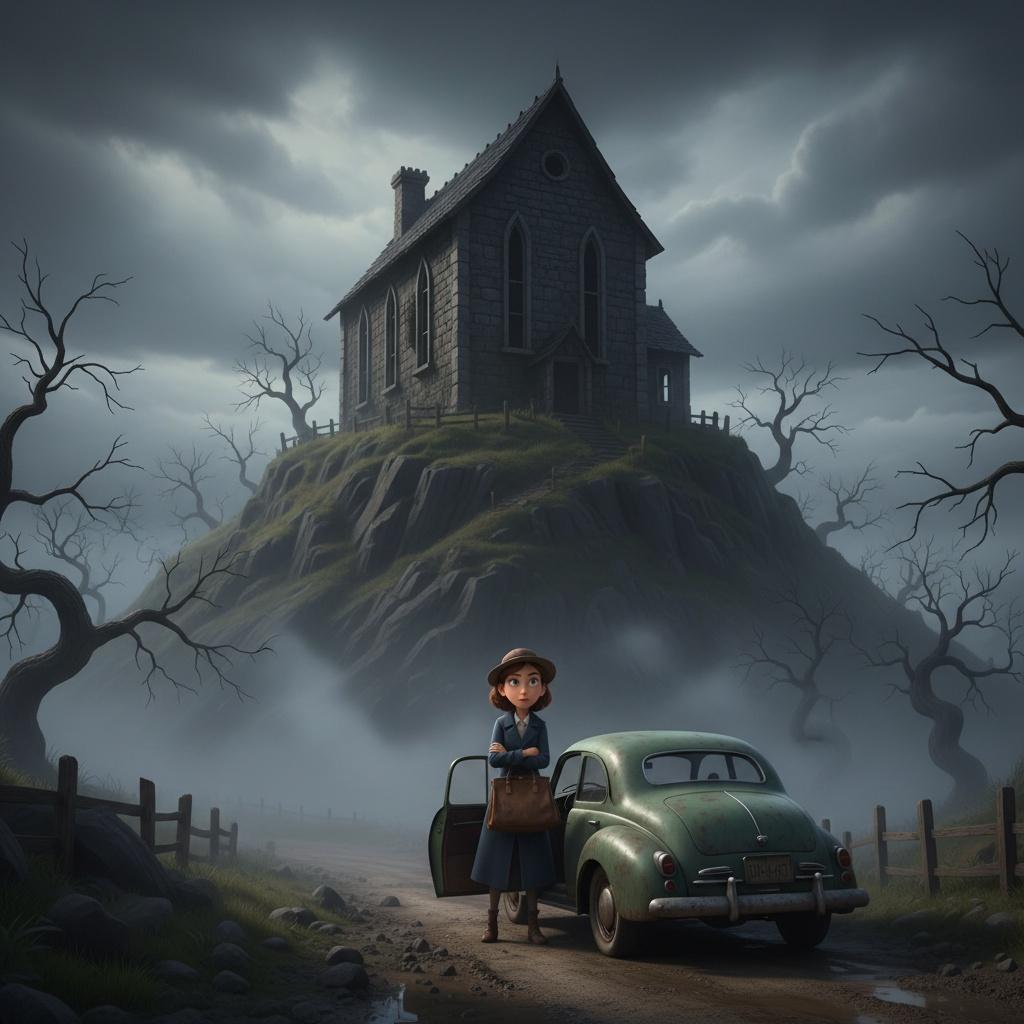
Miss Albright surveyed the orphanage, its battered facade looming over the valley like a specter. The windows stared back, dark and unwelcoming, and the distant sound of children's laughter was conspicuously absent. Inside, the corridors were dim and narrow, the stone walls cold to the touch, as if the building itself drank in any warmth.
Mrs. Thorne led Miss Albright through a curt tour, her footsteps echoing on the stone floor. "Discipline and routine are the pillars here. The children need order, not coddling," she said, her tone clipped. In the shadowed corners, a dozen quiet children watched, their eyes hollow, but one girl – Sinu – seemed almost to fade into the gloom, her presence barely a whisper amid the silence.
Sinu[/@ch_1] sits hunched at a battered wooden table, her pale hands moving ceaselessly over scraps of paper, drawing with a focus that borders on obsession.]
Miss Albright approached gently, offering colored pencils and a smile. "Your drawings are so detailed, Sinu. What do you see when you look at the orphanage?" But Sinu barely responded, her watery blue eyes never leaving her latest sketch. The images unsettled Miss Albright—shadowy figures with too many limbs lurking in corners, children with hollowed eyes behind bars, and the recurring silhouette of a monstrous, black-rooted tree, its branches snaking through the orphanage’s very walls.
Sinu[/@ch_1] sleeps fitfully, clutching a new drawing in her hands.]
Miss Albright tiptoed over, carefully extracting the paper. The drawing chilled her: Mrs. Thorne, twisted and furious, holding a broken porcelain doll with a cracked head, one glass eye missing. In the morning, chaos erupted. The antique doll – Mrs. Thorne's cherished heirloom – lay shattered on her office floor, exactly as in Sinu's drawing. Mrs. Thorne accused the older boys, but they protested their innocence, voices trembling.
Sinu[/@ch_1], and unidentifiable creaks seem to shudder from the walls themselves. The children grow quieter, huddling away from Sinu, their fear palpable.]
Miss Albright questioned a little boy, Timmy, who shivered as he whispered, "She knows things. And things happen around her." Driven by dread, Miss Albright combed through old files late into the night, uncovering a brittle newspaper article: a century-old fire had consumed the original orphanage's wing, trapping many children inside. The playroom, where Sinu now drew, was the site of that horror. The article mentioned a huge oak tree, burned to its roots—a tree that haunted every one of Sinu's sketches.
Miss Albright[/@ch_2] creeps to the playroom, where Sinu sits in the flickering glow of an emergency lamp, drawing on the wall with charcoal.]
Miss Albright watched, heart pounding, as the charcoal lines grew into a colossal, black-rooted tree, its branches pulsing and breathing, casting shifting shadows across the room. Within its roots, desperate faces screamed in silence—the children from the fire, immortalized in agony. As Sinu added a pair of watery blue eyes at the tree’s base, whispers filled the air, a chorus of despair that made the walls themselves moan.
Sinu locked eyes with Miss Albright, a faint, ancient smile curving her lips. It was not a child’s smile, but something deeper, colder, and far older. Miss Albright finally understood: Sinu was not merely drawing the horror—she was its vessel, the memory and rage of the orphanage given form, feeding on sorrow, reliving the agony of the lost children through her art. The orphanage was not haunted by something; it was haunted by Sinu herself, and now, Miss Albright was trapped within this eternal, chilling masterpiece.