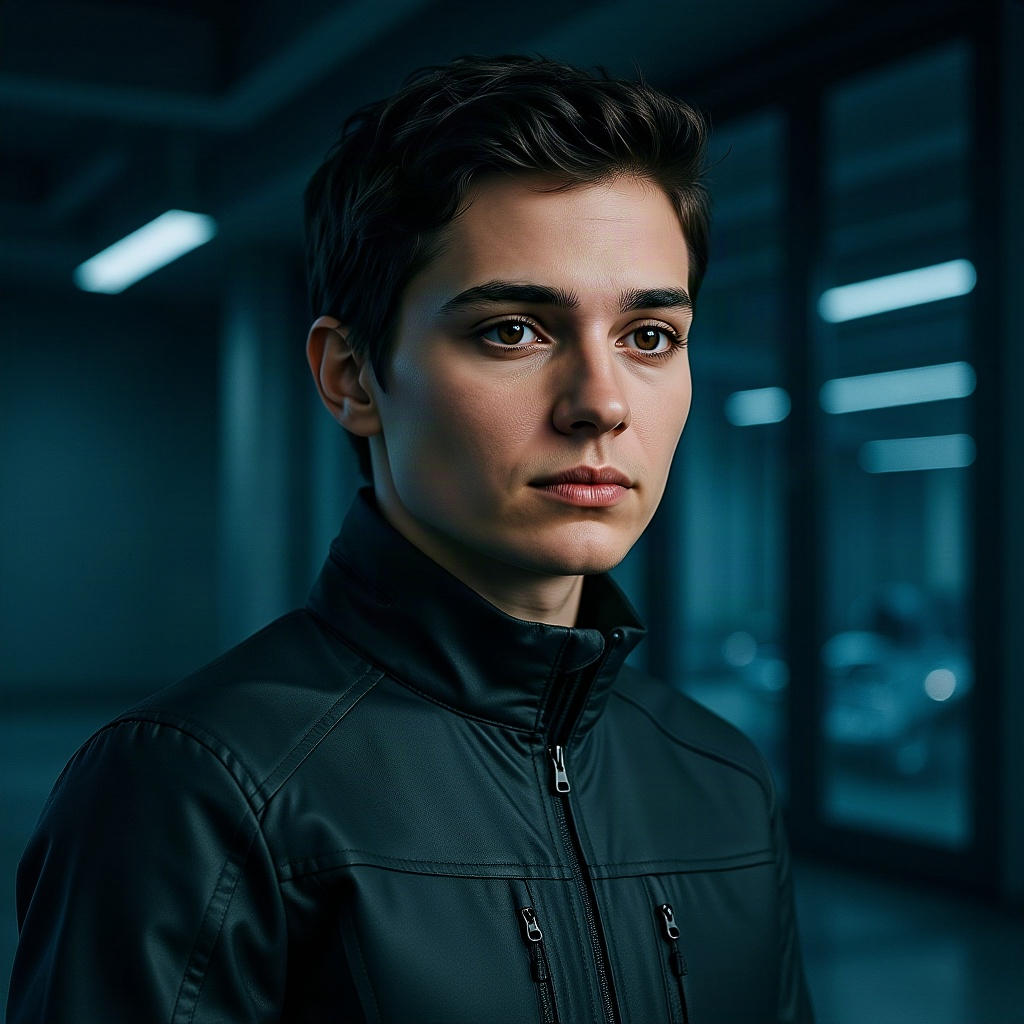
Hunter, a young black man with glossy Jheri curls and a prominent mustache, adjusts his Raiders cap, glancing nervously at the script in his hands. Crew members hurry past, lugging equipment, their footsteps echoing off the cinderblock walls. The director, clipboard in hand, points out the timing marks taped to the floor.
"Alright, let's get this right. This is the scene that'll set the tone,"
Hunter[/@ch_1], seated alone on the worn couch. The TV screen glows with static before cutting to the iconic N.W.A album cover, its raw energy almost palpable. The studio lights cast dramatic shadows, highlighting the tension in the room.]
Hunter leans forward, elbows on knees, staring intently at the TV. The album cover dominates the screen—five men loom from above, their faces hard and unyielding. Eazy-E’s pistol points straight at the audience, a challenge and invitation all at once.
"Damn. They look like they about to jump out the screen,"
Hunter[/@ch_1]'s face, his expression shifting from awe to contemplation. The studio fades into a blur, the world narrowing to the image on the TV. The heavy thump of a distant beat pulses through the room.]
Hunter studies the album cover—N.W.A as street reporters, their defiant stares unflinching. He runs a hand over his mustache, eyes tracing Eazy-E’s pistol, the menacing energy, the urban landscape etched behind them.
"This is South Central, man. You can feel it—like they reporting straight from the streets,"
Director, a wiry man with a five o'clock shadow and sharp eyes, approaches Hunter.
"Remember, you’re Ice Cube. You gotta show what this cover means—not just to you, but to everyone watching. It's raw, it's real, it's the truth,"
"I got you. Let me run it again—this time, I’ll make ‘em feel it,"
Hunter[/@ch_1] as he channels Ice Cube’s iconic cool. The TV blares the image of N.W.A, the pistol, the stares, the gritty city behind them.]
Hunter straightens up, eyes burning with conviction. He turns slightly to the camera, voice low and powerful, every word laced with the urgency of South Central’s reality.
"Straight Outta Compton. Not just an album—it’s a warning, a story, a shout for the world to listen,"
Hunter stands, stretching his arms, sweat glistening on his brow. He shares a look with the director, a silent understanding passing between them. The spirit of N.W.A’s music—the raw, aggressive truth of their world—hangs heavy in the air.
"That’s how you put South Central on the map,"