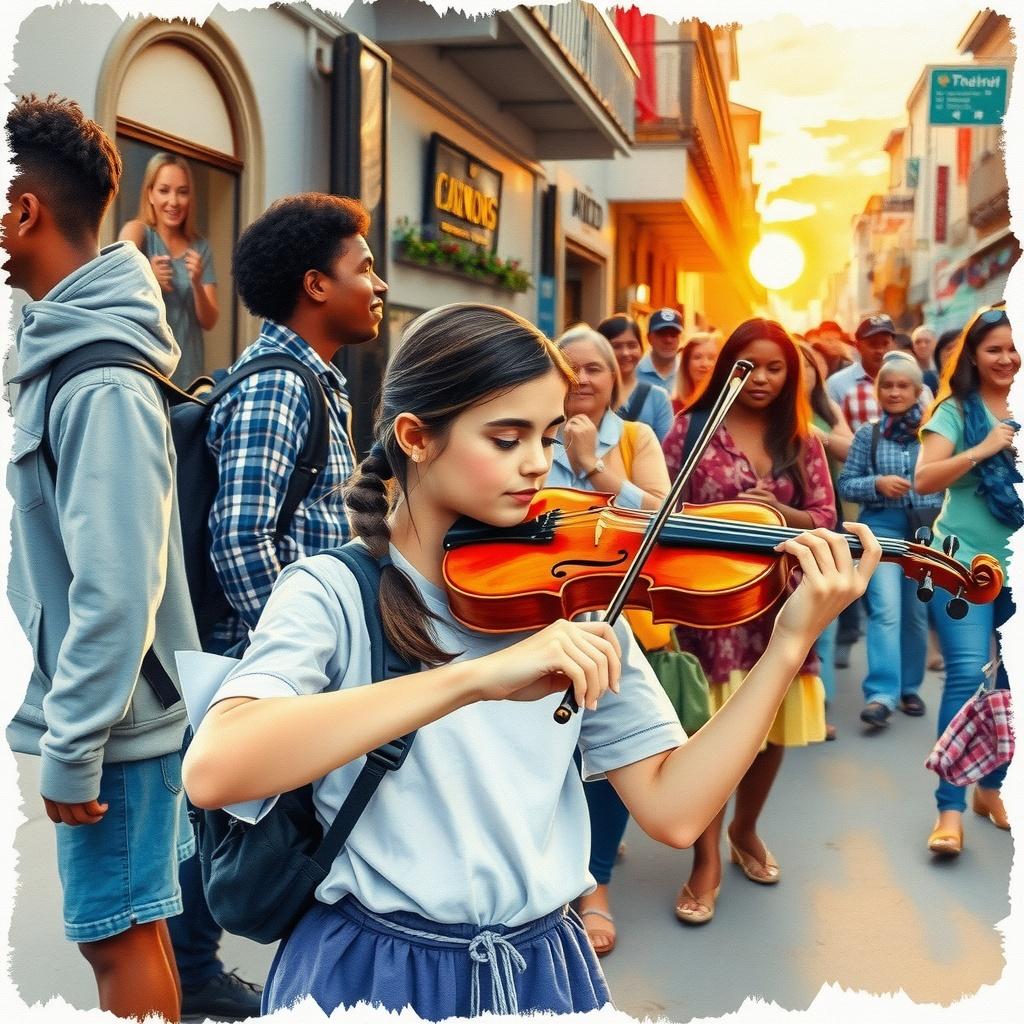
Lina, the young blind violinist, plays with a grace that draws the attention of passersby. Her hair is tied back with a piece of blue ribbon, her clothes threadbare but clean. Despite the heat, she loses herself in the music, each note a small rebellion against the world’s indifference.
Her father, once a cobbler, now frail and bedbound, listens as Lina returns home and describes the world she cannot see. "Papa, today I played Vivaldi. I imagined the sun was painting gold on the street," she says softly, sitting by his side and placing her hand over his. "Your music brings me light, Lina," he whispers, smiling weakly.
Maestro Vittorio, a renowned conductor recently returned from a hiatus, is transfixed by Lina’s playing. He remains perfectly still, absorbing every note as her bow glides and skips across the strings. "Such feeling… such sorrow in her music," he murmurs to himself, returning the next day and the day after, always listening, always silent.
Maestro Vittorio clears his throat gently, and Lina turns toward the sound. "Young lady, your music deserves to be heard by more than these hurried streets," he says, voice warm and reverent. "Music is my world, sir. But I cannot leave my father," she replies, her brow furrowing. "Let me help you both. Come to the Opera House. Let the world see—better yet, hear—your gift," he urges.
The moment Lina draws her bow, the hall is filled with her music—passionate, aching, alive. The crowd is silent, then erupts into thunderous applause. Backstage, her father, now in a wheelchair, wipes tears of pride from his eyes as he listens to the audience’s cheers.
Lina is no longer just a street musician; she is a symbol of perseverance and talent. "Your music has changed our lives, Lina," her father says, voice full of gratitude. "No, Papa, our love did," she answers, her smile radiant as she readies her violin for another day—this time, on the world’s grandest stages.