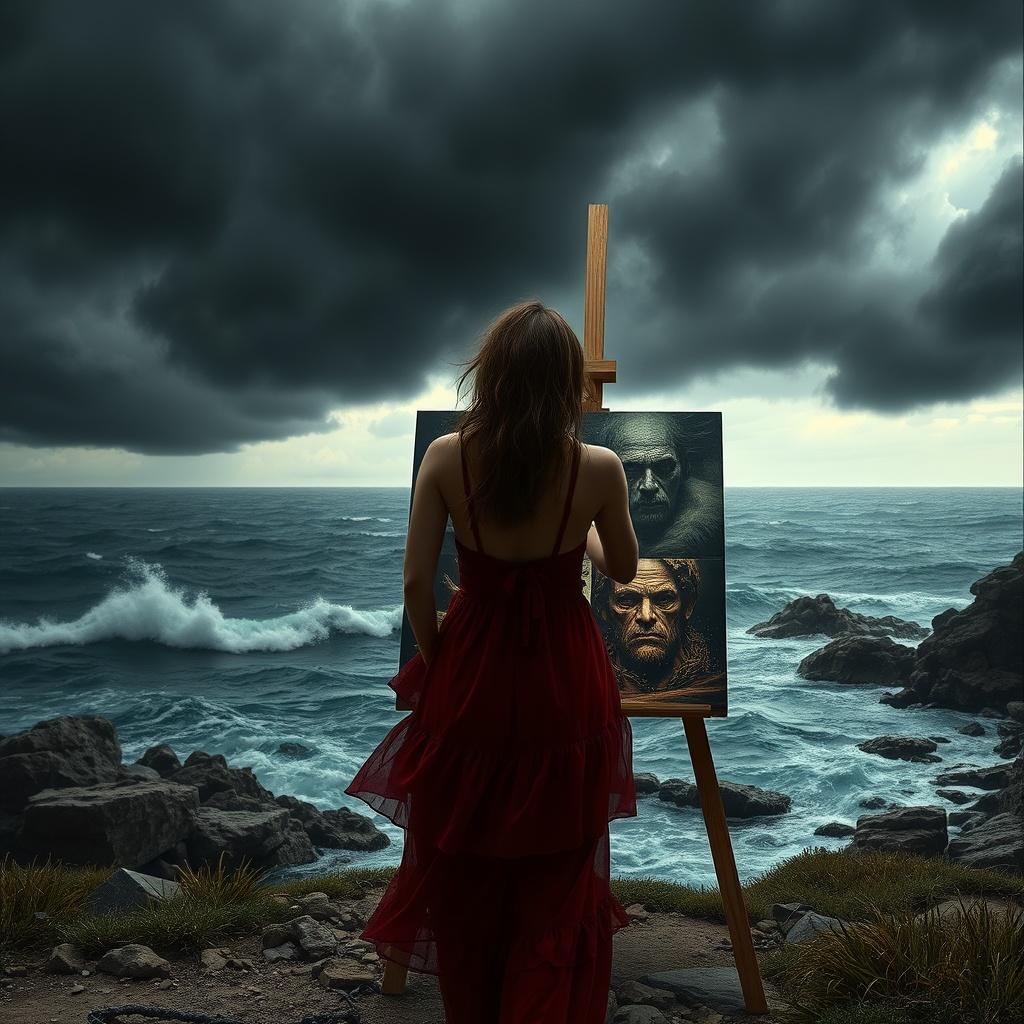
Lilás sat in her studio, the sound of rain tapping incessantly at the window. Her fingers danced across the canvas, seemingly guided by an unseen force. As she painted, vivid images of chaos and destruction emerged. Her heart pounded in her chest, a mix of fear and fascination.
"Why do I keep seeing these things?" she whispered to herself, her eyes tracing the dark shapes on the canvas. Each stroke felt like a burden, yet she couldn't stop. The visions had started a month ago, each painting more sinister than the last.
Desperate for answers, Lilás met her friend Amelia at their favorite café. Amelia, a local historian with an insatiable curiosity, listened intently as Lilás described her predicament.
"It sounds like you're connected to something beyond our understanding," Amelia said, her eyes alight with intrigue. "But perhaps there's a reason for these visions. Maybe you’re meant to warn people."
"Warn them? But how? They’re just paintings," Lilás replied, her voice tinged with frustration.
Lilás walked along the rocky shore, the sea reflecting the storm within her. She pondered Amelia's words, torn between her duty to warn others and her desire to abandon the haunting gift.
"Maybe I can make a difference," she thought, her resolve slowly solidifying. The waves crashed against the rocks, mirroring the tumult in her heart.
Back at her studio, Lilás decided to hold an exhibition. Each painting was displayed with a brief description, hoping to stir awareness and prompt action.
As visitors moved through the gallery, Lilás watched their reactions closely. Some were skeptical, others fearful, but a few seemed genuinely concerned.
Ethan, a local journalist, approached her, his interest piqued. "These are powerful, almost prophetic. Do you truly believe these events will come to pass?" he asked.
"I don't know," Lilás admitted, "but I hope to prevent them in any way I can."
Encouraged by the exhibition's impact, Lilás organized a community meeting. She shared her visions, urging the community to prepare for possible disasters.
Mayor Collins, a pragmatic leader, stood up. "We must take these warnings seriously. Let's work together to safeguard our town," he declared, rallying the people to action.
Lilás felt a sense of relief wash over her. Her paintings, once a source of dread, had become a beacon of hope and unity.
In the weeks that followed, Lilás continued to paint, her brush now guided by a sense of purpose. The darkness in her visions began to fade, replaced by images of resilience and recovery.
"I may not understand this gift, but I know it's meant for something greater," she thought, her heart lighter than it had been in months. Her journey was just beginning, but she was no longer afraid.