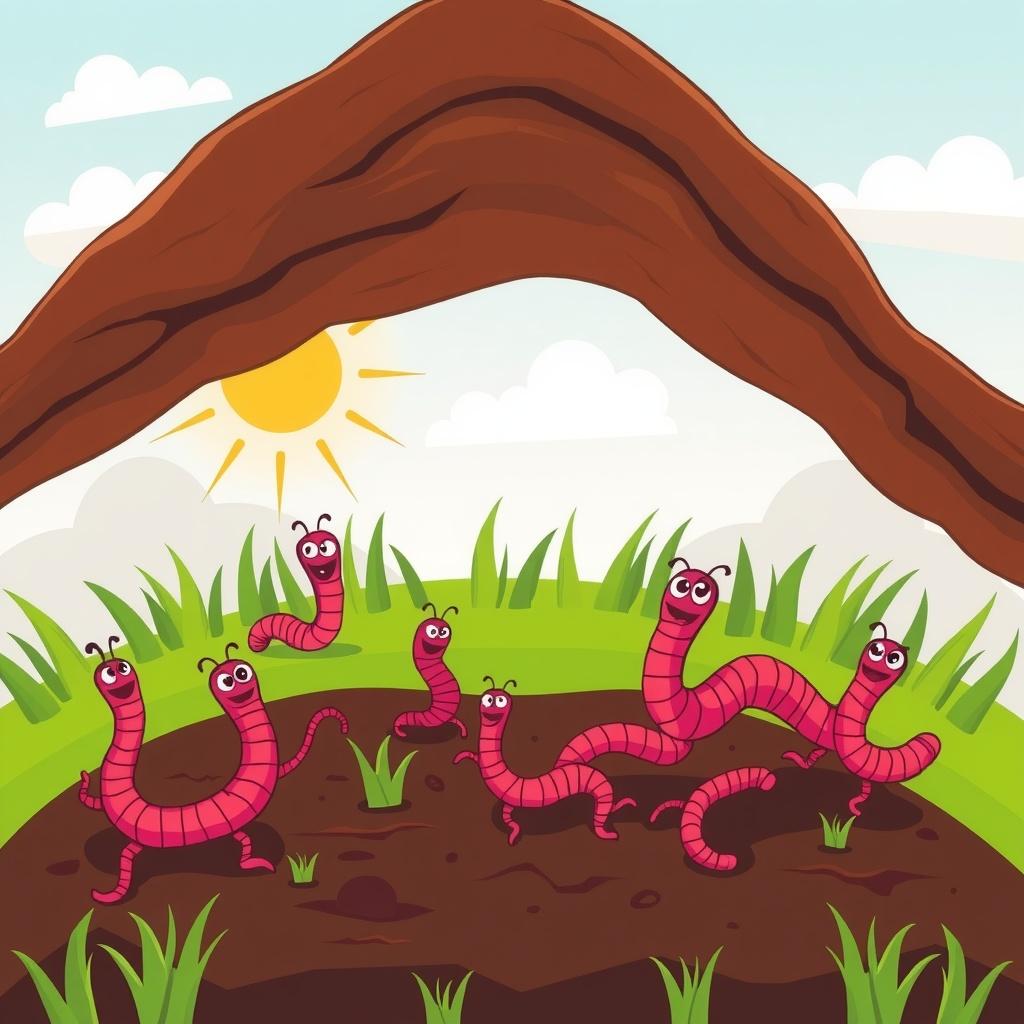
Beneath the surface, nestled within the moist earth, an earthworm slowly wriggles awake. The ground pulses with the steady beat of distant raindrops, each vibration sending a shiver through the worm’s slender body. It senses the coolness of the soil around it, the scent of decaying leaves, and the promise of nourishment nearby.
Driven by instinct, the earthworm inches forward, its body contracting and stretching in a rhythmic dance. Each movement aerates the soil, creating passages for water and air. Along the way, the worm brushes past a family of ants, who pause briefly to observe the gentle intruder before scurrying back to their own busy tunnels.
Sensing danger from above, the earthworm freezes, blending seamlessly into its environment. The robin’s beak pecks curiously at the soil, but the worm remains just out of reach, hidden beneath a protective layer of earth. The threat passes, and the garden’s quiet rhythm resumes.
The earthworm feasts, breaking down the dead leaves and transforming them into nutrient-rich castings. Every bite helps the garden above thrive, feeding roots and nourishing plants. Though unseen, the worm’s work is vital—turning decay into new growth.
As the garden drinks in the rain, the earthworm senses the interconnectedness of all things beneath the surface. It glides through its labyrinthine home, passing by beetles, grubs, and the delicate tips of sprouting seeds. Each creature plays a role, and together they ensure the circle of life continues.
The earthworm curls up in a safe nook, its body warm from the day’s work. It listens to the muffled sounds of roots growing, water trickling, and the gentle hum of the earth. In the darkness, the worm dreams of tomorrow’s journey, ready to continue its silent, essential role in the world beneath our feet.