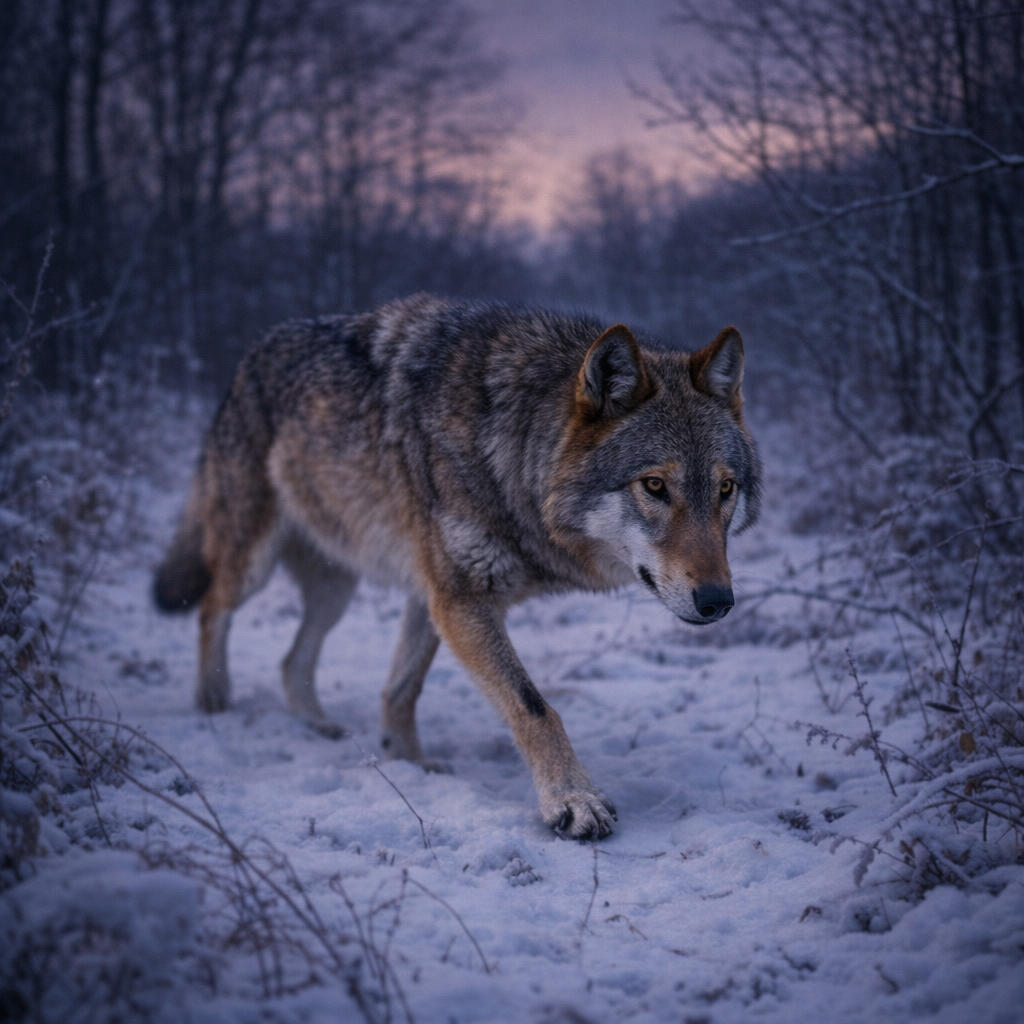
The old wolf moved through the brittle undergrowth, his once-sleek coat mottled with age and hardship. Hunger gnawed at him, hollow and relentless, as he pressed on, following the faintest disturbance in the snow. Each breath steamed in the frigid air, mingling with the ghosts of past winters.
The young buck stands by the stream, his sides heaving with exhaustion. He scrapes at the ice with a trembling hoof, desperate for water, the sound echoing in the silent woods. The wind carries no warning; he is downwind, oblivious to his approaching fate.
As the old wolf emerges from the shadows, only a dozen paces separate him from his quarry. The buck’s head snaps up, antlers sharp against the white, muscles coiling to flee. Yet he does not run—weariness roots him to the spot, eyes wide with more than fear.
The old wolf takes another step, the cold fire of hunger warring with something older, deeper. He peers into the buck’s weary gaze and sees not just terror, but kinship—a reflection of his own struggles. The wind howls, and both creatures shudder, battered by the season’s cruelty.
"Enough," the growl is not for the buck, but for the endless hunger and cold. Neither predator nor prey moves, suspended between instinct and mercy. In this frozen moment, survival is a shared burden, not a contest.
Without another glance, the old wolf turns from the buck, his silhouette swallowed by the pines. The buck watches him vanish, legs trembling but unbroken, before lowering his head to the ice once more. Tonight, the winter has claimed enough; for now, both endure.