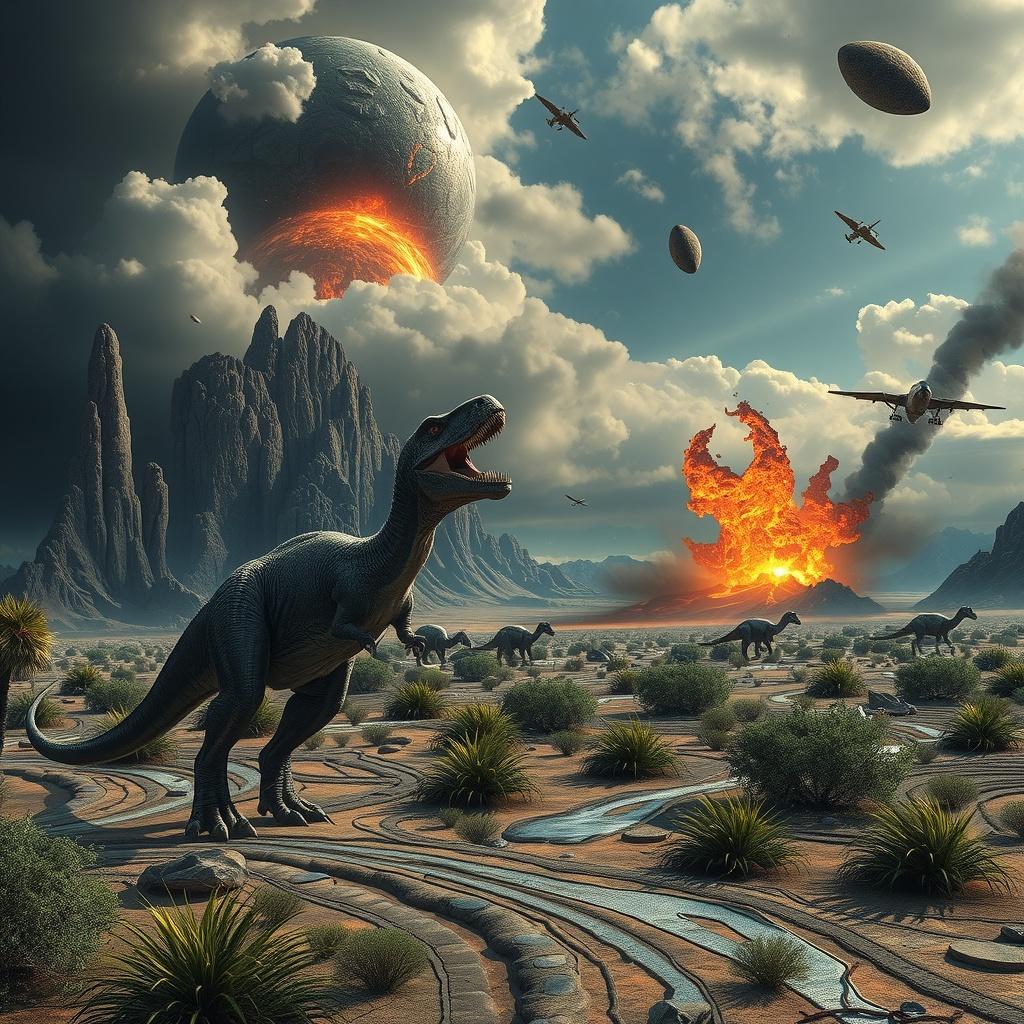
The giant asteroid hurtled towards Earth, a harbinger of doom for the majestic dinosaurs below. The creatures, unaware of their fate, roamed the verdant plains and dense jungles. The impact was imminent, and the world was about to change forever.
The ground shook violently as the asteroid struck the Yucatán Peninsula, creating the massive Chicxulub crater. Fires ignited instantly, and towering tsunamis raced across the seas. The dinosaurs, caught in the chaos, struggled to survive in the rapidly changing environment.
With sunlight blocked, temperatures plummeted, and the lush vegetation began to wither. Herbivorous dinosaurs, deprived of their food sources, faced starvation. Predators, in turn, found their prey dwindling. The balance of life teetered on the brink of collapse.
Volcanic eruptions in what is now India added to the planet's woes, spewing lava and noxious gases into the atmosphere. The air became difficult to breathe, and acid rain poisoned the land and water. Survival became an even greater struggle.
As the catastrophic events unfolded, the dinosaur population dwindled. Eventually, the mighty creatures that had roamed the Earth for millions of years vanished, leaving only their bones as a testament to their reign. The world was now a silent, somber place.
In the aftermath of extinction, a new era dawned. Small mammals, once overshadowed by dinosaurs, began to thrive in the changed environment. Over time, they evolved and diversified, setting the stage for the rise of humans. The cycle of life continued, resilient and ever-changing.