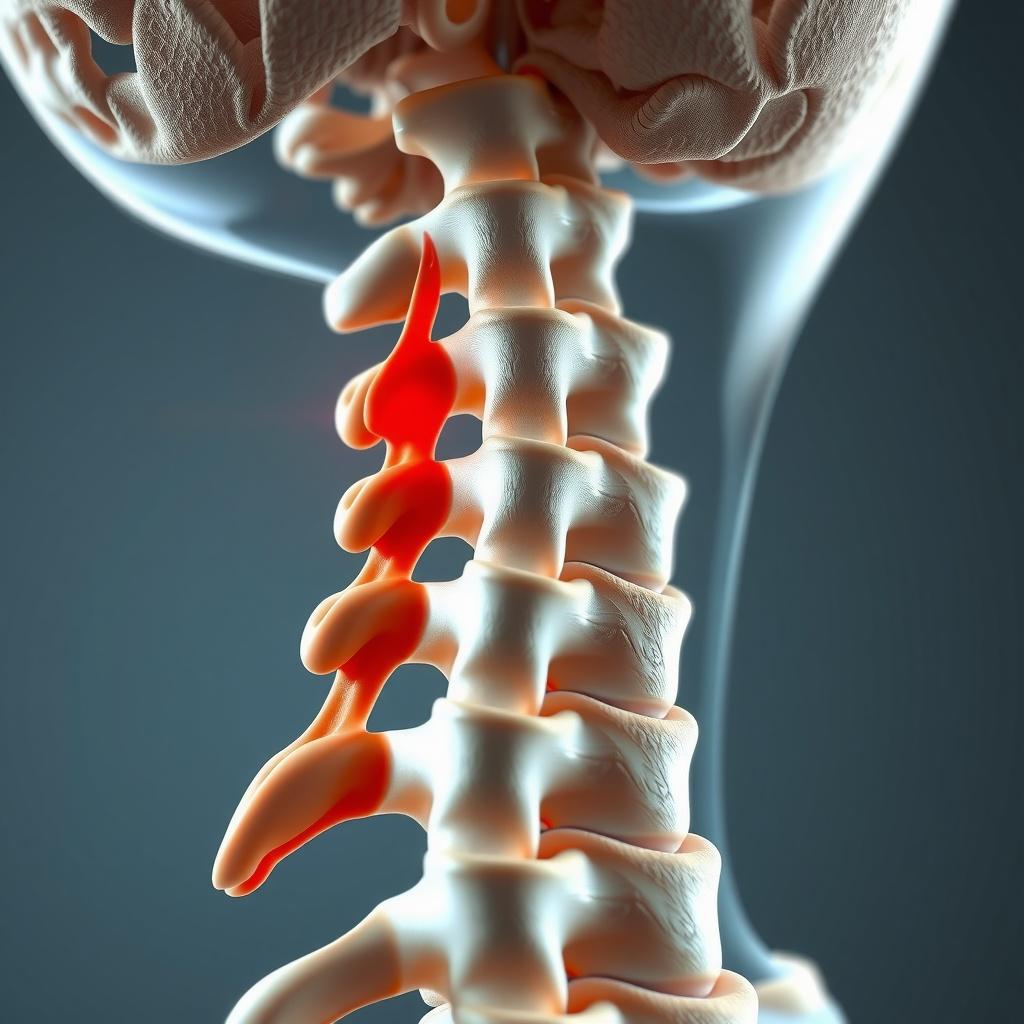
Dr. Evelyn Ross, a seasoned neurologist, reviews her patient list, noting a surge in neck pain complaints. She glances at the anatomical model, tracing her fingers along the vertebrae, pondering the intricate balance between mobility and vulnerability in the cervical spine.
"Every twist and turn of the neck tells a story—sometimes of trauma, sometimes of age, sometimes of mystery," she murmurs, preparing for her next patient.
Jake Turner[/@ch_2], enters, his posture stiff and uncertain. The faint scent of antiseptic hangs in the air.]
"It happened so fast—a car hit me from behind. Now my neck feels like it’s locked in place," he explains, wincing with every movement. Dr. Evelyn Ross gently palpates his neck, noting tenderness and limited rotation.
"This is classic whiplash—a rapid acceleration-deceleration injury. Muscles and ligaments are strained, sometimes without visible damage on scans. We'll start with rest, gentle physical therapy, and possibly pain management," she reassures him.
Maria Sanchez[/@ch_3], clutches her arm, her fingers tingling.]
"My arm feels numb, and sometimes the pain shoots down my shoulder," she confides, anxiety clouding her eyes.
"You may have cervical radiculopathy—when a nerve root is compressed, often by a herniated disc or bone spur. We’ll confirm with imaging and nerve studies, then explore treatments ranging from physical therapy and medications to, rarely, surgery," Dr. Evelyn Ross explains, the images on the screen highlighting the delicate nerves branching from the spine.
Dr. Ross[/@ch_1] examines an elderly patient, Mr. Liu, whose neck cracks audibly with every turn.]
"The pain’s deep and sharp, worse when I turn my head," he grumbles.
"Facet, or zygapophyseal, joint pain is common as we age. The small joints at the back of your neck can become inflamed or arthritic," she explains. "We can use targeted injections to both diagnose and treat this pain, alongside strengthening exercises," she adds, jotting notes on his chart.
Dr. Ross[/@ch_1] studies the scans of Mrs. Patel, whose movements are slow and deliberate.]
"My neck feels stiff, and sometimes I get headaches at the base of my skull," she admits.
"This looks like cervical spondylosis—a degenerative process where discs lose height and bone spurs form. It can cause pain, stiffness, and even headaches if the upper joints are involved," Dr. Ross explains, outlining a plan involving posture training, medications, and perhaps traction.
Sophie Lee[/@ch_6], sits anxiously, her hands trembling.]
"Sometimes my neck feels like it’s going to give way, and once it just locked up completely," she confesses, fear etched in her voice.
"Cervical instability or acute locking can occur from ligament injuries or joint dysfunction. We’ll assess ligament integrity and stability with dynamic imaging," Dr. Ross assures her. "Treatment can include bracing, therapy, and in rare cases, surgery to stabilize the spine," she adds, offering hope.
Dr. Evelyn Ross[/@ch_1] reflects in her office, the cervical spine model gleaming softly under her desk lamp.]
"Each spine tells a different story, but with careful listening, examination, and evidence-based care, we can restore motion and relieve pain," she whispers, a smile of quiet satisfaction on her lips as she prepares for another day of spinal mysteries.