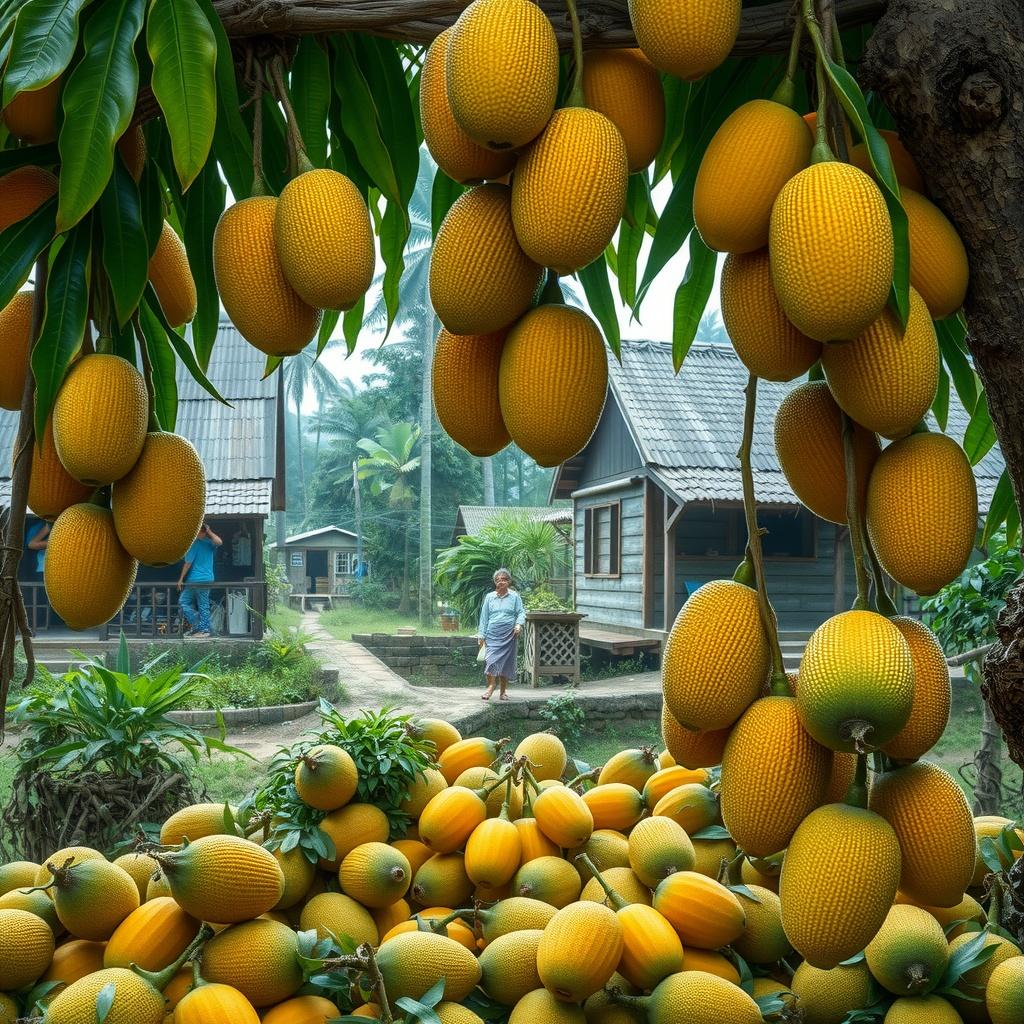
In the early days, Kanangkaan was a place of plenty. The very air seemed to hum with vitality, as if the earth itself was singing a joyful tune. People from far and wide gathered in this verdant paradise, drawn by the promise of the sweet, succulent jackfruits that grew in abundance. Families built homes beneath the shade of the towering trees, their lives intertwined with the natural bounty that surrounded them.
Kanangkaan quickly became a hub of activity. Traders sold their goods in the bustling marketplace, where the air was thick with the scent of spices and sweet jackfruit. Laughter and chatter filled the streets as children played, their hands sticky with fruit juice. The jackfruit became a symbol of prosperity, a token of the land's generosity.
But as the years passed, a change swept over Kanangkaan. The vibrant energy that once pulsed through the land began to wane. The jackfruit trees, so long a symbol of abundance, started to wither. Their fruits, once plentiful, grew scarce, leaving the villagers to ponder the mysterious decline. The skies turned gray, and an unsettling stillness settled over the once-thriving community.
As the jackfruits disappeared, so too did the people. One by one, families left in search of greener pastures, their laughter and liveliness vanishing like echoes on the wind. The marketplace fell silent, stalls abandoned, as Kanangkaan slipped into obscurity. The once-proud trees stood as silent sentinels, their bare branches a stark reminder of the village that once thrived beneath their shade.
Years later, a traveler stumbled upon the forgotten village of Kanangkaan. The quiet beauty of the place, with its tangled branches and whispering winds, spoke of stories long past. As the sun dipped below the horizon, painting the sky in hues of amber and gold, the traveler paused to reflect on the passage of time, the fleeting nature of prosperity, and the enduring spirit of a land once rich with life.