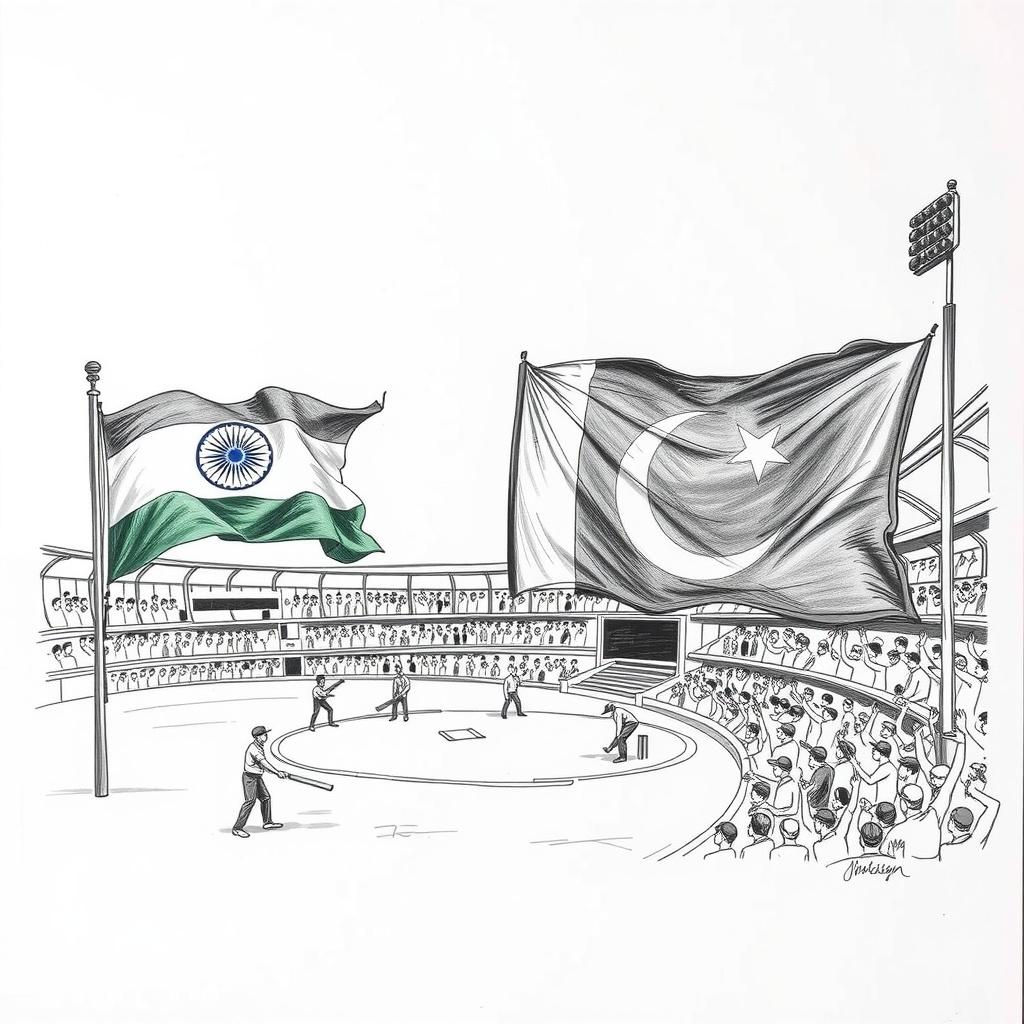
The crowd was electric, each person acutely aware of the historical significance of this match. This was more than just cricket; it was a clash born out of the partition of 1947, where two nations had been carved out of one. The Indian players, wearing their whites, moved with a sense of purpose, while the Pakistani team, equally determined, prepared for what was about to become a long-standing rivalry. As the first ball was bowled, the stadium erupted, marking the beginning of a complex sporting relationship.
In every household, from bustling cities to remote villages, television screens flickered, capturing the attention of millions. Every run, every wicket was met with cheers or groans, and the stakes felt monumental. Rahul, an ardent Indian cricket fan, sat at the edge of his seat, his heart pounding with every delivery. Ayesha, watching from Lahore, clutched her national flag, her eyes fixed on the screen. "This match means everything," Rahul whispered, echoing the sentiments of countless others.
The political tensions between the two nations often cast a shadow over cricketing ties. Decisions made in this room could influence whether cricket would be a bridge or a barrier. Mr. Khan, a seasoned negotiator from the Pakistan Cricket Board, leaned forward, "This series could be a step toward easing tensions," he suggested cautiously. Across the table, Mr. Sharma nodded, aware of the delicate balance between sport and diplomacy.
As Miandad stood ready, the world seemed to hold its breath. A single shot would decide the fate of two nations' hopes. The ball soared through the air, and when it landed beyond the boundary, the roar from the Pakistani fans was deafening. Ramesh, watching from Mumbai, slumped in disbelief, while Sana in Karachi danced with joy. This moment etched itself into the annals of cricket history, a symbol of the rivalry's intensity.
In recent years, encounters between the two teams have become rarer, heightening the anticipation each time they meet. Ananya, a sports journalist, tapped away at her keyboard, capturing the essence of the rivalry. "These matches are more than sport; they're a narrative of history and hope," she wrote, her words reflecting the collective heartbeat of both nations.
The boy's eyes widened in wonder, tracing the evolution of the rivalry through the artifacts before him. Bats signed by legendary players, jerseys worn during iconic matches—each item told a story of passion, pride, and perseverance. His father, standing beside him, placed a hand on his shoulder, "The rivalry has shaped our cricketing identity," he explained, a proud smile playing on his lips.