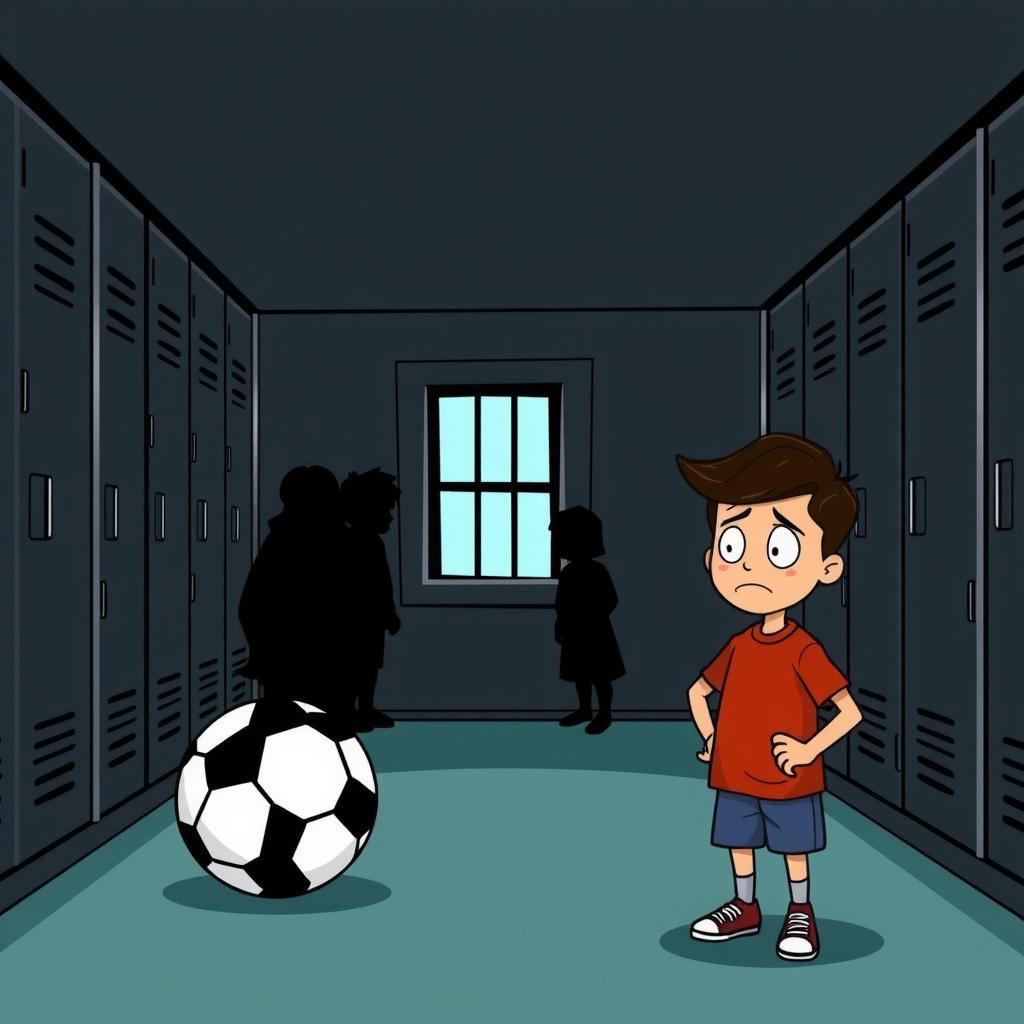
Ethan, a 13-year-old boy with tousled hair and wide, searching eyes, walked slowly down the corridor, his face obscured by a rough burlap sack. The guards on either side guided him with firm grips on his shoulders, their faces expressionless masks of indifference. "Where are we going?" he dared to ask, his voice trembling with a mix of curiosity and fear.
As Ethan stepped into his cell, the guards removed the sack from his face. The small space felt suffocating, its walls closing in around him. "This is your new home," one of the guards said, his tone devoid of any emotion. Ethan nodded silently, his eyes scanning the bare walls for any hint of comfort or familiarity.
Ethan found solace in the rhythm of the days, a strange comfort in the predictability of his new life. His mind slowly numbed to the reality of his situation, a transformation encouraged by the facility's design. "Remember your purpose," a voice from the intercom would remind him daily, echoing like a mantra through the corridors.
Ethan practiced dribbling an imaginary soccer ball, his feet moving instinctively across the cold floor. The cell became his training ground, each routine reinforcing the idea that soccer was his escape. "You will be great," the voice would whisper, the promise as hollow as the cell itself.
The once defiant spark in Ethan's eyes dimmed, replaced by a quiet resolve. He moved with the efficiency of a machine, his thoughts consumed by the rhythm of the game he'd never played. "This is who I am," he thought, surrendering to the identity imposed upon him.
Ethan stood in the center of his cell, imagining the roar of a crowd and the feel of grass under his feet. The dream was vivid, yet the reality was starkly different—a testament to the power of the prison that shaped him. "I will be a star," he whispered to himself, a statement of acceptance rather than ambition.