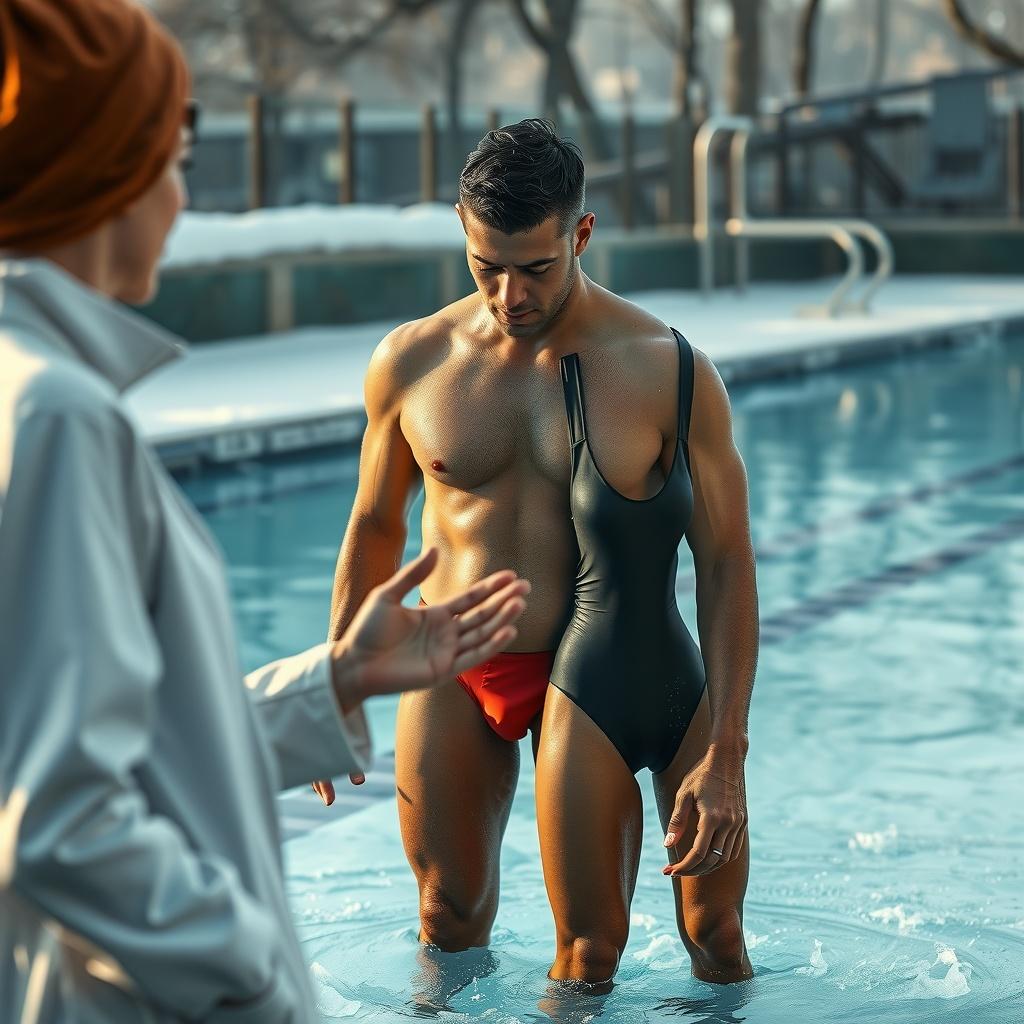
Peter stands at the edge of the pool, a small notebook in one hand and a collection of odd-looking swimsuits draped over a bench beside him. He moves with a quiet focus, his eyes scanning the water and the suits as if preparing for a scientific experiment rather than a morning swim.
Peter methodically examines each suit: some are ultra-slick, others thick and thermal, a few stretch and compress in unusual ways. He measures the fabric between his fingers, jotting down thoughts about slip, speed, and compression. "Today, the focus is on controlling body temperature and textile deformation," he murmurs, eyes bright with anticipation.
He glides into the water, the first suit hugging his form tightly. With each lap, he notes how the fabric reacts: does it slip easily, does it constrict, does it keep his muscles warm? "Interesting," he breathes between strokes, "this one compresses, but the speed is lacking."
Testing each suit in turn, he pushes himself harder, seeking the best balance of comfort and performance. He ignores the fogging of the windows and the occasional echo of footsteps from distant halls—his focus is absolute. "Textile deformation is more significant than I thought," he reflects, scribbling furiously.
Peter gazes at his notes, satisfaction evident in his posture. "It doesn’t matter what others think," he whispers to himself, "science is about discovery, not appearances." He feels the lingering warmth from his experiment and the sharper comfort of new knowledge gained.
Walking out into the cold, Peter smiles, already planning the next round of experiments. For him, winter swimming is more than a pastime—it is a journey into the physics of fabric, the resilience of the body, and the quiet joy of scientific exploration.