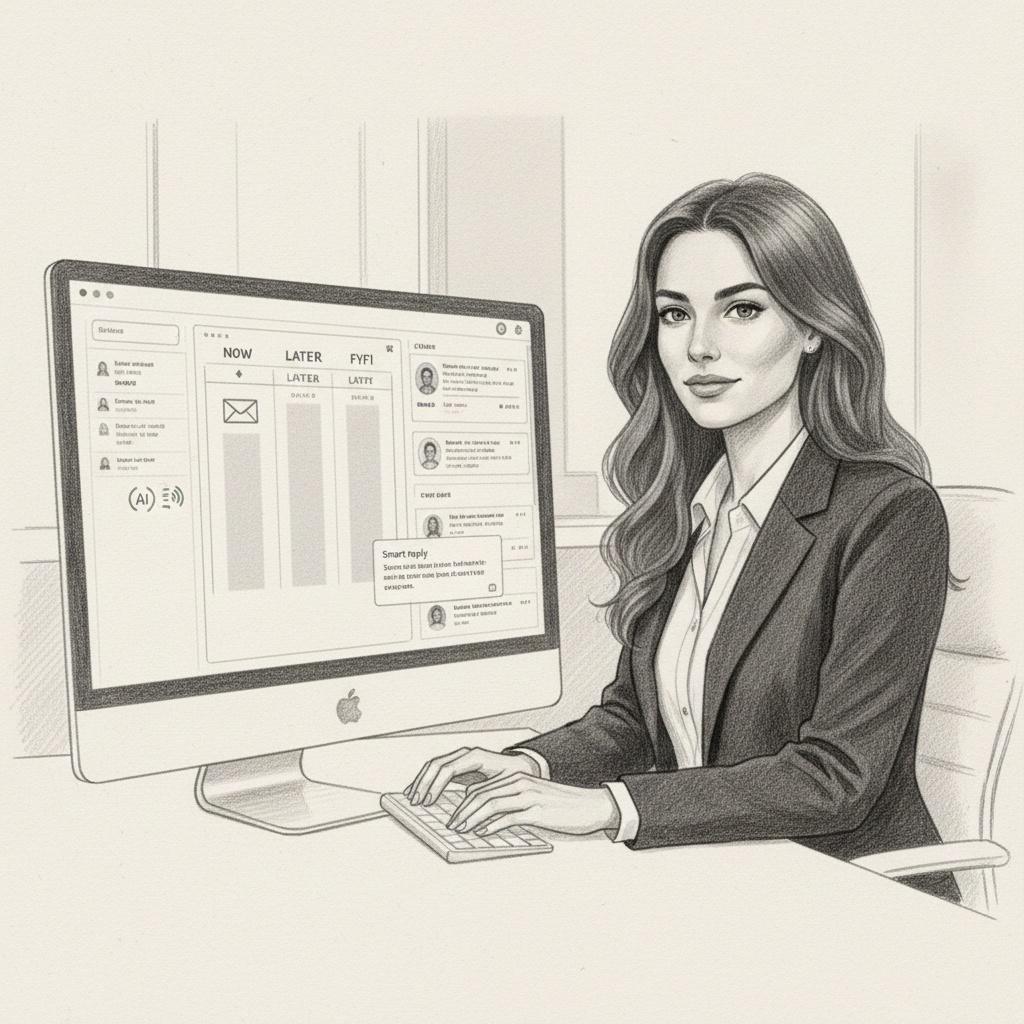
Laura, a focused professional with tired eyes and a steady posture, opens her day expecting progress and instead meets a wall of demands. Messages multiply faster than she can scan them, each subject line competing for attention like alarms in different corners of the room. "Every day starts like this—email, chat, customer updates, all at once, and somehow every single one feels urgent before I have even taken my first sip of coffee."
Laura jumps from inbox to chat to CRM, trying to connect threads that refuse to stay in one place. A customer follow-up hides beneath an internal note, while a simple update looks as urgent as a real escalation. "What needs my attention right now, what can wait until later, and what is just noise dressed up like urgency?"
The flood does not disappear, but it changes shape the moment the system begins to understand it. Important customer issues rise to the top, routine updates settle into place, and informational notes stop interrupting the flow of the day. "That is the first breath of relief—seeing what truly matters separated from everything that only looked loud."
Laura reviews the suggested reply, makes a quick edit, and watches the tone remain professional, clear, and personal. Instead of starting from a blank screen, she begins from momentum, shaving stress from every interaction. "It already understands the context, gives me a strong draft, and lets me respond faster without sounding robotic or rushed."
Laura leans back slightly, no longer reacting to chaos but directing the day with intention. The difference is visible not only in the screen layout, but in her expression—focused, calm, and back in control. "Less noise, more focus, and communication that moves faster because I can finally see clearly what deserves my time."
The transformation is complete: from scattered signals to a single, manageable flow. What began as overload ends in confidence, speed, and better decisions made without the burden of constant triage. "From overload to control—with AI."