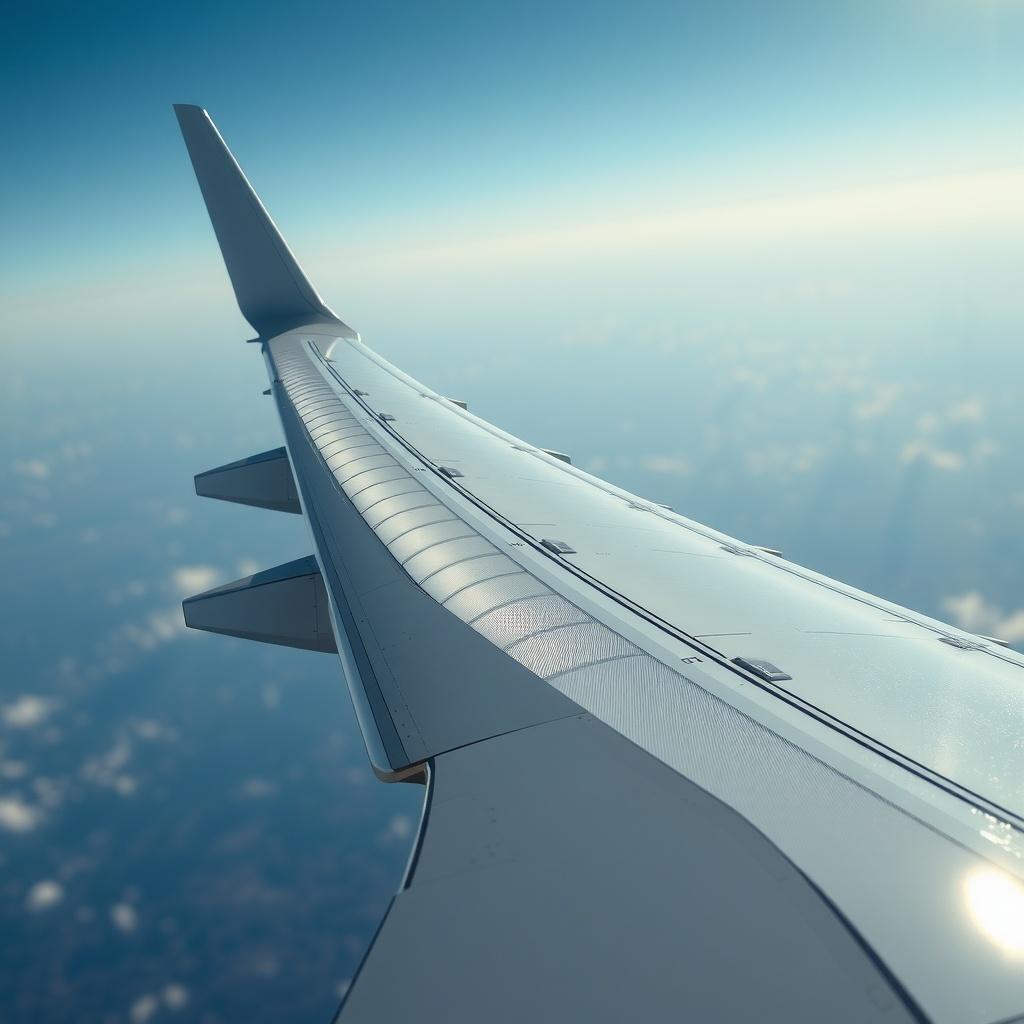
Dr. Emily Carter, lead researcher on the project, stood before her team, her eyes alight with excitement. "Today, we stand on the brink of a breakthrough in aviation," she announced, gesturing towards the model of a wing covered with 'covert feathers.' Her voice was filled with conviction as she described how these plates, inspired by the brown pelican, could transform the dynamics of flight.
Dr. Michael Tan, an aerodynamics specialist, leaned over a computer screen, his brow furrowed in concentration. "The data shows a significant reduction in drag," he murmured to his colleague, Dr. Sarah Lee, who nodded thoughtfully. "If we can replicate this consistently, it will revolutionize aircraft efficiency," she replied, scribbling notes in the margins of a report.
Sam Rogers, the chief engineer, adjusted his safety goggles and gave the signal to start the test. The wind tunnel roared to life, and the team watched intently as smoke trails revealed the airflow over the innovative wing design. "Look at the smooth transition," he pointed out, "It's working just as we hypothesized."
Dr. Emily Carter beamed with pride as she reviewed the data. "This confirms it," she said, "Our 'covert feathers' are not just a theoretical success, but a practical one too." The room erupted in applause, each clap a testament to the hard work and innovation that had led them to this moment.
Dr. Michael Tan looked around at his colleagues, his eyes shining with possibility. "This is just the beginning," he said, "Imagine what other secrets nature holds that we can unlock." Dr. Sarah Lee nodded in agreement, "The skies are our canvas now."
Dr. Emily Carter stood at the window, watching the horizon with a sense of fulfillment. "We've created more than just a steel bird," she mused quietly, "We've opened the door to a new era of aviation." The future of flight, inspired by nature, stretched out before them, as limitless as the sky itself.