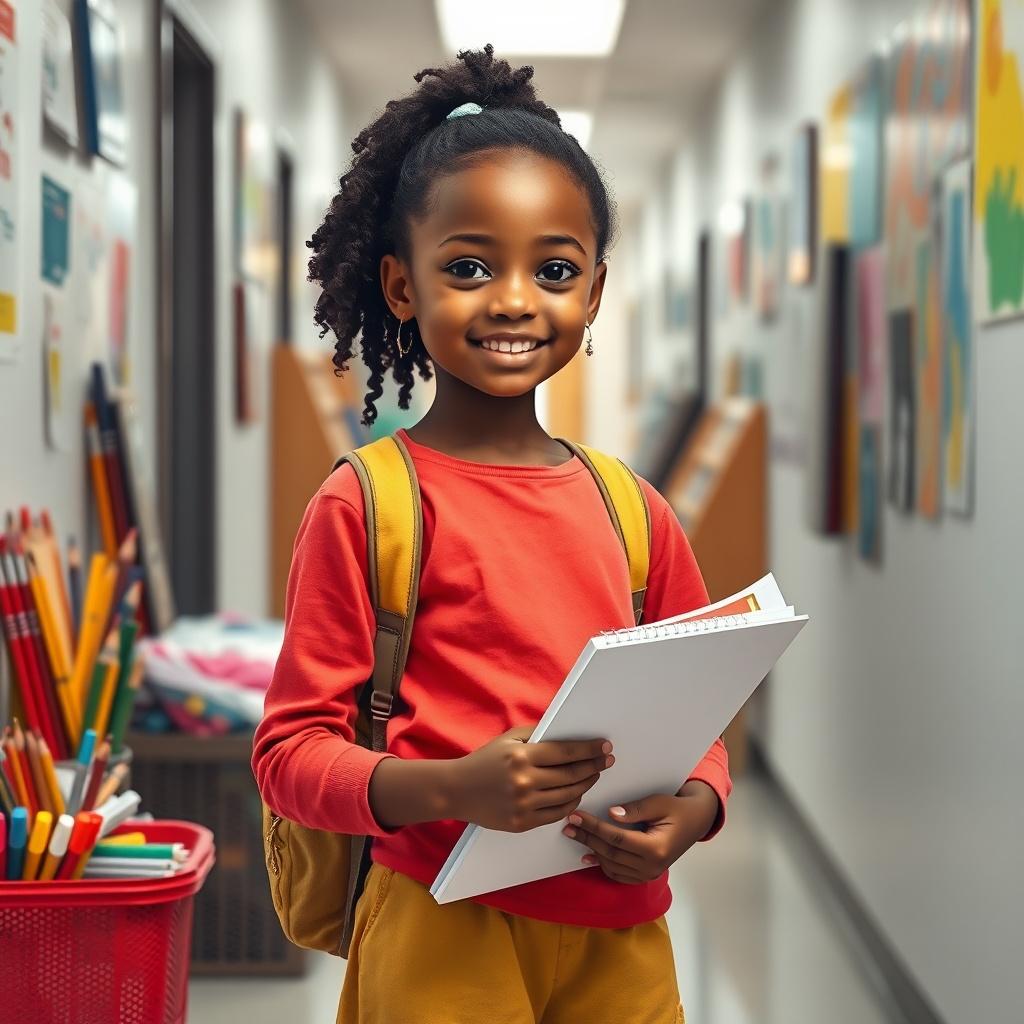
The halls of my new high school stretch out like an endless maze, each step echoing with the chatter of students who seem to know exactly where they belong. I clutch my books tightly, trying to blend into the background, but it’s hard to ignore the curious glances I get. Being a biracial sixteen-year-old in a predominantly white school feels like standing in the spotlight without a script.
I find solace in the art room, where the smell of paint and the sight of blank canvases offer a temporary escape. Liam, a fellow student with tousled hair and paint-splattered jeans, nods at me from across the room. "Hey, you're Nina, right? I've seen you around," he says, his voice friendly and open.
We sit outside, the warm afternoon sun filtering through the trees as we talk. Liam shares his passion for art and how it helps him express things he can't put into words. "I guess I'm still trying to find my place here," I admit, feeling a weight lift as I speak.
Liam suggests we collaborate on an art project, something that reflects our identities and challenges stereotypes. "Let's create something that tells your story, Nina," he proposes with enthusiasm. The idea excites me, a chance to turn my struggles into something beautiful and meaningful.
We spend hours in the art room, our ideas flowing as easily as the paint across the canvas. I lose myself in the colors and textures, feeling a sense of belonging I hadn't expected to find. "This is incredible," Liam says, stepping back to admire our work.
The day of the unveiling arrives, and the hallway buzzes with anticipation. Our project stands proudly on display, a tapestry of colors and stories that speak to everyone who passes by. "Your art is amazing, Nina," a voice says, and for the first time, I feel like I truly belong.