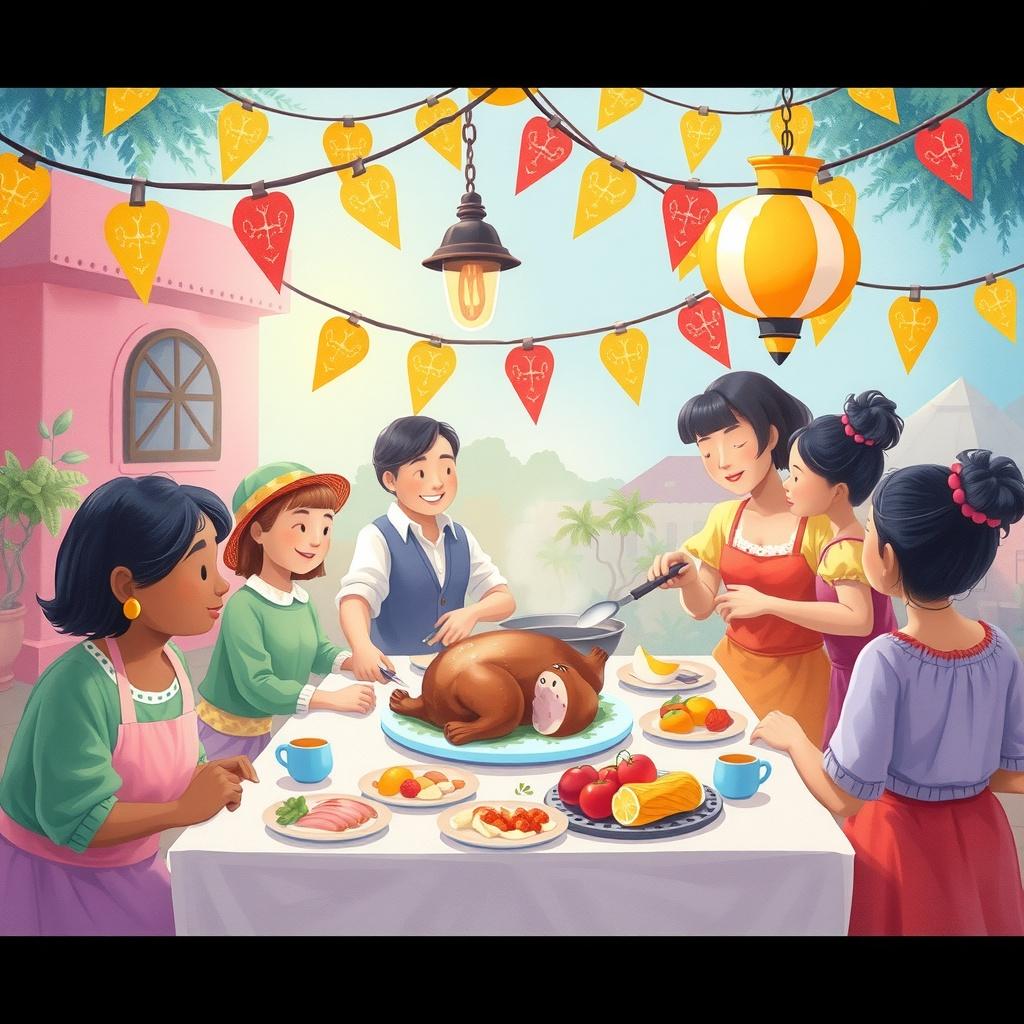
Aling Nena, the barrio's most skilled cook, stands beside a long wooden table, instructing a group of eager children on how to wash and chop onions. Nearby, Mang Romy, the local farmer, unloads crates of freshly harvested root crops. "Remember, children, the secret to a delicious fiesta dish is teamwork and patience," she says, smiling as the kids giggle and splash water.
Kuya Toto, the barrio's expert in roasting lechon, checks the coals and brushes the pig with coconut oil. "Lechon is the star of every fiesta. We use local spices like garlic, lemongrass, and black pepper for flavor," he explains to a group of teenagers, who watch intently, taking notes for their school project on Filipino cuisine.
Lola Belen, known for her famous lumpia, rolls spring rolls with practiced hands while teaching her granddaughter. "Tradition means sharing recipes and stories. That's how we pass down our heritage," she says. Across the table, Tita May mixes halo-halo, layering shaved ice, sweet beans, and purple yam for dessert.
Rico, the barrio artist, paints bright flowers on coconut shells to be used as serving bowls. "Fiesta isn’t just about eating. It’s about celebrating our culture, creativity, and unity," he explains to a visitor, pointing to his handiwork.
Aling Nena stands at the head table, welcoming everyone. "Let us give thanks for our blessings and the spirit of bayanihan that made this fiesta possible," she says. The crowd cheers, and the first slices of lechon are served, crispy and fragrant.
Mang Romy[/@ch_2], who teaches them the importance of planting and caring for the land. Neighbors reflect on the day’s success, grateful for the bonds strengthened.]
"A fiesta isn’t just a party—it’s a lesson in working together and appreciating our roots," he tells them. The barrio glows with pride, knowing that their traditions and spirit of unity will live on in the next generation.