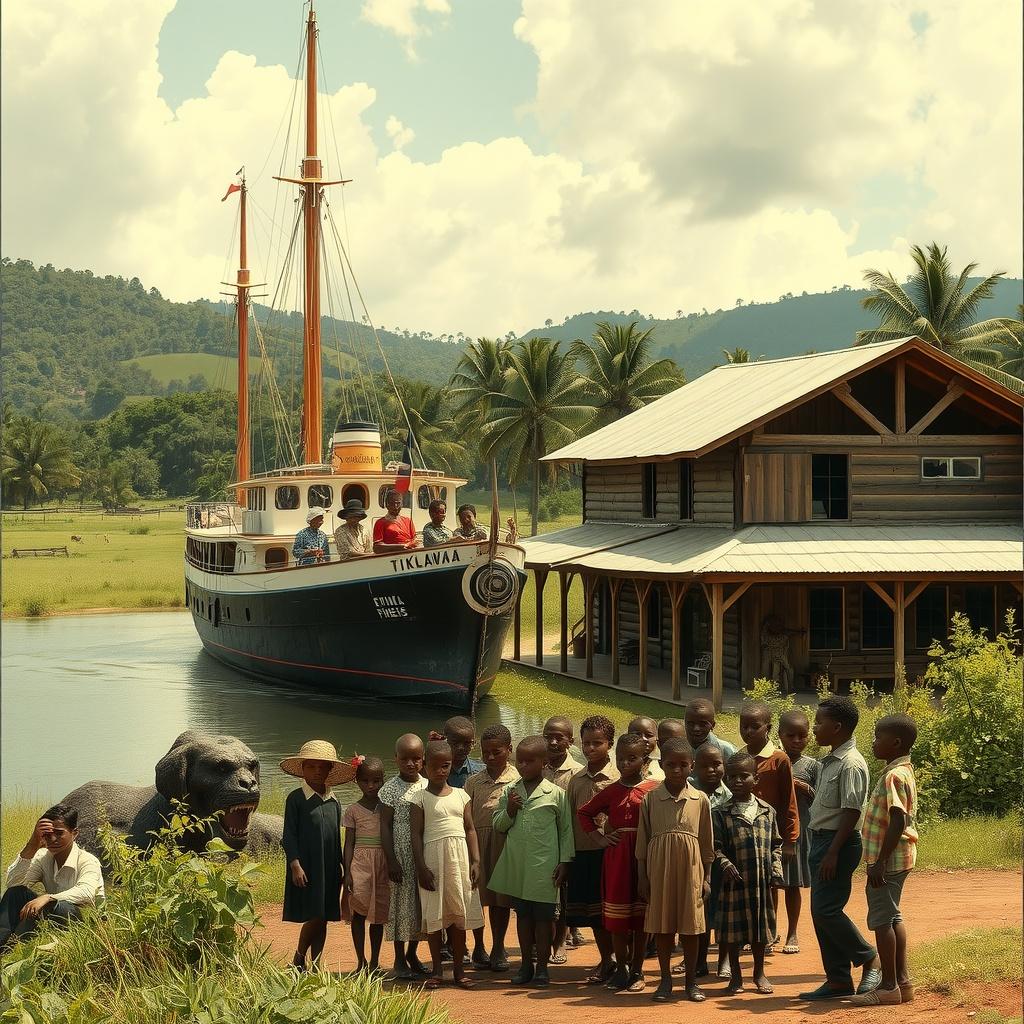
The year was 1929, and I was merely eight years old, standing on the deck of the SS Tiklawa, my heart pounding with excitement and a hint of trepidation. As our small steamship glided toward the bustling port of Mombasa, I couldn't help but wonder what awaited us in this land so different from my native England. The sea air was thick with humidity, and the cries of seagulls echoed above us, welcoming us to Africa's shores.
My new life in Kenya began with schooling in a modest wooden building, surrounded by the vastness of the African landscape. Here, amid the rustling leaves and distant animal calls, I found camaraderie and warmth. My classmates and I forged friendships that would last a lifetime. "John, have you ever seen such a sky?" my friend David asked one afternoon, pointing to the endless expanse of blue, dotted with fluffy clouds. "It's as if we're in a different world," I replied, feeling a sense of belonging among my new companions.
At the age of thirteen, life presented its first real challenge—finding work. The bustling streets of Nairobi offered little to someone so young, but fortune smiled upon me when I secured unpaid work at a small shop. "It's not much, but it's a start," I consoled myself, determined to make the most of the opportunity.
My next opportunity came through the kindness of Mr. J. H. Maxwell, my school principal, who found me a position at the Kenya Post Office. Earning three pounds a month felt like a fortune, and I was filled with pride. "You'll do well here, John," Mr. Maxwell assured me, his encouragement fueling my resolve to succeed.
World War II cast a long shadow over our lives, and the need for soldiers drew me away from the post office. Despite being underage, I joined the army, driven by a sense of duty and adventure. With my Army number, C A C 34, I became part of something larger than myself, though the realities of war were sobering. "It's a tough world out there, but we'll make it through," a fellow recruit reassured me, and his words became a mantra during those trying times.
In 1942, my journey took a new direction with East African Railways, where I spent the next 25 years. Rising to the position of Yard Master, I felt a deep sense of accomplishment. The trains were my domain, and I orchestrated their movements with precision and pride. "Every train tells a story," I often mused, watching the mighty locomotives glide along their paths.
Eventually, I shifted my focus to education, becoming the Principal of Athi River Academy. Teaching and nurturing young minds brought me immense joy, despite the challenges of racial discrimination in post-independence Kenya. My own college, Eastleigh Commercial College, became a testament to resilience and the power of knowledge. "Education is the key to change," I would tell my students, hoping to inspire them as I had been inspired throughout my journey.