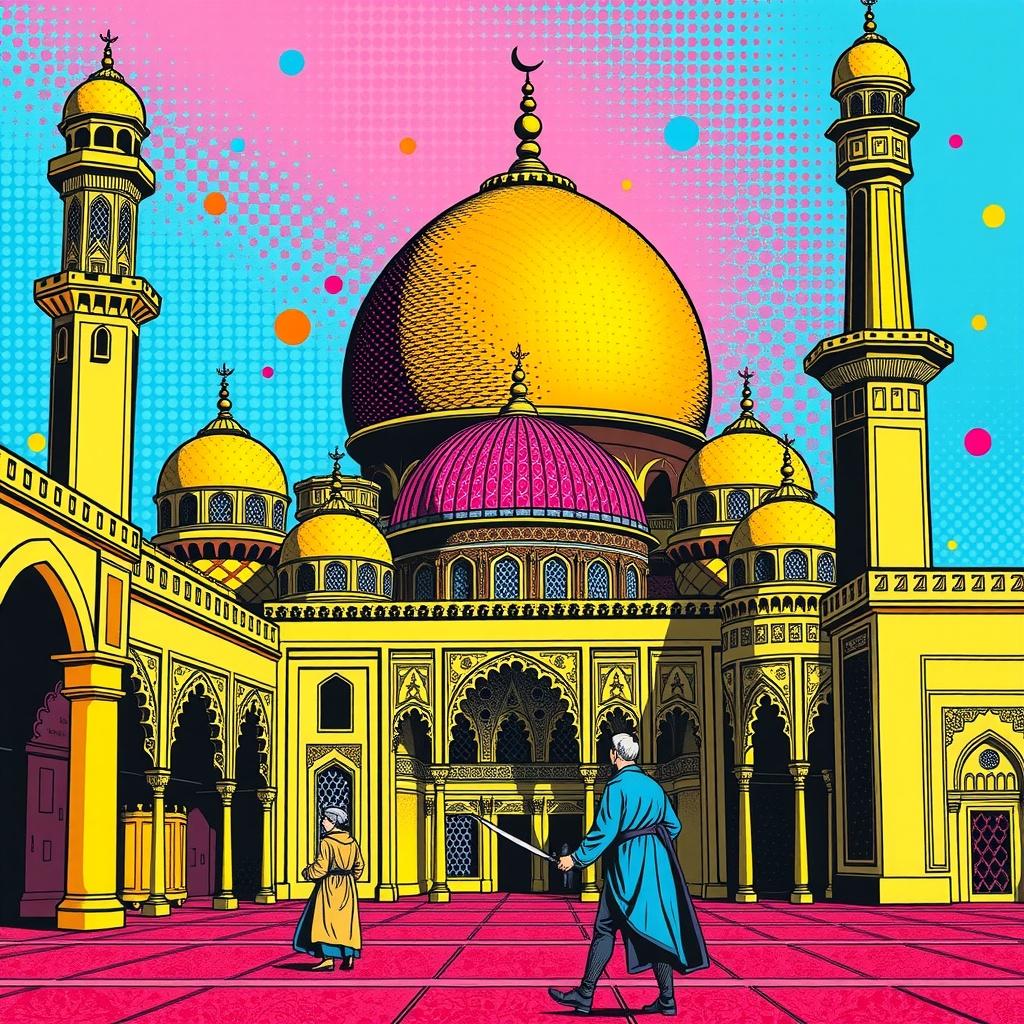
The early days following the passing of Prophet Muhammad (peace be upon him) were marked by both grief and determination among his followers. Under the clear skies, the Rightly Guided Caliphs—Abu Bakr, Umar, Uthman, and Ali—met to discuss the future of the Islamic community. Their gatherings were filled with solemn reflection and a shared vision for the spread of their faith.
The Islamic rule expanded rapidly beyond the Arabian Peninsula, reaching the fertile lands of Persia. Through strategic conquests and wise diplomacy, the Caliphs established control over vast territories. Traders and scholars alike traveled these new lands, exchanging goods and ideas, weaving a rich tapestry of cultures and traditions under the banner of Islam.
The Abbasid Caliphate heralded a golden age for Islamic civilization. Baghdad became a beacon of knowledge and learning, attracting scholars from across the world. In grand libraries, works from Greek, Persian, and Indian scholars were translated and studied, advancing fields like science, medicine, and philosophy. The intellectual fervor of the time was palpable, as scholars engaged in lively debates and discussions.
In 1258 CE, the Mongol invasion brought devastation to Baghdad, marking the end of the Abbasid Caliphate's dominance. Despite this catastrophic event, the spirit of Islam endured. The faith continued to spread across continents, carried by resilient believers who adapted to new challenges and environments.
The Ottoman Empire rose to prominence, alongside the Safavid and Mughal empires, each playing a crucial role in preserving and shaping Islamic culture. These empires became centers of power and creativity, influencing art, architecture, and governance. The call to prayer echoed through their cities, a testament to the enduring legacy of Islam.
In the modern era, despite the disruptions of colonialism, Islam has continued to thrive. Through migration, scholarship, and reform movements, the faith has adapted to a rapidly changing world. Today, Islam stands as one of the world's largest religions, uniting over 1.9 billion followers in their shared beliefs, while embracing the diversity of cultures and ideas that define the contemporary landscape.