The air was filled with excitement as the Board of the Medical School in Bordeaux discussed the addition of a new statue to their prestigious institution. The renowned sculptor, Jean-Baptiste Barrias, stood at the head of the table, his eyes gleaming with creative fervor. "This statue will not just be a decoration," he declared, "It will symbolize the eternal connection between nature and healing."
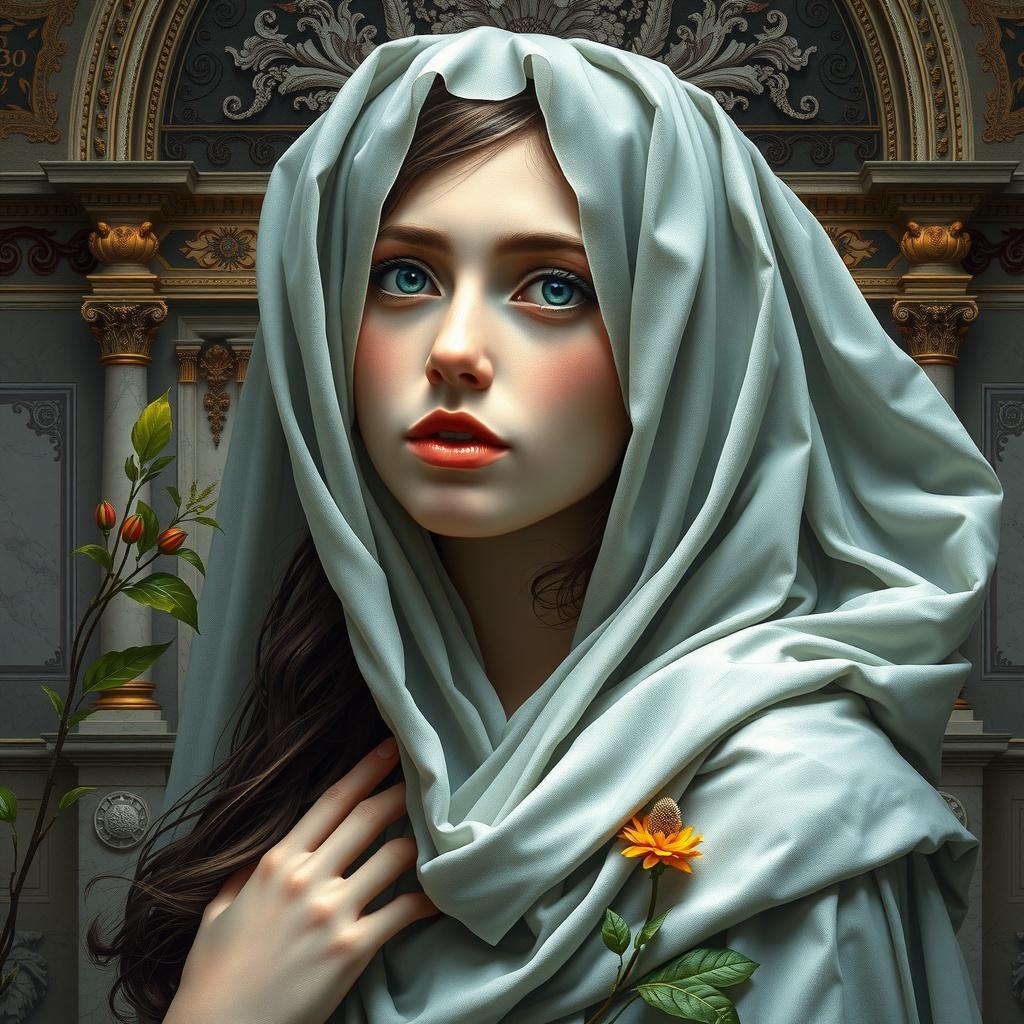
The young woman, the allegory of nature, began to emerge from the marble block. With each careful stroke, Barrias revealed the delicate features of her face and the graceful folds of her veils. Her expression was serene, embodying the quiet strength of nature itself. "She is almost alive," Barrias mused, stepping back to admire his work.
The students and faculty gathered to witness the unveiling. As the cloth was drawn away, gasps of admiration filled the air. The statue of the young woman, her veils partially lifted, seemed to breathe with life. Professor Lucien Dubois, a respected figure at the school, approached Barrias with a smile. "You've captured the very essence of nature," he praised.
Jean-Baptiste Barrias had been commissioned once more, this time to create a second version of the statue in polychrome. Rich colors adorned the figure, enhancing her lifelike presence. As the statue was installed, visitors marveled at the vibrant depiction of nature's beauty. "She stands as a guardian of knowledge and art," Barrias reflected.
Claire Fontaine, a young art historian, was captivated by their story. She delved into archives, uncovering letters and sketches that revealed the passion behind Barrias's creations. "These statues are more than art; they're a legacy," Claire said, inspired to share their tale with future generations.
Visitors paused to contemplate the intricate details and the stories behind them. Claire, now a curator, watched with satisfaction. "As long as they stand, the secret of the statues will live on," she thought, proud to be part of their continuing narrative.