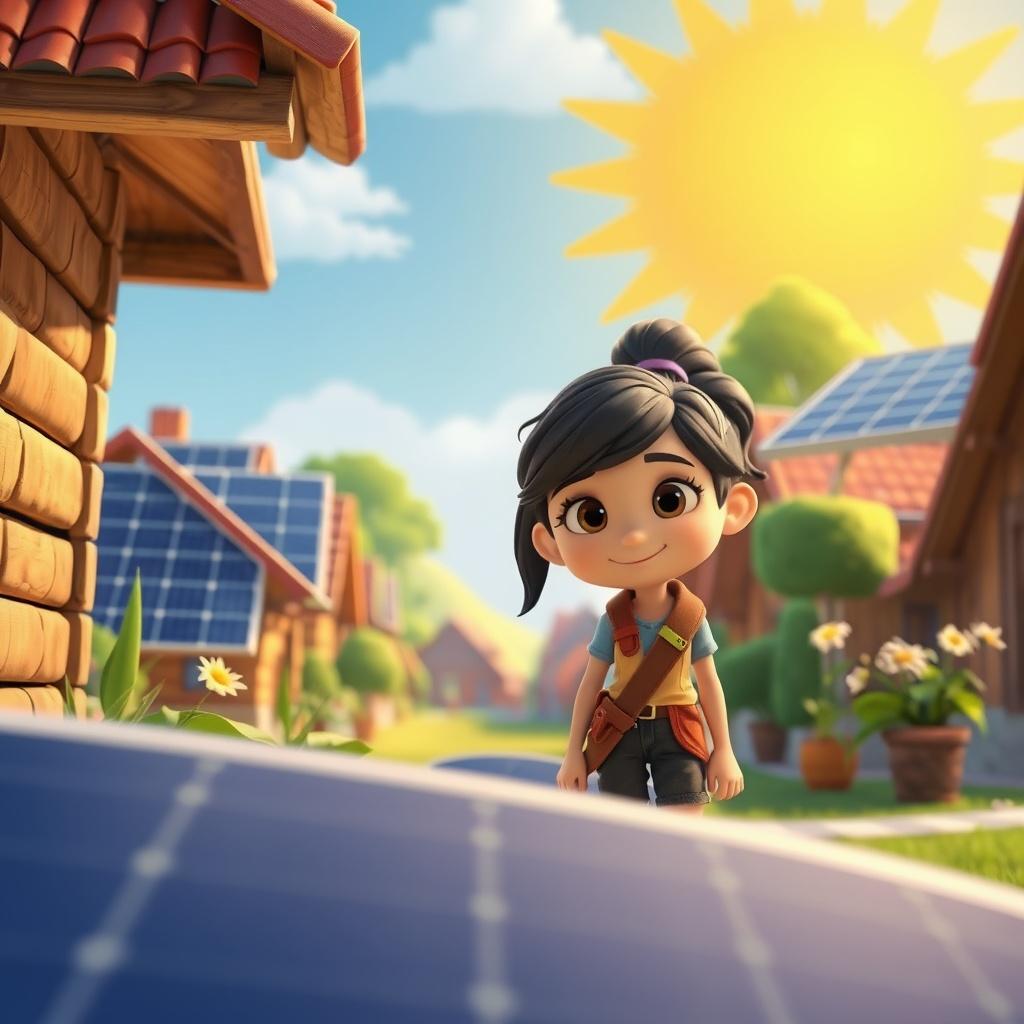
In the quaint village of Sinar Lestari, the air was filled with the scent of fresh earth and blooming flowers. Aruna, a determined young girl with a spark of curiosity in her eyes, sat by the window, her gaze fixed on the dwindling candlelight. "Is there a way we can stop relying on unstable electricity?" she pondered aloud, her thoughts drifting towards a more sustainable future.
The next day, at school, Aruna wandered through the library, her fingers trailing along the spines of countless books. One particular book caught her attention—a vibrant image of a house adorned with solar panels. "What if we use sunlight to power our home?" she mused, her heart racing with newfound inspiration.
Back home, Aruna excitedly shared her idea with her family. Her father, a kind man with a thoughtful demeanor, chuckled but couldn't hide his intrigue. "But solar panels are expensive," he remarked. Undeterred, Aruna and her family devised a plan to create their own solar panels using recycled materials. Little Kinan, her sister, joined in with enthusiasm, eager to help.
On a bright Sunday morning, the project began in earnest. Aruna's father crafted a wooden frame, while Aruna and Kinan carefully cleaned the glass borrowed from neighbors. The family worked in harmony, their laughter echoing through the village. "We're trying to generate electricity from sunlight," Aruna explained to curious neighbors who stopped by, some skeptical, others inspired.
Not everything went smoothly. A fierce rainstorm damaged some wires, leaving Aruna disheartened. "Should we just give up?" she asked her father, her voice tinged with disappointment. Smiling gently, he replied, "Failures are part of learning. Let's fix this." Together, they improvised, using plastic covers to waterproof the panels and replacing damaged batteries.
After weeks of effort, their solar panel finally worked. The small lamp flickered to life, casting a warm glow through the room. That night, during a blackout, their home remained lit, a beacon of hope in the darkness. The success inspired their neighbors, who began seeking Aruna's guidance in building similar systems.
Sinar Lestari transformed as more villagers embraced eco-friendly practices. Aruna's house, now dubbed "The Sunlight House," became a symbol of change and inspiration. Proud of her accomplishments, Aruna dreamed of becoming an environmental engineer, determined to help more communities live sustainably.